

Let’s Leave Out the Shoes for the Three Kings
Sponsored

Catholic365 is sponsored by
CatholicTalk.net



“Come to me, all you that are weary and are carrying heavy burdens, and I will give you rest. Take my yoke upon you, and learn from me; for I am gentle and humble in heart, and you will find rest for your souls. For my yoke is easy, and my burden is light.” Matthew 11:28-30
Moving from Cuba to Spain at age seven disrupted my preparation for First Holy Communion, sparking a deep, years-long longing within me to receive the Eucharist. The preparations to receive my First Holy Communion in Cuba had to be done in secret. By the time I was born, the communist government had already closed all the Catholic schools, shut down many churches, and exiled most of the priests. Yet, it was more important to my mother that I receive the sacrament than it was to avoid being caught. As an adult, I now realize the immense risk she took just to bring Jesus into my life—the same risk so many still take today in countries without religious freedom.
While later attending a Catholic school in Spain, I would sit in the chapel early every morning, watching the nuns receive Communion and wishing with all my heart that I could join them. I even read a story about a saintly girl who miraculously received a flying Host through intense prayer; I tried it, but to my disappointment, I was no saint. I would have to wait.
As my long-awaited Communion day finally approached, we learned my grandparents were arriving from Cuba that summer. Wanting them there, my mother asked the nuns if we could postpone the sacrament. Instead of deciding for me, the nun insisted it should be my choice. Called into the office and asked if I could wait one more year, I broke down in tears. "I cannot wait any longer to receive Jesus," I pleaded. "My grandparents will understand." My mother respected my choice, and I received the Eucharist that May.
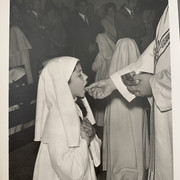
Just like my mother and the nun gave me the freedom to decide my path, Jesus constantly offers us free will. He never forces Himself upon us; instead, He presents the choice and lovingly waits for our response.
Here in the United States, we are blessed with that total freedom. I can find an open church with a tabernacle containing the Sacred Host within blocks of my house in any direction. And yet, on most days, I just drive right by them without taking the time to stop and spend even a few minutes in prayer.
This week, I will join thousands of Catholics across the United States in consecrating myself and my family to the Sacred Heart of Jesus. Preparing for this day over the past month has deeply transformed my understanding of the Eucharist. The Sacred Heart of Jesus is alive, beating for us inside every Host in every tabernacle around the world. Jesus thirsts for us and desires nothing more than for us to spend time adoring Him.
Yet, in most tabernacles, He sits entirely alone. This abandonment causes Him a profound, spiritual sorrow—not from physical pain, but from our ingratitude, indifference, and lack of love.
In His 17th-century revelations to St. Margaret Mary Alacoque, Jesus expressed that while His heart burns with love for humanity, He too often receives contempt, sacrilege, and coldness in return. Because Jesus is divine, His consciousness encompasses all of time—past, present, and future. In His agony in the Garden and on the Cross, He foresaw every one of our sins, along with every ounce of our indifference. Our rejection of His love caused Him real, spiritual suffering then, and it grieves His heart today.
To console the Sacred Heart of Jesus, we are called to practice reparation—offering prayers, devotions, and sacrifices to make up for the coldness of the world. But Jesus doesn’t force this upon us. It remains our choice. He gives us free will so we can freely choose to sit with Him in adoration, or choose to fill our time with worldly distractions.
Jesus is not forcing me to consecrate myself to His Sacred Heart. By choosing to do so, I am choosing to become His disciple, which naturally requires sacrifice. But it is also an invitation to entrust Him with all my burdens, pains, and anxieties. When we offer our heartaches to His Sacred Heart, He uses them not only to purify us, but to heal other needy souls as well. Through these small sacrificial offerings from our hearts to His, Jesus—in His mysterious, divine mercy—will save souls and convert hearts.
Just as I was given the choice 55 years ago to receive my First Holy Communion or delay it, Jesus today gives each of us a choice. He invites us to spend time with Him in adoration, to make sacrifices in reparation for the sins of the world, and to surrender our own pains so He can use them to sanctify needy souls. He never forces; He simply invites.
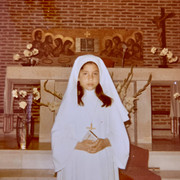
The preparations to receive my First Holy Communion in Cuba had to be done in secret because by the time I was born, the communist government had already closed down all the Catholic schools, many of the churches, and had exiled most of the priests. But it was more important for my mom that I received the sacrament than being caught. I realize now, as an adult, the risk she took to bring Jesus into my life. It’s the same risk that many people take in countries where they don’t have the freedom to practice their religion. But here in the United States, we do have that freedom. I can find an open church with a tabernacle that contains the Sacred Host within blocks of my house in any direction. And yet, most days, I just drive by them without taking the time to stop and spend a few minutes in prayer.
The same longing that filled my heart as a little girl: I thirst for Him, just as He thirsts for each of us. Will we choose to answer His call and quench His thirst? Or will we leave Him abandoned and forgotten in the tabernacle?
Copyright © 2026 Christy Romero. All rights reserved. If you thought of someone while reading this, bless them by sharing it with them.
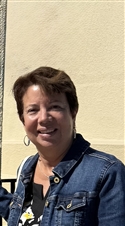
My name is Christy Romero and I am a cradle Catholic. I met my husband, Rafael, 46 years ago on a Youth Encounter, and we got married four years later. We have three young adult children who are all happily married, and two grandsons that have stolen our hearts. Even though I have always loved writing, God took me on a different career path. I graduated with a degree in Accounting in 1986, and thirty years ago, I established my practice to help small businesses and individuals with their tax filings. Last year, I decided to retire to spend more time with my growing family, and to dedicate more time to writing. I created a blog to share my meditations ten years ago, and I have a faithful following of family and friends. Now, I feel God urging me to share the Good News of the Church that He established over 2,000 years ago with a larger audience. In the words of St. Teresa of Calcutta: “I am just a little pencil in the hand of a writing God sending a love letter to the world.” You can find more of my writings at https://christysmeditations.blogspot.com/



