
Touching God

Forgiving Oneself
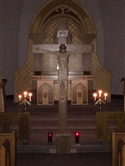

Photo by Artem Sapegin on Unsplash
Forgiving Oneself
Deacon Jonathan Brewer
Introduction
Today man has made themselves, not like gods, but god. You hear the statement; I am the fulness of
what I can be and who I am. Before I can love anyone else, I must love myself, then everything else will fall in
line with this. It goes as far as, I must love myself before I can love God, how will I know how to love God if I
do not know how to love myself. Also, with this comes the statement “I must forgive myself.” This has become
the final crown in man ascending to no longer having need of God. We have become self-contained; I no longer
have a need-to-know regarding what sin is or the need to accept God’s forgiveness. To address this gap between
God and man that man has created, we need to define what sin is and why the need for accepting God’s
forgiveness before one tries to “forgive” oneself.
Discussion
To understand the shortsightedness of the statement, I must forgive myself, we need to look at the basic
definition of sin. For now, we are not going to deal with venial and mortal sin, only the overview of what sin is
in a basic sense. The Catechism of the Catholic Church 1850 states “Sin is an offense against God: "Against you,
you alone, have I sinned, and done that which is evil in your sight." Sin sets itself against God's love for us and
turns our hearts away from it. Like the first sin, it is disobedience, a revolt against God through the will to
become "like gods," knowing and determining good and evil. Sin is thus "love of oneself even to contempt of
God." In this proud self-exaltation, sin is diametrically opposed to the obedience of Jesus, which achieves our
salvation.” (1) Look at the base root: Sin is an offense against God. With this understanding, one may then take
it all the way out to its fulfillment, which is: I am the temple of the Holy Spirit. If I sin against myself, I am
offending God. If it is true that when I see my neighbor, I see Christ in them and when I offend them, I offend
Christ. When we sin against ourselves or each other, we offend God. St. Augustine brings a little more clarity to
this. “Sin is an offense against reason, truth, and right conscience; it is failure in genuine love for God and
neighbor caused by a perverse attachment to certain goods. It wounds the nature of man and injures human
solidarity. It has been defined as "an utterance, a deed, or a desire contrary to the eternal law." (2) Understanding
the basic tenants of sin, we begin to see that forgiving oneself does not fit if sin truly is an offence against God.
St. Ambrose brings a little different light on sin and forgiveness, and at the same time reminds us of whom we
sin against and where forgiveness comes from:
“I have sinned, he says, against heaven, and before you. He confesses what is clearly a sin unto death, that you
may not think that any one doing penance is rightly shut out from pardon. For he who has sinned against heaven
has sinned either against the kingdom of heaven, or against his own soul, which is a sin unto death, and
against God, to Whom alone is said: Against You only have I sinned, and done evil before You.
“So quickly does he gain forgiveness, that, as he is coming, and is still a great way off, his father meets him,
gives him a kiss, which is the sign of sacred peace; orders the robe to be brought forth, which is the marriage
garment, which if anyone have not, he is shut out from the marriage feast; places the ring on his hand, which is
the pledge of faith and the seal of the Holy Spirit; orders the shoes to be brought out, Exodus 12:11 for he who is
about to celebrate the Lord's Passover, about to feast on the Lamb, ought to have his feet protected against all
attacks of spiritual wild beasts and the bite of the serpent; bids the calf to be slain, for Christ our Passover has
been sacrificed. 1 Corinthians 5:7 For as often as we receive the Blood of the Lord, we proclaim the death of the
Lord. 1 Corinthians 11:26 As, then, He was once slain for all, so whenever forgiveness of sins is granted, we
receive the Sacrament of His Body, that through His Blood there may be remission of sins.” (3)
How does forgiveness and the offence against God play out in our everyday lives in a world where we
have become our own gods? Let us start from the beginning with Adam and Eve in the garden. Satan tells Eve
that if you eat of the tree you will become like God knowing the difference between good and evil. She looks
upon the fruit and sees that it is good for food and knowledge. They eat of the fruit and from that comes death.
(4) From this time on the senses become dull and what was good has become evil. We know this because they
were ashamed and hid from God. (5) This plays out well in society today: Good is bad, girls are boys, boys are
girls, rules are bad and lawlessness is good. I no longer need God, all I need is myself because I am the
fulfillment of everything. In short, right is wrong, wrong is right. We no longer look for truth because I have my
own reality. Within this thought there is no need for God, at the same time there is no need for forgiveness. The
Church and society move this thought forward by the very statement “you must forgive yourself.”
Let us look at a couple scripture passages that might help and bring a little more clarity to this. The first
passage is from Luke 5:17-26 describing the healing of the paralytic. (6) In verse 20 Jesus says, “man your sins
are forgiven you.” Here Jesus is establishing a basic principle between forgiveness and sins, the connection
between the two. Up until the coming of Christ the priest would offer the holocaust on the alter, then put all the
sins of the people on the goat and send out into the desert. Then in verse twenty-one the Pharisees say, “Who can
forgive sins but only God?” They understood where forgiveness came from and that any other way was a
blasphemy. To clarify this further, Jesus says in verse twenty-four, “But that you may know that the son of man
has authority on earth to forgive sins.” This statement by Jesus is of utmost importance considering later he
says, “whose sins you forgive are forgiven them, and whose sins you retain are retained.” (7) In the sacrament of
reconciliation, after confessing our sin, the priest gives us absolution by saying, ““God, the Father of mercies,
through the death and the resurrection of his Son has reconciled the world to himself and sent the Holy Spirit
among us for the forgiveness of sins; through the ministry of the Church may God give you pardon and peace,
and I absolve you from your sins in the name of the Father, and of the Son, and of the Holy Spirit.” (8)
Even at the last supper Christ raised the cup and says, “drink from it, all of you, for this is the blood of the
covenant, which will be shed on behalf of many for the forgiveness of sins.” (9) In accepting God’s forgiveness
for our sins, we understand that he is faithful and just to forgive our sins. It takes humility of heart and
vulnerability to live in that trust of Him who loves us. Even on our death bed we want to maintain that we can do
it ourselves. Take for example the thief on the cross: (10)
“One of the criminals who were hanged there was hurling abuse at Him, saying, "Are You not
the Christ? Save Yourself and us!" But the other answered, and rebuking him said, "Do you
not even fear God, since you are under the same sentence of condemnation? And we indeed are suffering
justly, for we are receiving what we deserve for our deeds ; but this man has done nothing wrong." And he
was saying, "Jesus, remember me when You come in Your kingdom!" And He said to him, "Truly I say to
you, today you shall be with Me in Paradise."
Even at the doorstep of death, we still do not have the need for God or his forgiveness. Too much of the time we
are like the one thief: we mock and jeer that which we need. Unlike the other thief who knew where his help and
salvation came from: He turned to Christ, in humility, asking him to remember him when he comes into his
kingdom.
In spiritual direction the same principles apply: Understanding what sin is and where our forgiveness
comes from. We help lead people to the foot of the cross, the place where all the answers are found. Here we find
that all good gifts come from God, unmerited as they are. As I sit with my directee, do I rely on myself or the
Holy Spirit to direct me? I can rely on myself and only see the externals of the person; it is only through the
sensitivity of the Holy Spirit that we can see deeper to know how God wants us to participate as directors in our
directees life. Needing to get rid of the I, the I can forgive myself and the I can be a spiritual director. Rather,
God has forgiven me; God can qualify me to be a spiritual director. Forgiveness is a gift, let us not hijack it from
the giver.
As spiritual directors we fall into the trap of the “I.” I must forgive myself, becomes I want to help, I
want to have an influence, I want, I want, I want. One day I was talking to a dioecian exorcist about his call to
become an exorcist. He said when the bishop asks you if you want to be an exorcist and you say yes, you are not
the one that is called. If you say no, then the bishops figures that you have the call. If, as directors we do not
understand that sin is an offence to God, and forgiveness only comes from him, we need to reevaluate our call
and make sure that the “I” did not cloud our judgement. Always remembering that we serve at the pleasure of
our Lord, keeping in mind that we are here not to be served but to serve and to give our lives for the sake of
Christ.
Conclusion
Forgiveness is an unmerited gift from God. Forgiving myself would be like a priest offering himself the
sacrament of reconciliation. Can I be sorry for what I have done, sure, I can even have remorse for what I have
done in my life. Can I forgive myself? No, forgiveness only comes from Him that created us. It may be that we
should view “forgiving oneself” as truly accepting that we have been forgiven. It is only through Christ blood
that we have the forgiveness of sins. In a world where people no longer have a need for God and that within
themselves, they are the fullness of everything, the Church does not need to play further into their self-elevation.
It is a feel-good statement, but as spiritual directors we must be careful: Words truly do matter. You are forgiven,
you are loved. This is the very foundation of our faith.
References
__MCE_ITEM____MCE_ITEM__(1) CCC Second Edition, Part III Article 8 Sec II Paragraph 1850
__MCE_ITEM____MCE_ITEM__(2) St. Ausgustine, Contra Faustum 22 PL 42, 418
__MCE_ITEM____MCE_ITEM__(3) St. Ambrose on Repentance, Book II Chapter III Paragraph 17,18
__MCE_ITEM____MCE_ITEM__(4) Douay-Rheims Holy Bible, Genesis III Verse VI
__MCE_ITEM____MCE_ITEM__(5) Douay-Rheims Holy Bible, Genesis III Verse X
__MCE_ITEM____MCE_ITEM__(6) New American Standard Revised Edition, Luke 5:17-26W
__MCE_ITEM____MCE_ITEM__(7) Douay-Rheims Holy Bible, John XX Verse XXIII
__MCE_ITEM____MCE_ITEM__(8) CCC Second Edition, Part II Article I Sec VII Paragraph 1449
__MCE_ITEM____MCE_ITEM__(9) Douay-Rheims Holy Bible, Matthew 26:28
New American Standard Revised Edition, Luke 23:39-43
Recommended Stories
About the Author
Ordained Deacon for the Diocese of Fargo, serving St. Peter and Paul Catholic church in Karlsruhe ND. Also, chaplain for Heart of America Medical Center, Heart of America Hospice and Haaland Home all in Rugby ND. Married for 45 years to wonderful women raised catholic and I converted to the Catholic faith about 30+ years ago.





