So You're a "Person of Faith" and "PRO-Choice"? Really? Which Faith?

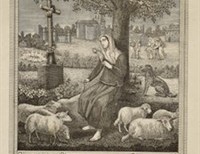
St. Therese' of Lisieux: Being Just What the Good God Wants Her to Be!


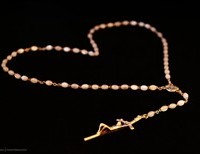
Photo By: Flickr/Thérèse de Lisieux
“If I had not been received into Carmel, I would have entered a Refuge, to live there unknown and despised in the midst of the poor penitents. To pass for such in the eyes of all would have been my happiness. I should have been the apostle of my companions telling them what I think of the Mercy of the Good God.” (St. Therese of the Child Jesus and the Holy Face)1.
The great 20th century Catholic Philosopher, Theologian, Educator and Author Dr. Dietrich von Hildebrand defines humility as, “the precondition and basic presupposition for the genuineness, the beauty and the truth of all virtue”2. The profound sense of humility expressed in the foregoing words of St. Therese’ of Lisieux (“The Little Flower”), serve to provide us with an, albeit momentary, but nevertheless piercing insight into the deepest recesses of the heart of this young Carmelite Saint. Her now world renowned and deeply loved spiritual autobiography entitled, “The Story of A Soul”, which was published posthumously, has served to inspire and guide millions to a closer relationship with Christ Jesus through the practice of what St. Therese’ herself referred to as her “Little Way” or “the way of spiritual childhood”3.
In spite of her deep desire to become a saint, Therese’ was also quite conscious of her own personal limitations. In comparing herself with the great Saints, Therese’ said that she felt that that there was as much difference between the Saints and herself, as there was between “a mountain whose summit was lost in the clouds and a tiny grain of sand”4. However, she was also firmly convinced that “The good God would not inspire unattainable desires; I can, then, in spite of my littleness, aspire to sanctity. For me to become greater is impossible; I must put up with myself just as I am with all my imperfections. But I wish to find the way to go to Heaven by a very straight, short, completely new little way”5.
In the midst of her search for this “new way”, she came upon two passages from the Old Testament which, in particular, made a tremendously deep and lasting impact upon her and which serve as the foundation of her “Little Way”; “If anyone is a very little one, let him come to Me.” (Proverbs 9: 4) and “As a mother caresses her child, so I shall console you, I shall carry you at My breast and I shall swing you on My knees” (Isaiah 66:12-13). Continuing in this train of thought, she reflected on the idea of “an elevator” and writes, “We are in a century of inventions; now one does not even have to take the trouble to climb the steps of a stairway; in the homes of the rich an elevator replaces them nicely. I, too, would like to find an elevator to lift me up to Jesus, for I am too little to climb the rough stairway of perfection”… “The elevator which must raise me to the heavens is Your arms, O Jesus! For that I do not need to grow; on the contrary, I must necessarily remain small, become smaller.” Expanding on this conclusion St. Therese’ sums it all up writing, “I don’t count on my merits since I have none, but I trust in Him Who is Virtue and Holiness. God alone, content with my weak efforts, will raise me to Himself and make me a saint, clothing me in His infinite merits”6 which reveal the basis of her “Little Way” as being both a profound sense of humility and an unwavering confidence in an All- Loving God.
In addition to her abilities to inspire, support and encourage others through her writings, Therese’ was also very adept, particularly during her time in Carmel, at “living the hidden life with Christ in God” (Colossians 3:3), so much so, that in the waning days of her mortal life, not a few of the sisters who actually lived together with her in the Carmel at Lisieux, wondered what the Abbess could possibly write about their little sister in her obituary. One sister in particular was even heard to remark that Sr.Therese’, “as lovable as she is, has certainly done nothing worth the trouble to recount”7. It also quite clear that within the breast of our young saint, beat not only a heart filled with Love for our God, but that it was also the heart of a “spiritual warrior” and a missionary, taking, as she did, her inspiration from the great Saint Joan of Arc and Ven. Theophane Venard8. Two months before her death, Therese, on July 17, 1897, said, “I feel especially that my mission is about to begin, my mission of making God loved as I love Him, of giving my little way to souls. If God answers my desires, my heaven will be spent on earth until the end of the world. Yes, I want to spend my heaven in doing good on earth”… “I can’t make heaven a feast of rejoicing; I can’t rest as long as there are souls to be saved”9. St. Therese’ passed from this life at midnight on September 30, 1897.
Subsequent testimonies and events prove that Our Blessed Lord has, in fact, granted the desires of His little bride, as in the years since her passing, battle hardened veterans of the blood drenched fields of the First World War, in sworn statements, identified St. Therese’ as being the young nun who personally and miraculously guided them to alternate combat positions, in the midst of hotly contested engagements, so to remove them from harm’s way and save their lives. In addition, they gave detailed accounts of her exploits in providing vitally needed help, comfort and assistance to their wounded comrades as artillery shells exploded around her 10. In recent years, the great Abbess, Foundress of EWTN and television personality Mother Angelica credited St. Therese’ with having healed her of an extremely painful and what is, quite often, a life shortening illness 11 and in 1997, St. Therese’ was declared a “Doctor of the Universal Church”.
My own relationship with “Little Therese” (as she has instructed her friends to call her when we pray to her12), has been one of deep and abiding friendship. Over the years, she has listened to me, laughed with me, reminded me, consoled me and scolded me (always in the most gentle of voices) but she has never failed to inspire me, in places ranging from her side altar at St. Patrick’s Cathedral in the heart of New York City, to the sandy, tranquil beaches of Florida; through the darkest nights of the aftermath of 9-11 attack, and on joy-filled occasions such as my Wedding Day. She reminds me to “Always keep lifting your foot to climb the ladder of holiness and do not imagine that you can mount even the first step. All God asks of you is good will. From the top of the ladder He looks lovingly upon you and soon, touched by your fruitless efforts, He will Himself, come down and taking you in His arms, will carry you to His Kingdom, never again to leave Him13” and that “Perfection consists simply in doing His Will and being just what he wants us to be”14.
References-
1 An Irish Carmelite, (1915), Thoughts of St. Therese, P.J. Kennedy & Sons
2 Von Hildebrand, (1997) Humility: Wellspring of Virtue, pg. 5, Sophia Institute Press
3 Clarke, (1977), St, Therese of Lisieux: Her Last Conversations, pg. 257, ICS Publications, Washington, D.C.
4 Saint Therese of Lisieux, (2007), “The Story of A Soul”, pg. 121, Cosimo Inc., New York
5 Saint Therese of Lisieux, (2007), “The Story of A Soul”, pg. 121, Cosimo Inc., New York
6 De Meester, (2002), With Empty Hands: the Message of St. Therese of Lisieux, pg. 76, Burns & Oates, London
7 Jean D'Elbee, Jean du Coeur de Jésus d'. Elbée, (2001), I Believe in Love: A Personal Retreat Based on the Teaching of St. Therese’ of Lisieux, pg. 171, Sophia Institute Press
8 Saint Therese of Lisieux, (2007), “The Story of A Soul”, pg. 185, Cosimo Inc., New York
9 Clarke, (1977), St, Therese of Lisieux: Her Last Conversations, pg. 102, ICS Publications, Washington, D.C.
10 Treece, (2001), Apparitions of Modern Saints; Appearances of Therese of Lisieux, Padre Pio, Don Bosco and Others, pgs., 46-61, Servant Publications Ann Arbor, Michigan
11 Arroyo, (2005), Mother Angelica: The Remarkable Story of a Nun, Her Nerve and a Network of Miracles, pg. 31, Doubleday, New York
12 Clarke, (1977), St, Therese of Lisieux: Her Last Conversations, pg. 270, ICS Publications, Washington, D.C.
13 Saint Therese’ of Lisieux, (2012), The Story of a Soul (L'Histoire d'une Ame). The Autobiography of St. Therese’ of Lisieux With Additional Writings and Sayings of St. Therese, pg. 232, Hamburg: Tredition GmbH
14 Saint Therese of Lisieux, (2012), “The Autobiography of St. Therese of Lisieux”, translated by Ronald Knox, pg. 34, Martino Publishing, Mansfield Centre, CT
Recommended Stories
About the Author
Frank Lloyd is a New York born Roman Catholic Father of five, Grandfather of eight and a lifelong student of History and Comparative Religion. He holds Bachelor’s Degree in Psychology, an Associate’s Degree in Applied Science and is certified to teach the Social Sciences for Grades 6-12 in the State of Florida.
Now retired after twenty-five years, working in the Telecommunications Industry, Frank and his wife Anna now reside in Florida and he is blessed and privileged to serve as an Extraordinary Minister of the Blessed Sacrament in the Diocese of St. Petersburg. His primary interests are in making whatever contribution, through Our Lord's Grace, that he can to the "New Evangelization", writing and teaching and in furthering his education.
More Stories By :