Garbage In Garbage Out

Guide to Attending College Pt 3: The Dictatorship of Relativism
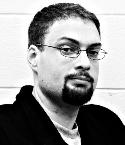

Photo By: Flickr/William Murphy
In this third and (at least for now) final part of my series on attending college we will address the metaphoric element in the room: university campuses exemplify the dictatorship of moral relativism that Pope Emeritus Benedict XVI warned us about. For those unaware, the dictatorship of moral relativism is the state where truth itself is suspect in the culture at large, and any claims of truth are met with either indifference or hostility. This, at the very least, results in people being blindly accepting of any moral claim to rights, if not outright hostile to claims of absolute truth.
Enter the university environment, where many students today engage in activism to end perceived oppression on campus because the truth claims of some conflict with the perceived rights of others. If you've been paying attention at all then you're well aware that university campuses have been in the throws of a new age of student activism in the name of tolerance and social justice. But is it really tolerance? Judge for yourself, though I warn you that most of us use a different definition of tolerance than campus activists and many professors do today.
My friend, Cirra, recounts her experiences at two public universities, Portland State University and Oregon State University. Cirra is a recent graduate from OSU who transferred out of PSU to finish her education in a more tolerant environment. “My experiences at OSU and PSU were fairly similar,” Cirra told me in an email. “I thought that transferring to OSU would mean less anti-Catholic rhetoric considering OSU is more of an ag/engineering school and Corvallis seemed like a more conservative town, but as it turns out, the professors are just as (if not more so) anti-religion and in one case – the astronomy class I took – outright anti-Catholic.”
Prior to that she attended Portland State, where three classes targeted Christianity in general, including a year-long art class for Freshmen that prominently featured anti-Christian art, including an infamous picture of a crucifix submerged in urine. The picture didn't shock her but the conversation on the art piece did. “But what shocked me more and made it hard to move on was the conversation about the piece that followed in my class,” she recounted. “It was very anti-Christian and many students mocked Christianity while my professor sat back and not only allowed this hateful speech but also encouraged it. I walked out of the class early shaking and in angry tears. I couldn’t believe what had just taken place and I was seriously considering transferring out of PSU or just dropping college altogether if this is what I had to look forward to.” This was Freshman year. Other experiences she'd face would include verbal violence aimed at her for tabling for a pro-life student group, to which she received no support from club advisers.
Cirra is not a victim of anything though. Rather, her experience is not atypical of what faithful students can experience at secular universities. The dictatorship of relativism is hostile to any claims of absolute truth, and especially hostile to claims by the Catholic Church of truth. This, for Cirra, was expressed in the classroom by paid professors as part of regular lectures. Professors would recount easily refutable claims about the Church stifling free thought and science and students would just accept these claims without critical thinking.
Recommended Stories
About the Author
Anthony Stine is a doctoral candidate at Portland State University in Public Affairs and Policy. He is a Catholic convert who came into the Church in 2014. Anthony is a fan of GK Chesterton, CS Lewis, Archbishop Fulton Sheen, and a myriad of saints including St. Thomas Aquinas, St. Francis of Assisi, St. Philomena and St. Augustine. When not writing about issues related to society, the Church, or pop culture Anthony is spending his time with his cat Mighty, writing a doctoral dissertation on Catholic Social Teaching and Sustainability, and grinding out work for his day job. Anthony's other writings can be read at The Complicated Catholic: