On The Eucharist

The Sacraments of Healing

Photo By: Flickr/Miran Rijavec
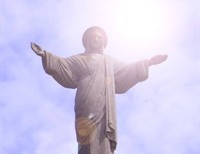
What is sin, and what is hell? For many, sin is visualized as a heinous act which only bad people commit, while many of the ‘little’ sins committed on a daily basis are not really sins but just good old Catholic guilt meant to keep the pews filled. As far as a visualization of Hell, many (without knowing it) are influenced heavily by Dante’s Inferno, visualizing a fiery pit and endless torture. In reality, however, sin are acts we commit against the wish (and will) of our heavenly Father, while hell is a complete separation from the love of God. As we sin, we begin to separate ourselves from God piece by piece, turning our backs on Him as one would turn their back on the sun. While we cannot see the sun with our backs turned, we can feel its warmth and are compelled to turn back toward it. We accomplish this turning back toward God through the sacraments of healing.
Blessed Pope John Paul II said of suffering “Even though in its subjective dimension, as a personal fact contained within man's concrete and unrepeatable interior, suffering seems almost inexpressible and not transferable, perhaps at the same time nothing else requires as much as does suffering, in its "objective reality", to be dealt with, meditated upon, and conceived as an explicit problem; and that therefore basic questions be asked about it and the answers sought.” Our Holy Father here is telling us human suffering is a fact of life, a condition we must live with each and every day as both a consequence of our fallen nature as well as our gift of free will. When one thinks of suffering, they think of a human, earthly affliction which can be dealt with through medicine. Suffering is much more than a bodily condition, however, for “Suffering is something which is still wider than sickness, more complex and at the same time still more deeply rooted in humanity itself (Blessed John Paul II, Salvifici Doloris).” Suffering is both a spiritual as well as an earthly condition, requiring us to turn to both medicine as well as the Church for true healing to occur.
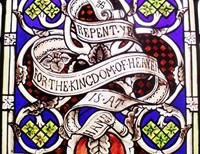
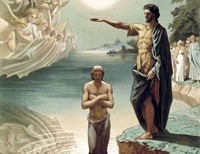
Since sin separates us from God, we must utilize the sacrament of Confession to cleanse us from our sins and reunite us with our Lord. At our Baptism, we were cleansed from sin and washed anew in a life joined with Christ, for as Christ said “Amen, amen, I say to you, no one can enter the kingdom of God without being born of water and Spirit (John 3:5).” Our human condition, including our gift of free will, allows for the ability for man to sin even after baptism, for “the new life received in Christian initiation has not abolished the frailty and weakness of human nature, nor the inclination to sin that tradition calls concupiscence, which remains in the baptized such that with the help of the grace of Christ they may prove themselves in the struggle of Christian life (Catechism of the Catholic Church).”
But why must we confess our sins to a person (a priest), can’t we just tell God we are sorry? While approaching the sacrament with a contrite heart, and praying to the Lord for the Grace to sin no more, and apologizing to our heavenly Father for failing to follow his directions, are necessary, Christ instituted the sacrament of Confession for a reason - it is hard. It is much easier to pray to God and ask for absolution than to openly confess our sins to another person. It is through this telling of our sins, however, that our soul is truly cleansed and often causes the penitent to (perhaps for the first time) be truly honest with themselves.
The other Sacrament of Healing, the Anointing of the Sick, is a sacrament in which “the whole Church commends those who are ill to the suffering and glorified Lord, that he may raise them up and save them (Catechism of the Catholic Church).” The Anointing is not meant to indicate sin is the cause of the illness, for Christ rejected human afflictions, such as illness as a punishment from God, in His Gospels. The Anointing is meant to provide a spiritual healing, for “Illness can lead to anguish, self-absorption, sometimes even despair and revolt against God (Catechism of the Catholic Church).” Sickness can also cause a person to stop and reflect on their life, allowing an examination of conscience and drawing the sick person closer to Christ, for as the Catechism reminds us “By his passion and death on the cross Christ has given a new meaning to suffering: it can henceforth configure us to him and unite us with his redemptive Passion.”
Christ died for our sins, fulfilling the Old Testament covenant and establishing the new. If Reconciliation serves to bring us closer to God, the Anointing of the Sick brings us to Christ in another manner-by offering our suffering up to Christ we are binding ourselves with him on His cross. The Anointing always works exactly the way the sacrament is supposed to by strengthening the Christian as they suffer through this illness, preparing those near death for their journey home, and (at times) allowing the power of God to manifest in a miraculous healing, much like the miraculous healings Christ performed during his time on Earth.
Through the Sacraments of Healing, the Christian is healed to both God and the Church, for “Reconciliation with the Church is inseparable from reconciliation with God (Catechism of the Catholic Church).” The Church, through her sacraments, offers sacramental grace to her faithful, uniting them with God in a real and tangible way. The sacraments of Healing provide a beautiful and fruitful way for Catholics to truly live a life in Christ.
Recommended Stories
About the Author
Chris Boyer is originally from the coal region of Pennsylvania. He is a cradle Catholic who is married to a convert to the faith. He works to catechize the faithful at his home parish through his participation in the RCIA program and youth religious education. He also coordinates the baptismal preparation program for his local parish. Chris holds the Master of Sacred Theology degree from Saint Joseph’s College of Maine and is currently pursuing the Doctor of Business Administration Degree. He resides with his family in coastal Delaware.