A Biblical Defense of the Papacy

An Exegeses of the Sacrament of Baptism Part II

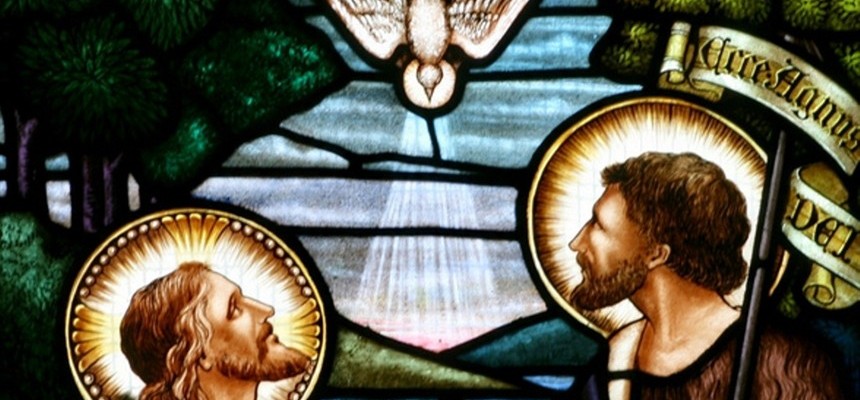
Photo By: Flickr/Waiting For The Word
This post is the second in a two-part series on the sacrament of Baptism. The first post discussed the theological foundations for the sacrament while this post focuses on the gifts of the sacrament.
So what, then, do we gain from our baptism? In addition to the sacrament being the “washing of regeneration and renewal by the Holy Spirit” (CCC #1215), the Church teaches us that Baptism is a beautiful and glorious gift from God that conveys grace (even unto the guilty), anoints us into the common priesthood of believers, and seals us into Christ’s Church (CCC #1216). The grace we receive from the sacrament includes the forgiveness of all sins, both original sin and personal sins. We now become an adopted son of God and a member of Christ’s Holy Catholic Church. The sacrament seals the infant with the character of the sacrament, known as the indelible spiritual mark. No matter how severe our sins, this mark remains as a permanent sign of our union with Christ and our membership in His Church.
We also receive gifts from the Holy Spirit at our baptism, which will be strengthened at our confirmation. These seven gifts grant us the grace to respond to the promptings of the Holy Spirit and strengthen us as we attempt to live a moral Christian life. These gifts are not a creation of the Church or a new concept brought about after the life of Christ, but rather are rooted in the Old Testament. Isaiah Chapter 11 states “And the spirit of the Lord shall rest upon him: the spirit of wisdom, and of understanding, the spirit of counsel, and of fortitude, the spirit of knowledge, and of godliness” (11:2).
What then do these gifts do for us exactly? In short, the gifts complete the theological virtues of faith, hope, and charity as well as the cardinal virtues of prudence, justice, fortitude, and temperance (CCC #1831). The highest of all the gifts is wisdom, which is the perfection of faith. Our faith is strengthened through this gift of wisdom, for we are able to discern and reflect upon matters of this world and how these matters will ultimately affect our final destination. The gift of understanding enables us to grasp the tenants and truth of our faith. While we can never fully understand the Trinity (at least, not until we reach our heavenly reward at the end of our Earthly life), the gift of understanding allows us to work through and accept the limited explanation we have on this topic here on earth.
The third gift, council, perfects the cardinal virtue of prudence. The catechism notes that prudence is the virtue that allows us to orient ourselves towards God. It is the virtue that allows us to “discern true good in every circumstance” (CCC #1806). In order to truly discern the true good, we must listen to the directions of the Holy Spirit who will guide us in defending the truths of our faith. The gift of fortitude is both a gift of the Holy Spirit and a cardinal virtue. Fortitude allows us to remain firm on the path to salvation even during times of difficulty. When the Holy Spirit councils us toward a certain path or action, He also disposes upon us the gift of fortitude to carry this action out.
The fifth gift, knowledge, differs from wisdom in that wisdom is the gift that allows to judge all things through the lens of our faith knowledge is the actual ability to carry this action out. To put it more simply, wisdom is the desire while knowledge is the action. The gift of piety instills within us a sense of duty to love and serve God. Lastly, Fear of the Lord is the gift that relates directly to the theological virtue of Hope. While hope is the virtue through which we desire the kingdom of God as our eternal reward, Fear of the Lord is not a fear of the Trinity but rather a fear of offending God. The Lord, as the act of contrition states, is all good and deserving of all of our love. If we truly believe this, and we desire an intimate relationship with God, then we must avoid every occasion to cause offense towards Him.
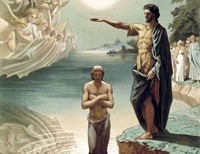
It should also be noted that, like the gifts of the Holy Spirit, the sacrament of Baptism is preconfigured in the Old Testament. The Old Testament is filled with water bringing forth a new spiritual life. In 1 Peter 3:20, the Apostle discusses the great flood of Noah from the Book of Genesis, noting that through this flood a total of eight people were saved from the wickedness of the world through the cleansing waters (NAB). In the book of Exodus, we read of the Israelites crossing the Red Sea unharmed while the chariots of Pharaoh where swallowed up, saving the Israelites from their captors (14:10-22 NAB). Lastly, we read in the book of Joshua the priests, carrying the ark of the covenant, stepped into the river Jordan, stopping its flow and allowing the Israelites to safely cross through these waters into the promised land.
Bibliography
Hahn, Scott. Swear to God The Promise and Power of the Sacraments. New York, NY: Doubleday, 2004. Print.
King, Will. "What is Concupiscence?" Catholic Answer 27.3 (2013): 26-29. Electronic.
O'Neill, Coleman E. Meeting Christ in the Sacraments. Staten Island, NY: St. Pauls Press, 1991. Print.
United State Conference of Catholic Bishops. Catechism of the Catholic Church. Huntington: Our Sunday Visitor, 200. Print.
Recommended Stories
About the Author
Chris Boyer is originally from the coal region of Pennsylvania. He is a cradle Catholic who is married to a convert to the faith. He works to catechize the faithful at his home parish through his participation in the RCIA program and youth religious education. He also coordinates the baptismal preparation program for his local parish. Chris holds the Master of Sacred Theology degree from Saint Joseph’s College of Maine and is currently pursuing the Doctor of Business Administration Degree. He resides with his family in coastal Delaware.