Warriors for the Working Day

Ritual Without Reality


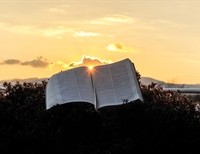
Photo by Josh Applegate on Unsplash
Having been raised protestant I have always found it puzzling that so many protestant groups reject the very idea of liturgy, catagorizing it as "ritual without reality," and a departure from true worship that developed only after the Edict of Milan, claiming their simple services, at least in their own opinion, more in line with the practice of the early church. This position is indefensible as demonstrated by protestant sources, most notably, by Francis Procter and Walter Frere in their study, A New History of the Book of Common Prayer, 1910, as quoted here;
The earliest information as to the services used in the Christian Church comes to us, not from the direct evidence of Service-books, but indirectly from other sources. The services were at first very free; it was only by degrees that liturgical forms of prayer were stereotyped, and until the forms had attained some fixity there was no great place for Service-books.
None of the earliest of such books have survived, but quotations from the Liturgy exist in writers of the second and third centuries, increasing in volume as time goes on: some such quotations have been surmised to exist in documents of the first century such as S. Clement’s letter, and the Didache, or even in the New Testament writings. Descriptions of services are given by Pliny in his celebrated letter to Trajan (circa 112), by S. Justin Martyr in his First Apology (c. 148) and at a later date in several passages of Tertullian and others. More full than these are the descriptions dating from the fourth century, such as those given by S. Cyril of Jerusalem in his Catechetical Lectures delivered in Jerusalem in 348, and by S. Silvia of Acquitaine in her Peregrinatio ad loca sancta (circa 385): the former are official comments on the Liturgy delivered by the Bishop, while the latter are a pilgrim’s descriptions of the services held in Jerusalem other than the Liturgy.
At an earlier date (c. 250), the interesting document commonly called the Hippolytean Canons) contains directions and formulas, for the Liturgy and other rites, .especially Ordination and Holy Baptism.
When we come to the celebrated ecclesiastical manual called The Apostolic Constitutions, we are on the debateable land between a treatise and a service-book. The book is definitively a treatise and a compilation from many sources, but the liturgical formulas which it includes are of such magnitude that it might almost be said that a service book is incorporated in the treatise. The same is true also of the newly-published Testament of our Lord, which contains the essential parts of the Liturgy, the Baptismal and Ordination Services of an even earlier date (250-380), but in the form of a book of Church law and practice rather than that of a Service-book.
Procter notes specifically 1 Timothy. 3:16;
And without controversy great is the mystery of godliness: God was manifest in the flesh, justified in the Spirit, seen of angels, preached unto the Gentiles, believed on in the world, received up into glory.
and Ephesians 5:14: "Wherefore he saith, Awake thou that sleepest, and arise from the dead, and Christ shall give thee light," as examples of liturgical quotations. There are of course countless hymns and littanies to be found in the New Testament, some examples include, 2 Corinthians 13:14; "The grace of our Lord Jesus Christ, and the love of God, and the fellowship of the Holy Ghost, be with us all evermore. Amen," One can easily argue that the Magnificat, (Luke 1:46-56,) the Benedictus, (Luke 1:67-80,) and the Nunc Demittus, (Luke 2:29-32,) formulaic as they are, were quotations from liturgical passages, which were familiar to the first Christians. The same may be said of Paul's great poem of love in 1 Corinthians chapter 13. The evidence for early liturgical practice in the church is indisputable.
The practice of the Liturgy of the hours was also evident in the New Testament, "...Peter and John were going up to the temple at the time of prayer—at three in the afternoon," (Acts 3:1,) and elsewhere we find that "About noon...Peter went up on the roof to pray," (Acts 10:9.) Lest anyone claim these examples were holdovers from Judaism, note that some eight years after the resurection Paul and Silas were praying and singing hymns to God at midnight, (Acts 16:25!)
I do have to admit that those who say ritual without reality is dead are absolutely dead, that is t h e trouble with the vast majority of Catholics today, the reality is to them an undiscovered country. But! When reality, relationship, knowledge, and, most importantly faith are coupled with ritual, that reality is empowered, made palpable and this was so from the earliest days of the church.
The Catholic Church, rich in liturgy, is poorer for t h e lack of Bible teaching and conversely our protestant brethren, rich in scripture, are t h e poorer for their paucity of liturgy.
Recommended Stories
About the Author
I am a convert to Holy Mother Church, and, as you may know, converts make the worst zealots!
It was the Blessed Virgin, the Immaculata, who brought, rather, dragged me, into the Church! I am her servant, her knight, her Miles Immaculata!
I believe, like the character, Curly, in "City Slickers;"
Curly: One thing. Just one thing. You stick to that and the rest don't mean (a thing)
Mitch: But, what is the "one thing?"
Curly: That's what you have to find out.
For me, that is "Christ Jesus, and Him Crucified!"