Spending Lent in the Desert
Sponsored

Catholic365 is sponsored by
Road to Purity


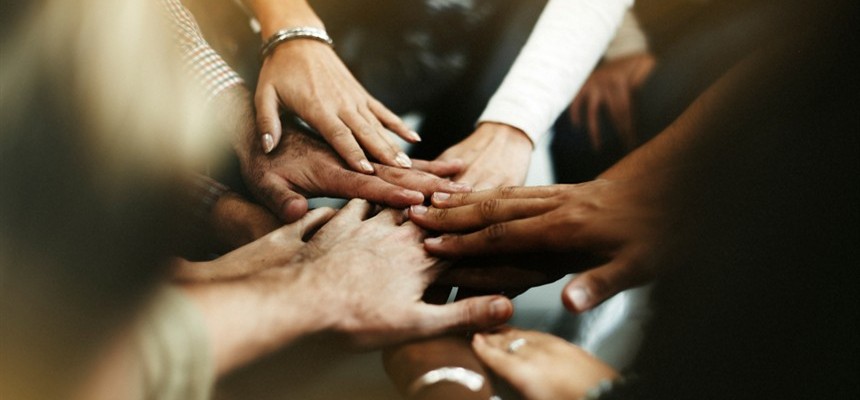
Dinner tables, public squares, social media platforms, governing bodies of representatives - all of these seemingly unrelated forums seem to be connected today by one common (and ironic) element: division.
Though most of these locales have at some point in time been places for unity and common, civil discussion, now it seems we are experiencing untold amounts of turbulence across the board. This discourse has become a constant that is not only present during election cycles, but seems to have become a consistent realization of our differences.
In fact, it no longer seems sufficient to say that we merely differ, but that these divisions have become definitive and seemingly deeper than ever before, to the degree that even politics can tear a family or friendships asunder. Many people assume positions so drastic that it leads them to break ties with those that hold contrary or differing opinions. Diversity, once something that was celebrated in society, has now taken on a sort of fight mentality, where it is always "us" vs. "them" and "our side" must win no matter the cost.
Yet, I find myself, especially in these days, coming back to the high priestly prayer of Christ more and more. In John 17, verse 11, Jesus is praying directly to the Father, and He prays:
"And now I will no longer be in the world, but they are in the world, while I am coming to you. Holy Father, keep them in your name that you have given me, so that they may be one just as we are."
So often, we can be a bit near-sighted in our interpretation of these words, and assume that Christ is simply praying for the church. And there is a deep level of truth to this, and in the midst of seeing so many different denominations and religions in our world, we can certainly join Christ in prayer for unity. But Christ would likely not have simply wished us to look at the Church and those outside as our sole focus in praying for united. Rather, I daresay that He wants us to pursue unity even more deliberately in our daily lives - in all places and forums. In fact, we should seek to be sources of unity to one another in every place we go. Whether it is the public forum, the political spectrum, or even on social media, we should be keeping Christ's prayer for unity close to our hearts, especially in times when divisions run so deeply and threaten so many relationships.
Certainly, we do hold differences, and we can disagree, but at the end of the day, we are all loved into being and held in existence by the one and same God. That same God who brings us into existence holds the others we encounter in the same existence as well. We should be mindful of our call to be men and women of communion, even when others aren't so keen on that same idea. This is not to say we should compromise on what matters or simply become limp and give into another when conflict occurs. Rather, we should always be willing to attempt to do the work to come together or invite others into respectful and cordial dialogue. We should not be so willing and quick to erect a wall that inhibits and avoids any possibility of seeking unity at all.
So, even in the midst of those times when we may find ourselves divided or at odds with one another, in times of political struggle and stress, or even when we encounter one another online in any way, let us continue to carry Christ's prayer of unity ever closer to our hearts: may we not be instruments of division, whether intentionally or not, but let us seek to seek communion with the "other side." May we be one.
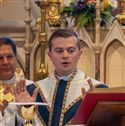
Fr. Daniel Belken is a Roman Catholic Priest for the Diocese of Springfield-Cape Girardeau in Missouri. As a “cradle Catholic,” he had an early start on a path that eventually led him to the seminary after graduating high school. This was due in great measure to the boundless passion and zeal of Pope Saint John Paul II, several good priests, and ultimately, God’s great mercy. He was ordained a priest on June 12, 2020. In his leisure time, he enjoys practicing and playing the organ, reading classic literature, and publishing to his podcast "Open Wide the Doors."