
Sponsored
Catholic365 is sponsored by Catholic365 Christmas Gift Guide
Catholic365 Christmas Gift Guide
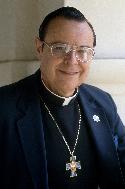
Rev. John H. Hampsch, C.M.F
Catholic365 Contributor

Rev. John H. Hampsch, C.M.F

Latest Articles By Rev. John H. Hampsch, C.M.F

Scripture

Scripture

A tour guide who was showing a group of people through a steel mill astonished his listeners by saying that they could painlessly wipe their finger briefly through a small stream of glowing molten steel poured from a ladle, but only if the finger was first wet and dusted.
Read article →
Guilt

Guilt

Someone, probably a clever TV evangelist, coined a quirky definition for the virtue of trusting in God: he calls it the “bathtub of the soul.” There’s nothing like a bath or shower to restore a soiled body with refreshing cleanliness; yet, a sense of absolute cleanliness of one’s soul is even more refreshing and delightful.
Read article →
Contemplation

Contemplation

Oliver Cromwell, the Puritan Lord Protector of England, had his own quaint form of grace that he piously recited before each meal: “Some people have food but no appetite; some people have an appetite but no food. I have both. The Lord be praised!”
Read article →
Timelessness

Timelessness

A child’s death from a ravaging illness seems to us to be outrageously premature, since in our time frame life ideally lasts into advanced adulthood. We find it hard to trust the Lord’s timing when he chooses to take from this earthly garden a precious flower just beginning to bud and replant it in his heavenly garden.
Read article →
Frugality

Frugality

“Backclipping” is the name given to the linguistic anomaly of amputating words. For instance, for “mathematics” we say “math,” for “teenager” we say “teen,” and so on. Try whiling away your time waiting at stoplights by thinking of other backclipped words, such as exam, lab, demo, intro, tech, rehab, decaf, and the like. Why do we tend to shorten such words?
Read article →
Expectancy

Expectancy

Trust includes a reliance on God’s pattern and purpose for our lives, even when to us it appears meaningless, purposeless, and unattainable. Deeper levels of trust lead to an overwhelming assurance that God is the God of the future as well as the past and present; the future is in his perfect control.
Read article →
Happiness

Happiness

A craggy farmer once gave me an unsophisticated guideline for success that abounded with homespun wisdom: “Gumption,” he opined, “is partly grit and partly grin.” By “gumption” he meant willingness to grapple with a problem; “grit” implies determination in that effort. The “grin” is the anticipated satisfaction of accomplishment.
Read article →
Possessions

Possessions

One of the most heroic forms of trust is found in an unquestioning dependence on the Lord for material needs. Repeatedly this is reflected in the inspiring lives of saints committed to a spirit of poverty.
Read article →
Peacefulness

Peacefulness

There are countless people, not just gullible tourists, who are forever seeking the very best of everything that life has to offer. These unsettled souls never seem to experience peacefulness--which is a state of mind not to be confused with the peace described in the previous article.
Read article →
Peace

Peace

A woman asked her friend how she could stay so calm in the midst of heavy pressures in her nerve-racking job. The answer was as simple as it was profound: “I’m too blessed to be stressed.”
Read article →
Fortitude

Fortitude

In his book The Screwtape Letters, C.S. Lewis provided an interesting insight into fortitude or courage, namely, that it is exercised only at the moment it is put to the test: “It is not simply one of the virtues, but the form of every virtue at the testing point, which means at the highest point of reality.
Read article →
Piety

Piety

At the risk of causing my readers to suffer “quiplash,” I feel that I must quote the old cliché: “The one who kneels to the Lord can stand up to anything.” Or its sister truism: “The shortest distance between a problem and a solution is the distance between your knees and the floor.”
Read article →
Counsel

Counsel

Like a self-guiding smart bomb, there is built into our human nature a divinely designed guidance system that may almost be described as a kind of self-guidance system. The Bible refers to it as “the counsel of the heart.” In Sirach 37:13, for instance, it says, “Heed the counsel of your own heart, for no one is more faithful to you than it is. Our own mind sometimes keeps us better informed than
Read article →
Knowledge

Knowledge

Of course, not even snooping operators know everything about everything--my catechism says that only God is omniscient. Moreover, his universal knowledge is not only of the “nonsnooping” type but even the nonreasoning type; it doesn’t result from discursive reasoning, drawing conclusions, or even observation.
Read article →
Understanding

Understanding

To commence means to begin. However, a commencement ceremony is a graduation--more of an end than a beginning. When you look at it, our language is filled with linguistic anomalies. We use a parkway for driving and a driveway for parking. A cargo is moved by ship and a shipment is moved by car.
Read article →
Copyright © Catholic365.com | All Rights Reserved