Orchid, Eugenics, and the “Acorn and Oak” Fallacy
Sponsored

Catholic365 is sponsored by
Road to Purity




In my social media feed, I see a recently taken photo of a man wearing a green T-shirt at a soccer field, sitting on an American flag as if it were a beach blanket. His T-shirt boldly declares I STAND FOR THE NATIONAL ANTHEM. A man wearing a blatantly nationalistic sentiment yet desecrating the symbol of all the nation once stood for.
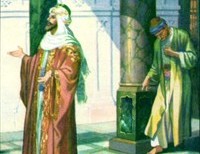
The juxtaposition is not so hard to understand. We no longer spend much effort in teaching our young the laws concerning proper respect for the American flag. His T-shirt is simply a declaration of his tribal loyalties. He doesn’t have to understand symbols or their sacredness (whether divine or secular) in order to parrot slogans or vote in elections. We can’t condemn him for his unintended profanity without condemning ourselves for letting such a situation come to pass.
When I saw it, I thought of the many people who openly wear crosses around their necks and T-shirts that say things like LORD’S GYM—HIS PAIN, YOUR GAIN. Do they all really live the gospel message? How many of them really let the awful, solemn mystery of Good Friday inform their lives and actions? How many of them, I wonder, wear their Christian bling only because one side of our culture wars has done a better job at co-opting Christian symbols than has the other?
(Another picture shows a tattoo on a man’s arm—the Confederate Stars and Bars wrapped around the cross, with the slogan STAND FOR THE FLAG—KNELL FOR THE CROSS. If you don’t get the Ku Klux Klan’s perversion of Christianity, you won’t get the ironic aptness of the misspelling of kneel.)
In a forthcoming Catholic Stand article, I discuss the use of Catholic traditions as rituals that not only help teach and carry on the faith but as markers that separate us from the rest of our culture. Borrowing a parable from G. K. Chesterton (“Chesterton’s fence”), I compared traditions to fences. We need those markers of separation, I contend, because we are not supposed to blend in with the rest of our culture. Rather, we are supposed to be “a city on a hill,” to “let our light shine before others” (Matthew 5:13-16).
You could say that the traditions allow us to wave our freak flag: “We’re here; we’re Catholic; get used to it.” In fact, I did.
But the intent of the traditions goes beyond the mere culture-war display of Catholic tribal loyalty. Let’s be real: The culture wars are not between Christianity and anti-Christianity, but rather between competing secular visions of Utopia. Both sides of the fight represent the end-stage metastasis of the Protestant Reformation and the falling of night on the European Enlightenment. To paraphrase Treebeard in J. R. R. Tolkien’s The Two Towers, we Catholics should be on neither side because neither party is truly on our side. In fact, we’re largely irrelevant.
Remember that the traditions help us teach and live the gospel message. That they also separate us from the outer culture is a necessary consequent but not their primary intent. Put differently, to protect our Catholic identity is a necessary condition for their reinstatement, but not a sufficient condition. If the only purpose of a given tradition, such as praying the Angelus at specific hours wherever we are, were to publicly display our Catholicism, it would be not only unnecessary but the kind of “piety for public consumption” Jesus decried in the Sermon on the Mount (cf. Matthew 6:1-6).
More important than the rituals by which we pass on the faith is the way in which we live the gospel message. We indict the present system as much by the way we show our love for others as we do by the way we resist evil. Consider, for example, the way people resent and disparage good people as “goody-goodies” or assume that their public restraint is a hypocritical front for private licentiousness. Loving your enemies and showing compassion towards your persecutors really ticks them off; if you had burning coals heaped on your head (cf. Romans 12:20), you might resent it, too.
Make no mistake: There is an enemy trying to destroy the Catholic Church in America, and it is as much within the Church as without. But it is not comprised within a single political party or ideology; the enemy lies within everyone who wants the Church to shut up, whether it be about sex or about free-market capitalism, whether it be about gender issues or about immigration. The enemy lies within every soul who simply wants the Church to validate their particular compromises with the world and who will not tolerate a gospel message that does not tolerate half-measures.
For the Church exists to preach the Evangelium. That is her main job. The Church is dogmatic about her dogma precisely because she teaches a specific gospel and only that gospel; she is intolerant of error because error as such has no right to credence. The Church is authoritarian about her teaching precisely because she has the Christ-given authority to teach it. Catholicism is a definite thing, which is to say there are teachings and practices that are not Catholic as well as those that are. It is what it is, and it ain’t what it ain’t.
So by all means, let’s have the old traditions. But let’s make sure we’re not sitting on the freak flag we’re supposed to be waving. Let us have our rituals, but let’s not turn them into virtue signals. Let us have our fences, not to keep ourselves inside or keep others out, but to mark off where inside ends and outside begins. Let’s teach and use the traditions properly so we can know and live the Catholic faith properly. For our goal is not to build a material “new Jerusalem” but to prepare ourselves for the new Jerusalem not made by human hands.
Anthony S. Layne is a former managing editor and contributing writer for Catholic Stand. A resident of Denton, Texas, he is a customer service representative for a major home lender and an officer of the parish Knights of Columbus council. Although he has no wife or children, he takes great pride in his fantastic nieces and nephews.
Twitter: @AnthonySLayne
Pinterest: Anthony S. Layne