Mercy from Divine Love

Familiarity With God's Word
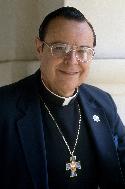

Photo By: Flickr/George Redgrave
After the first element we must have for God's word to abide in us, Hunger for God's Word, that we reviewed yesterday, the second power trigger, familiarity with Scripture, implies a kind of knowledge that is unsatisfied with a shallow inquiry. A superficial investigation into God's Word will not only lead to distorted conclusions, as Peter reminds us (2 Pt 3:16), but also will fall short of providing insights needed to release the problem-solving power of the Word.
Jesus specifically highlighted the coupling of Scripture knowledge with Scripture power when he fulminated in response to the Sadducees, "You do not know the Scriptures or the power of God" (Mt 22:29). When it comes to God's Word, ignorance is impotence.
This kind of familiarity with the Bible does not require us to be Scripture scholars. It simply presumes that we are involved in an ongoing investigation of its meaning by frequently delving into it with wholesome inquisitiveness. A love letter is not read casually but with intense interest; it is read repeatedly, each phrase pondered for deeper meanings and connotations that might give more intimate insights into the very person of the beloved. No less assiduousness should be employed to God's "love letter," for in it he reveals himself. St. Jerome, who gave us the Latin Vulgate translation of the Bible, said that "ignorance of God's Word is ignorance of the Word made flesh."
Unfortunately, many people remain ignorant of God's Word, treating it more with indifference than disrespect. Even many Christians who expect society to respect the Bible neglect it themselves. According to a Barna Research Group survey, although 93 percent of Americans own a Bible, half say they never read it—including 23 percent of those identifying themselves as born-again Christians! Why, if all unused Bibles were dusted off simultaneously, we'd probably suffer a major dust storm.
A dusty Bible is as disgraceful for a Christian as was a rusty sword for a samurai warrior in Japan's feudal days. Scripture is, in fact, a weapon of divine power against the enemy—“the sword of the Spirit," Paul calls it (Eph 6:17). "A chapter a day keeps Satan away," the saying goes. But a dusty Bible is a sword in the scabbard and no threat to the enemy.
To put a new twist on an old metaphor, a Bible in the hand is worth two on the shelf. More to the point is the old aphorism, "A Bible known is worth a dozen merely owned." But, as some clever wordsmith has phrased it, "The Bible offers no loaves for the loafers." And so, although neglectful or lazy Christians do not usually regard themselves as spiritual loafers, some do come to recognize that they are spiritually undernourished.
This realization comes late for certain people; they begin to delve into the "Good Book," as they like to call it, when they become aware that eternity is just around the corner, in the sunset years of life. (I'm reminded of the elderly man who, when asked by his grandson why he read the Bible so much, responded, "I'm cramming for finals.")
"Nobody ever outgrows Scripture," claimed the great preacher Charles Spurgeon. "The book widens and deepens with our years." "Ihe word of God will stand a thousand readings," adds James Hamilton, "and he who has gone over it most frequently is the surest of finding new wonders there."
Learned and unlearned alike can benefit from becoming familiar with God's love letter, for it is adaptable to each one's needs and talents. St. Gregory the Great suggested a unique metaphor: "Holy Scripture is a stream of running water," he said, "where an elephant may swim and a lamb may walk without losing its footing."
This excerpt is from the book The Art of Loving God by John H. Hampsch, C.M.F., originally published by Servant Publications, 1995. This and other of Fr. Hampsch's books and audio/visual materials can be purchased from Claretian Teaching Ministry, 20610 Manhattan Pl, #120, Torrance, CA 90501-1863. Phone 1-310-782-6408.
Recommended Stories
About the Author
The Rev. John H. Hampsch, C.M.F., ordained as a Catholic priest in 1952, is a member of the Claretian Missionaries, and is founder and director of the Claretian Teaching Ministry. Listed in Who’s Who in Religion in America, he has served as parish priest, seminary professor and rector, college professor, lecturer, magazine writer, newspaper columnist, editor, retreat master, hospital chaplain, prison chaplain, campus chaplain, Cursillo director and director of suicide prevention programs in Texas and California.
He earned degrees in philosophy from Loyola-Marymount University in Los Angeles and from Notre Dame University, with postgraduate work at the University of Southern California and the Dominican House of Studies in River Forest, Illinois, in ascetical and mystical theology.
Find his many books and audio/visual recordings at www.Catholicbooks.net