Witch Hunt. Fakes and Facts

A Present That May Change the Presentee's Future
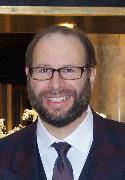

Photo By: FLickr/Christopher
Searching for last-minute Christmas presents your friends will like? So, what about a book?! "Great idea!“ I agree! Next point of interest: What kind of book should it be? Well, if your friends belong to the special community of (not yet or lapsing) Catholics, I may have some suggestions, i.e. (nearly) new books by practicing Catholics, who are also scientists, columnists, and much more. So, here we go – fasten your seatbelts!
To assist on addressing new atheists’ positions towards topics like God, Religion, Church among others, Patrick Madrid (author of the very interesting Pocket Guide to Catholic Apologetics [2006], and many other mainly apologetic books on Catholicism and Christianity) wrote, together with Kenneth Hensley, The Godless Delusion: A Catholic Challenge to Modern Atheism (2010), "a hard-hitting book, [that] helps Christians to wake up to the crisis of godlessness, alerting them to the imperative need to take seriously atheism’s challenge, while learning how to effectively engage in today’s atheistic debate“ (book editor’s quote).
But, does Catholic apology really have the strength to convince rational adults? Well, at least sometimes, as we can learn from eleven people mentioned in Atheist to Catholic: 11 Stories of Conversion (2011) by Rebecca V. Cherico. And from a twelfth person named Kevin Vost who wrote the story of his own conversion: From Atheism to Catholicism: How Scientists and Philosophers Led Me to the Truth (2010) – not as touching as usual reports of converts are, but it goes very deeply into the details of the historical argument on Christian belief. The book editor’s description is quite auspicious:
"God was dead to Kevin Vost for most of his adult life. Baptized, confirmed, and raised Catholic, at age 17 Vost left it all behind as he immersed himself in atheism for a period that lasted over two decades. Paralleling a successful career as a psychologist and professor, Vost allowed his clinical perspective to drive his faith perspective as well, falling into a common trap for many Catholics. This timely book’s unique approach includes the good elements in the thinking of several famous atheists. But then from experience and logic, he shows how each of these authors falls short of the mark. Vost also opens the door to the philosophers and psychologists whose work, implicitly or explicitly, have paved the way toward belief in God and even in Jesus Christ. And finally, from the perspective of a clinical psychologist, Vost unveils how theologians, popes, and Catholic philosophers persuaded him to abandon his atheism and embrace faith in Christ and the Church.“ Promising, indeed!
For those considering leaving the Church and/or their Catholic belief, Michael Leach’s Why Stay Catholic? Unexpected Answers to a Life-Changing Question (2011) may be helpful, according to the book editor, it is "an uplifting book about what’s right in the Catholic Church today, and why tomorrow offers such hope and promise“.
Regarding the interconfessional dialogue (that is: the debate or argument on the right way to celebrate faith within Christianity), Devin Rose provides us with some ideas how to deal with non-Catholic Christian belief, i.e. Protestantism, lancing the (rhetoric) question: "What if Protestantism were true?“ By reading If Protestantism is True: The Reformation Meets Rome (2011) "Catholics will learn to defend their faith, and Protestants will be challenged to answer the toughest questions about the roots of their beliefs“ (quote from the book editor).
And last, but not least, is the ultimate contribution by Michael Coren: Why Catholics Are Right (2011), "A practicing Catholic defends the faith and offers a passionate response to current anti-Catholic opinion.“ (quote from the book editor).
Please let me know if you have any further questions or need for additional book recommendations.
Merry Christmas!
Recommended Stories
About the Author
Josef Bordat, who was born in 1972 and lives in Berlin, began his academic career in Industrial Engineering (DI, 2000) and Philosophy (MA, 2004). He took his PhD in Philosophy (Dr. phil., 2006) at the Technical University of Berlin. He has lectured in Berlin and in Arequipa, Peru. He is published in different areas of philosophical and sociological research, especially on Bartolomé de Las Casas, Ethics, Globalisation, Human Rights and International Public Law. In his Weblog Jobo72 he publishes frequently different kinds of articles (Essays, Reviews, Reports, Satires, Poems) on several topics (Religion, Christianity, Ethics, Theology, Politics, Football, Catholic Church). Josef Bordat is Catholic, Pro Life, married and deeply engaged in Social Media
My blog: https://jobo72.wordpress.com/
English articles in my blog: https://jobo72.wordpress.com/category/articles-in-english/
My Facebook: https://www.facebook.com/josef.bordat
The blog's Facebook: https://www.facebook.com/joboistjobo72
My Twitter: https://twitter.com/JosefBordat
More Stories By :