Climate Change. An Issue for Catholics

Witch Hunt. Fakes and Facts
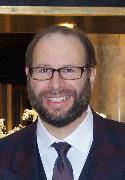

Photo By: Flickr/Watson Lau - THE CRUCIBLE_MG_2260
“For centuries, the church has persecuted and burned millions of wise women as witches!”
One of the classics concerning anticlerical stereotypes is the so-called “witch hunt”, that the Church supposedly operated in the “Middle Ages” against allegedly “wise women” and with “millions of victims”. It is time to bring into discussion newer research results, which stand in sharp contrast to this opinion, in order to make them finding their way into the common knowledge about the topic.
First, a preliminary remark on gender justice: The victims of the “witch hunt” were in fact indeed in majority women, especially in Germany, but in other parts of Northern Europe the gender ratio was numerically at least balanced; in some regions men (i.e. “wizards”) were in the majority: in Iceland 90 percent and in Estonia 60 percent of the victims were men.
What happened to them, once “identified” as “witches” or “wizards”? Women and men who allegedly possessed the capacity for “black magic”, were handed over to secular courts, which then passed a verdict, in 90 percent of all cases judging the poor individual “guilty”. There was no trial in our contemporary sense of law, confessions (and denunciations) were often pressed out by torture. As cruel as it was, it is as true that the Roman Catholic Church had hardly any part in it.
Catholic theology has characterized the popular belief in witchcraft and sorcery as aberrations and superstitions. Already in the 10th century, the “Canon episcopi” disapproved the belief in witchcraft as a demonic inspired imagination. The role of the Inquisition is often misjudged in this context. Only in some witch trials was the Inquisition involved. For the victim this was fortune in misfortune, because the Inquisition took the cases more seriously and the investigation was open according to the result, the acquittal rate for those processes was around 98 percent. Further more, the prison conditions in church prisons were significantly better than in those of the secular power.
In Catholic Spain, there was no witch hunt – because of the Inquisition; just in the year in which Martin Luther gave his “witch sermon” (1526), the (state) Spanish Inquisition condemned the belief in witches and thereby prevented the witch-hunt in their area of responsibility. In Italy, the (ecclesiastical) Holy Inquisition made sure that almost no “witch” and no “wizards” were burned. In Rome – the alleged center of horror – only a few witches and wizards were burned, for the last time in 1572, just in the year in which in Protestant Saxony, the legal basis, was created to start the persecution: the “Kursächsische Konstitutionen”.
The “witch-hammer” (Malleus Maleficarum, 1487), written by the multiple incriminated Dominican Heinrich Kramer (Institoris), often referred to “proof” the responsibility of the Catholic Church, was indeed a “witch hunt-manual” in practice, with a total circulation of 10,000 copies until 1520, but this book was neither commissioned by the Church nor authorized in any way after its dissemination. Kramer referred to the bull “Summis desiderantes affectibus” (1484) by Pope Innocent VIII and to an opinion of the Cologne theological faculty. He manipulated both writings so much that they could give his project the necessary authority. He gave the false impression that the Church was behind him. The so-called “witch bull” “Summis desiderantes affectibus”, however, contained only the request to seriously examine suspects and to correct, arrest and punish them – but not to kill them. In practice, this has reduced the persecution rather than promoted it. According to ecclesiastical law, this “witch bull" has never gained any importance. Until the reform of Canonic Law in 1917, the relevant document in the “Corpus Iuris Canonici” was the mentioned “Canon episcopi”; “Summis desiderantes affectibus”, however, does not appear in any glossary.
The most massive witch hunt in Europe took part not in the “Middle Ages”, but in Early Modernity (1430-1780), especially during the Thirty Years' War (1618-1648). The witch hunt took place mainly in Central and Northern Europe, which indicates that it was essentially a matter for Protestants, not Catholics. According to the current state of research, there were a total amount of about 40,000 to 50,000 victims (Brady), or about 50,000 (Henningsen), with a minimum of 30,000 (Behringer) and a maximum of 60,000 (Levack) – and not “millions”!
Look for more on this topic snd others in my new book “Von Ablaßhandel bis Zölibat. Das ,Sündenregister’ der Katholischen Kirche” edited by Lepanto, launched on November 27th.
Sources and Literature Review
Arnold Angenendt: Toleranz und Gewalt. Das Christentum zwischen Bibel und Schwert. Münster 2012.
Wolfgang Behringer: Hexen. Glaube, Verfolgung, Vermarktung. München 1998 [1].
Wolfgang Behringer: Neun Millionen Hexen. Entstehung, Tradition und Kritik eines populären Mythos, in: Geschichte in Wissenschaft und Unterricht 49 (1998 [2]), S. 664-685.
Wolfgang Behringer / Günter Jerouschek: „Das unheilvollste Buch der Weltliteratur“? Zur Entstehungs- und Wirkungsgeschichte des Malleus Maleficarum und zu den Anfängen der Hexenverfolgung, in: Heinrich Kramer (Institoris): Der Hexenhammer. Malleus Maleficarum. München 2001.
Thomas A. Brady: Settlements: The Holy Roman Empire, in: Thomas A. Brady / Heiko A. Oberman / James D. Tracy (Hg.): Handbook of European History, 1400-1600. Late Middle Ages, Renaissance and Reformation. Leiden 1995, Band II, S. 349-385.
Gustav Henningsen: La inquisición y las brujas, in: Agostino Borromeo (Hg.): L‘inquisizione. Atti del Simposio internazionale (Città del Vaticano, 29-31 ottobre 1998). Vatikan 2003, S. 567-605.
Brian P. Levack: The Witch-Hunt in Early Modern Europe. London / New York 1987 (deutsch: Hexenjagd. Die Geschichte der Hexenverfolgungen in Europa. München 1995).
Wolfgang Behringer: Hexen und Hexenprozesse in Deutschland. München 2000.
Recommended Stories
About the Author
Josef Bordat, who was born in 1972 and lives in Berlin, began his academic career in Industrial Engineering (DI, 2000) and Philosophy (MA, 2004). He took his PhD in Philosophy (Dr. phil., 2006) at the Technical University of Berlin. He has lectured in Berlin and in Arequipa, Peru. He is published in different areas of philosophical and sociological research, especially on Bartolomé de Las Casas, Ethics, Globalisation, Human Rights and International Public Law. In his Weblog Jobo72 he publishes frequently different kinds of articles (Essays, Reviews, Reports, Satires, Poems) on several topics (Religion, Christianity, Ethics, Theology, Politics, Football, Catholic Church). Josef Bordat is Catholic, Pro Life, married and deeply engaged in Social Media
My blog: https://jobo72.wordpress.com/
English articles in my blog: https://jobo72.wordpress.com/category/articles-in-english/
My Facebook: https://www.facebook.com/josef.bordat
The blog's Facebook: https://www.facebook.com/joboistjobo72
My Twitter: https://twitter.com/JosefBordat
More Stories By :