Finding Unity in a Fractured World

Social Justice: Real and Imagined


Photo By: Flickr/varykno
Social justice has been a topic and an important element in the cultural conversation for our nation and western civilization, in general, for the last many decades.
Starting in the 19th century, through the 20th and into the early part of this 21st century, social justice has stood for the push for legal equality and social equity. In all cases, there was a religious value underpinning the work. We’ve had women’s suffrage, temperance, unionization, child labor laws, and civil rights during this timeframe.
Still, the fact of the matter is that not all social justice is the equal.
In the 1960s, postmodern philosophy, which began in the 1870s in art, running through architecture at the turn-of-the-century, then through literature and poetry, finally make its way into the politics and the social action of the times.
Postmodernism is primarily a reaction to the Enlightenment, its purpose is steeped in skepticism and questions our metanarratives, those grand categories, like religion, science, and race, that make up our culture.
Postmodernism is never optimistic, and its real goal is to undermine our society and its foundations. The main principles of this philosophy are: relativism, secularization, deliberate irrationality, subjective emotionalism, reductionism, and narcissism.
Due to several of these principles, secularization primarily among them, postmodernism is part has effectively perverted the nature of the social justice dynamic, from one with a religious underpinning with a push for legal equality and social equity -- all people being created equal in the eyes of God -- to a patently secular radical egalitarianism that reduces the needs of the individual to a corporate political ideology.
Consider the kinds of questions that were asked by social justice warriors just a scant two decades ago:
- How many people in the world live on just two dollars a day?
- Which country in the world incarcerates the most people?
The answers to each of these questions were directed squarely at the United States and important clarifying questions, like, “why a dollar a day and not the yen?” were ignored.
In the last decade, social justice questions remained as political as the earlier ones, but some critical questions have come into the canon:
- What is oppression and what are the root causes?
- How are prejudice and bias created? How do we overcome them?
Both of these questions are still asked within the context of the United States racial issue. Because these kinds of questions remain political, they tend to divide people along political.
Secular social justice is merely political so it can’t be the proverbial “real deal.” It has no objective substance.
When we turn to Roman Catholic Church social doctrine, we witness a whole different imagery and a social justice based on objective truth, as opposed to secular and arbitrary politics. Of course, the objective truth is bound up in Christian theology, but is based upon the notion that human beings were created by God, "in his image," or imago Dei (Gen 1:27) .
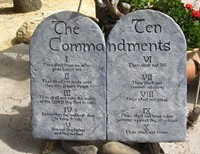
This truth, combined with the 10 Commandments and Jesus’s Second Greatest Commandment to "love one another as I have loved you" (John 13:34) turns social justice on its ear, as they say.
Political questions become irrelevant and social issues thus become the purview of the Church's social doctrine and its five principles:
1. The Common Good – the good of all people, regardless of their place on the earth, their politics or their economic status;
2. The Universal Destination of Goods – all the goods of the earth are created by God for the use of all creation, among which, the imago Dei is primary.
3. Subsidiarity – charity begins at home, decisions of justice are made at the level closest to the imago Dei. Centralized government needs to limit its interference;
4. Solidarity – as all of us are imago Dei and equally loved by God, we should turn our hearts and works to our brothers and sisters and have a charitable preference for the poor;
5. Participation – each of us bears the particular dignity of the imago Dei, we are called to work with the building up of the kingdom.
These principles are intended to change our hearts and minds, to seek to do God's will and disregard the often arbitrary and misguided politics the trap and keep us from one another.
Never care how many people around the world live on two dollars a day (now a $1.25 adjusted for inflation), simply know other members of God's human family are in need and then do something about it. Make it real social justice.
Remember, the more time spent asking rhetorical political questions, the less time there is to help, and to do, and to live the kingdom of God.
Recommended Stories
About the Author
I received my BA in English in 1976, and my MFA in Creative Writing in 1996, from Arizona State University. I teach creative writing at Rio Salado College and I have taught at both the University of Phoenix and Chandler-Gilbert Community College. I am also the literary critic for the local Catholic newspaper. Currently, I am the author of 18 books covering an array of subjects from poetry, psychology, religion, fiction, and the process of writing. I co-authored three of these books, and have a new book out. I was the administrator of an international prize in poetry.
I am a life-professed Lay Dominican and two of my books were on the Order of Preachers.
I retired in 2006 from the telecommunications industry after 28 years with Qwest Communications and have extensive, award-winning experience in business and creative writing, and received a national award in journalism from the AFL-CIO.
I enjoy amateur astronomy, woodworking, contemplating quantum mechanics. I am an avid shooter, photographer, a concrete sculptor, and am a voracious reader. I recently bought a motorcycle and tried to learn how to surf.
My writing website is: http://bobcurtis.webs.com/