The Substance of God's Plan Part 3

My Reversion
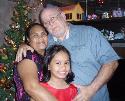

Photo By: Flickr/Chris Yunker- Vatican City
If one digs way, way back in the archive of my articles here on this site the first four articles that you’ll find from a couple years ago now tell the story of my journey from cradle Catholic to Semi-Agnostic, to Evangelical Christian, and finally home to the Church. However, since my archive contains between 70 and 80 articles, that is a bit of a task for anyone. The need arises many times in my conversations with non-Catholics, and perhaps some who believe that they are ex-Catholics (a discussion for another time), to not only share my experience but to also expand upon it a bit.
In one of my recent encounters with a non-Catholic, after giving him some of my background and education, I said, “I tell you these things not to boast or brag but simply to tell you that I have been where you are. I vowed I would never return to the Catholic Church. Do you know what changed my mind? The power of the Holy Spirit through FACTS.” It’s these facts that will be the “lion’s share” of what I will discuss here.
My Background
I was born into a Catholic family, baptized, received my First Communion and attended Catholic School K-6 grades. I am what we call a "cradle Catholic". Later, as I went to high school, I slowly drifted away from the Church, and then as a young adult, I became an Evangelical Christian. I was one for 45 years and most of that time was in active ministry. I have been a preacher, teacher, pastor, evangelist and Apologetics writer. I hold a Baccalaureate degree in biblical studies.
As I said, I spent nearly four decades in Evangelical Christian ministry, and the largest part of that was in the field of Apologetics… the science of “what we believe and why we believe it”. Because of my education and experience, I became, for lack of a better word, a biblical scholar. I know Greek and (to a lesser extent) Hebrew and have multiple translations of the Scriptures, as well as the manuscripts used to produce the majority of those translations (Erasmus’ Textus Receptus and the Wescott-Hort). In addition, I also have various “tools of the trade”, so to speak, such as Strong’s Exhaustive Concordance of Scriptural Greek and Hebrew.
My training as an Apologist tells me that to get a true picture, we need to get as close as possible to the original. For example, we don’t have the original manuscripts for any Books of the New Testament… those texts we call the “autographa” written by the hand of the Apostles and other authors themselves. But, we have copies that date back to within 50 years of the Apostles. and by comparing different manuscripts to one another, we get an accurate picture. That’s why you’ll see things like “produced from more reliable manuscripts” in the advertising for modern translations. Archaeology uncovers more and more manuscript evidence all the time. There are manuscripts that were not available to Erasmus that are to the newer translation committees.
It’s my love of the Scriptures and study of them that has caused me, many times, to move further and further afield from mainline Evangelical theology on subjects such as Baptism, Soteriology (salvation theology) and other tenets of their generally held and accepted teachings. As it turns out, unknown to me at the time, each move brought me closer and closer to Home. It’s here that we’ll look at some of the facts I mentioned to the person I chatted with.
Facts #1: The Evidence of Scripture
“The facts of Scripture not read through the glasses of others’ theologies.” as I told the person. One of the contradictions of being a proponent of Sola Scriptura is that you have to either disregard or “interpret” the words of Jesus Christ, as well as the teaching and writing of the Apostles and the other New Testament authors. This is required, because to not do so flies in the face of the various theologies taught to them by whatever denomination, movement or group to which they belong. When one is willing to accept the Scripture without those blinders, a different picture emerges.
For me it was a gradual process that grew out of my continued study of the Bible. One of the first places that I diverged from mainline Protestant theology was in the area of Baptism. In most Evangelical Christian teaching, baptism is an ordinance… and an optional one at that. It’s nice if you do it, but doesn’t matter to your eternal destiny if you don’t. The clear teaching of Scripture presents an exact opposite view. Two of the Gospel writers, Saint Matthew and Saint Mark, both report the clear command to baptize as part either “preaching the gospel to every creature” or as “making disciples of all men”. The Lord is recorded, in fact ,in Mark 16:16 as saying that “Whoever believes AND is baptized will be saved”. Saint Peter specifically says that Baptism is required in 1 Peter 3:21 and in this he agrees with what Saint Paul said in Romans 6. The history of the early Church recorded in Acts shows Baptism as a consistent result of hearing and believing the gospel. Only through higher allegiance to man-made teachings than to the inspired Scripture could we possibly conclude that “baptism is an optional ordinance”. Although I didn’t realize it at the time, this was one of my first steps home.
The next area where Scripture leads one away from Evangelical Christianity is in the teaching on Communion. In Protestant circles, the majority hold that Communion is the second “ordinance” established by the Lord. In their theology, the bread and wine merely represent the Body and Blood of the Lord Jesus. Communion has no real significance, other than being a lovely “memorial” that is completely optional.
But the Scriptures paint a whole different picture of Communion. The Lord said in John 6 that unless we eat His Flesh and drink His Blood we have no life in us and we will not be raised up in the First Resurrection (see Revelation 20). He made it abundantly clear in all Gospel accounts of the Last Supper that the bread and wine do not “represent” His Body and Blood, but ARE His Body and Blood. This was one more step on the road home.
Finally, Scripture makes it abundantly clear that the Lord established a Church, empowered one man (Saint Peter) to lead it and gave to the Apostles and those who came after them the power to forgive sins, as well as binding and loosing on earth. One cannot read Matthew 16:18 without the fun house mirror of Protestant theology, and possibly conclude otherwise. The same is true of John 20:21-23.
All of this evidence examined honestly and without bias could not lead anyone who loves and respects the Scriptures anywhere but to the Catholic Church.
Facts #2: The Evidence of History
It has been said that one cannot be a true student of history and remain an Evangelical Christian/Protestant. The continuity of Catholic teaching from the Apostles to their disciples (men such as Polycarp, for example, who was a disciple of Saint John), through the Church Councils that produced many things that my correspondent already agreed with... such as the Apostles' Creed and even the Canon of Scripture (for the most part, of course) is abundantly apparent.
It’s rather odd to believe that those who led the Church after the deaths of the Apostles were evil and corrupt men who led the Church into paganism, yet accept those works produced by their hands. The Doctrine of the Trinity is a good example of this. If it were not for the Ante-Nicene Church Fathers we would not even have that doctrine… which is held within Evangelical Christianity to be one of the delineations between “the kingdom of Christ and the kingdom of the cults”. Nowhere in Scripture do the words “The Trinity” appear, nor is it stated in plain language… rather it is inferred there.
In addition, a study of the writing of these Ante-Nicene Fathers, as well as other documents of their era (especially the period immediately after the Apostles), shows how quickly what we today identify as the Catholic Church emerges. The Eucharist is clearly taught, as is the hierarchy of the Church, the preeminence of Rome as the center of Church life, and in fact the very word “Catholic Church” all appeared as early as 150 AD… in fact, the last one in 107 AD.
No, the Church was not led down the path of paganism and idolatry by these men. They protected, preserved and handed down what they had received against error and corruption from men who produced heresies that today you would recognize as Jehovah's Witness. Mormonism and Oneness Pentecostalism.
Holding What is Good
Saint Paul tells us: “Prove all things; hold fast that which is good.” (1 Thessalonians 5:21). “Proving” means to examine all the evidence to arrive at “that which is good”. In examining the facts of Scripture and of History in an honest and forthright manner, one cannot be led anywhere but home to the only Church established by the Lord Jesus Christ… the only Church that honors and obeys ALL that He taught and to which the Apostles, as well as those who followed them, bore witness. Mine was a reversion not based upon emotion, but rather it was based upon evidence and facts. An honest, unbiased person can do no less.
Recommended Stories
About the Author
I was a Cradle Catholic from the time that I was born through my teen years. I slowly moved away from the Church and as a young adult I became an Evangelical Christian. I spent nearly 40 years in various types of ministry as a teacher, preacher, pastor or evangelist. But my main area of expertise was Apologetics…what we believe and why we believe it. I am a graduate of Central Christian College of the Bible in Moberly, MO with a Bachelor of Science in Biblical Studies. In November of 2014 I retired to the Philippines, where my wife Rose is from. We live in the mountains of Negros Oriental in the small town of Canlaon City with our many brothers and sisters, nephews and nieces (to whom I am “Daddy Mike”).
Nine years ago I reverted to the Catholic Church. I have try to write articles which inform, instruct and equip our Catholic brothers and sisters while avoiding using jargon. I have also sought to defend the Faith with our several Protestant visitors in as kind a way as possible
My archive here, which now contains nearly 80 articles, is located at http://www.catholic365.com/author/mike-bugal/
I may also be contacted via email at mbugal@yahoo.com