The Face of Mercy to Those in Misery Part #3

The Face of Mercy to Those in Misery

Bridges: The Face of Mercy to Those in Misery
Part 1 of a Four Part Series
At a recent retreat my wife and I were conducting, I placed a large box before the group and told participants that we had been storing up all kinds of graces and merits from the Jubilee Year of Mercy and saving them in the box for them. They could store the box anywhere. They could take out what graces they wanted when they wanted. Absurd? They got the point: we can’t put God or what He does in a box. But this is what most of us do. It’s easier to deal with categories and neat little boxes than actual people and situations. So we label people, things, and God, and put them in boxes, shelf them, and pull them out when it is convenient. We must guard against this kind of mentality and fight the temptation to hide behind our indifference and individualism in order to lead comfortable lives. Our Holy Father has encouraged us not to turn our backs on others but to build bridges of mercy. He reminds us that mercy is meant for everyone.
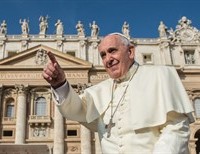
The Pope’s Apostolic Letter, “Misericordia et misera,” “Mercy and Misery,” was written to conclude the Holy Year that ended on the Feast of Christ the King. In this letter, he seeks to answer the question: What is the path we are to follow after the year of mercy? He begins the letter with Jesus meeting the woman taken in adultery (Jn. 8:1-11) and beautifully weaves the truth that the misery of sin is to be clothed with the mercy of love (#1b). He states that “Mercy cannot become a mere parenthesis in the life of the Church.” (#1a)
Being clothed in mercy makes it possible to look to the future with hope. He says that the “experience of mercy brings joy” (#3b) and that “we need witnesses of hope and true joy” (#3c). We are to be “instruments of mercy.” This witness of hope runs throughout his letter as he exhorts us to become “visible and tangible” signs of mercy in specific and powerful acts.
Throughout the Year of Mercy, Pope Francis talked about mercy as “the ultimate and supreme act by which God comes to meet man.” He has repeated that mercy is the “bridge that connects God and man.” It is also a bridge between peoples and cultures. In reading the Pope’s Apostolic Letter I have found at least 12 bridges that can help us to take mercy forward in visible and tangibles acts. We will look at the first three bridges in this article.
1) God’s love gives hope. God’s love is to take primacy over all else. The misery of sin is to be clothed with the mercy of love. This helps us to look to the future with hope and to make a new start in life. #1
2) The embrace of forgiveness. Forgiveness is the most visible sign of love, an unconditional and unmerited act of mercy. It transforms and changes our lives. It makes the divine mystery of mercy manifest. It helps us to live in charity and gives us the ministry of reconciliation. #2, 8, 11
3) Instruments of Mercy. The fruit of mercy is joy. This joy is to remain rooted in our hearts and to rise up within us giving a witness to a hope of a new life. #3
If mercy is to be a bridge that connects, then love, forgiveness, and being instruments of mercy are key bridges in understanding and experiencing mercy. How we can strengthen these first three foundational bridges of mercy will be the focus of our next article.
In theology and Church writings, citing paragraph or section number of a work is regular practice. For example the (#3) at the end of one of my sentences means the third section of the document is quoted or referred to. Most sections within a document have paragraphs that are not numbered, but referred to with a letter, although no letter is found in the document. Thus (#1b) would be section #1, second paragraph (b).
Recommended Stories
About the Author
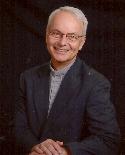
Deacon Michael Knuth was ordained a permanent deacon for the Diocese of Duluth, Minnesota in 1991. He has served the Church for the last 40 plus years in various educational roles as a volunteer catechist, a Director of Religious Education for two parishes (13 years), Director of the Office of Word for the diocese (1 year), and Diocesan Vocation Director (16 years).
He is a certified spiritual director having received his certificate from the Cenacle of Divine Providence’s School of Spiritual Direction in Clearwater, Florida. Deacon Mike has taught at all levels from cradle to grave; enjoying adult education, RCIA, and the formation classes for the permanent diaconate program of his diocese. He has conducted numerous seminars, in-services, workshops, and retreats.
He is currently doing spiritual direction, working with his wife caring for his elderly mother with Alzheimer’s, and writing a number of short stories and articles to be published. He is currently living in Pequot Lakes, Minnesota with his wife of 41 years. They have five adult children, two daughters who are consecrated, a son and two daughters who are married and providing them grandchildren.