The Greatest of These

US Policy And The Corporal Works Of Mercy

Photo By: Flickr/Z!SL
The Corporal Works of Mercy are found in the TEACHINGS OF JESUS (emphasis mine) and give us a model for how we should treat all others, as if they were Christ in disguise." (United States Conference of Catholic Bishops) (USCCB)
Jesus very strongly commands us to enact these works of mercy in Mt 25: 31-46, in which He speaks of The Judgement Day. He tells us that he will separate us into two groups, the sheep and the goats. The sheep will be allowed to remain with Him in eternity; the goats will be expelled from his presence. And what makes a person a sheep or a goat? To paraphrase Jesus, the sheep practiced the Works of Mercy, the goats did not. This is the sole criterion Jesus says by which we are to be judged.
The command to practice most of these works of mercy can be found in the Old Testament also: in Isaiah 58 and in the book of Tobit.
The Corporal Works of Mercy are "charitable actions by which we help our neighbors in their bodily needs." (United States Catholic Catechism for Adults)
What are these works? To refresh our memories, let me list them here:
1. Feed the hungry
2. Give drink to the thirsty
3. Shelter the homeless
4. Visit the sick
5. Visit prisoners
6. Bury the dead
7. Give alms to the poor
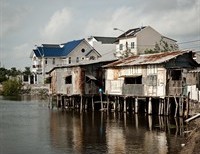
Today, I'm especially writing about the Third Corporal Work, sheltering the homeless. "Christ encourages us to go out and meet those without homes, affirming their worth, and helping them seek a resolution to the challenge they face." (USCCB)
Moral theologians say that not only are we, as individuals, held accountable for our sins, but nations are also held to such accountability. Consider the punishments of Sodom and Gomorrah, the fall of Jerusalem, the Great Flood. Even the story of the Tower of Babel. These were punishments for societal transgressions, not just personal sins.
Currently many countries of the world are having to deal with thousands of refugees trying to escape from war, violence and persecution inflicted upon them by their own countries. As I write this, our government is trying to forbid the entry of many of these refugees seeking respite and shelter. The government says this is just a temporary ban, but how many innocent oppressed people might die while waiting to be allowed entry? There already is a stringent vetting process in place, so why the need to shut the door to the "tired, the poor and those huddled masses?" (Emma Lazarus, "The New Colossus.")
In the 1980 encyclical, "Dives in Misericordia" Pope John Paul II says: "Jesus Christ taught that man not only receives and experiences the mercy of God, but that he is also called to practice mercy."
It is our individual duty, and the duty of our nation, to practice the Corporal Works of Mercy.
Recommended Stories
About the Author
I live in Lubbock, Texas and have been married for 47 years and counting. We have 5 children, 6 grandchildren, 1 great-grandchild, and 1 due soon. I served 4 years in the Air Force as a Medical Service Specialist during the Vietnam conflict and served 14 months at USAF Hospital, Clark AFB, Phillipines, taking care of Marines and Republic of Korea soldiers who were wounded in Vietnam. I completed undergraduate studies at University of Houston and obtained a Bachelor's Degree from Midwestern State University, graduated cum laude. Following that, I did post-graduate studies at Texas Tech University and Loyola Institute of Ministry,Extension Program. i am a Retired Educator,and have taught History and English at the secondary level. I am also a Retired Permanent Deacon, and for several years I wrote a Q&A column for a diocesan newspaper about the Catholic faith. In addition, I taught Church History for a diocesan Diaconate Formation Program and was director of the RCIA program in my parish for several years.
More Stories By :