Resist--then Accept the Will of God
Sponsored

Catholic365 is sponsored by
Catholic365 Christmas Gift Guide




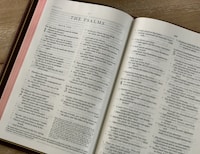
Blessed is the man who has not walked in the counsel of the ungodly, and has not stood in the way of sinners, and has not sat in the seat of evil men.
Happiness comes from acting according to God’s will. This simple truth is so obvious and necessary, it should so drive all human actions and thoughts, that the alternative should appear nonsensical. And yet the alternative is what drives humans forward in time, confronting the everyday with their own actions, their own will, contrary to God’s will, God’s law. What is more, not only do humans refuse to accommodate God’s will, but they find the activities of the ungodly more appealing than the godly, and act according to their own whims and vices.
St. Augustine’s City of God is an extensive commentary on the first verse of Psalm 1, not purposefully, rather by examining the ancient Romans and their vices and frivolities compared to what Christians believe and how they sometimes act, he provides a manual for how misery is the way of the City of Man, and happiness is the way of the City of God. The Romans were one of the highest expressions of the City of Man in terms of their culture, their power, their historical significance; and yet their disgusting sexual habits, their devotion to cruelty, their many wars and the destruction of so many lives, makes one realize, as Augustine argues, that their entire culture went counter to the will of God—hence the destruction of Roman Empire.
Historians have long debated the causes of the Fall of Rome, arguing that demographic, or economic, or social, or political, or cultural forces caused Rome’s fall, when St. Augustine, who was living through it, provides the best description of the fall of Rome, far surpassing Edward Gibbon’s grand treatise, The Decline and Fall of the Roman Empire. Most historians like Gibbon are secular, rarely discussing religion except as a cultural attribute to analyze, and few recognize what Augustine recognized, that God’s will is always present, now and then, and we see it during the Roman Empire. Augustine provides example after example of the will of God in the many disasters that befell Rome. God’s providence is continual and constant in human affairs. God’s will is inscrutable in human affairs. Yet what the New Testament proclaims for humans, echoing what the Psalmist had written over and over, is that humans must subordinate their will to God’s will to achieve happiness in this life and the life to come.
Humans are cursed with the ability to choose. They are cursed with apparent free will. They have convinced themselves that they can order their lives, control their destinies, make choices without (or ignoring the) consequences, tempt fate in so many ways, and live almost as gods. When it all comes crashing down, they are shocked, surprised, horrified, feel ill-used, curse God, fate, or the heavens, all the while taking no responsibility for what they themselves contrived.
But his pleasure is in the law of the Lord; and in His law will he meditate day and night.
God’s law, God’s word, comes in so many forms, it is impossible, as Paul said in his Epistle to the Romans, to be unaware, or pretend unawareness, of God’s Creation, God’s actions throughout time in human and natural experience. Nature is filled with the writing of God. Human history is a narrative of God’s will. Each life, human as well as others, are contrived by, designed by, God, and it takes very little thought, from humans who are otherwise so reflective and ruminating, to see the hand of God in each day of our existence.
God’s law is natural law, it is the law of the heart and soul, and we scarcely need to be told what is obvious in our deepest intuitions. As Richard Hooker, the Anglican theologian, wrote: “nature teaches men to judge good from evil, as well in laws as in other things” by “the force of their own discretion.” It follows then that “whatsoever we do, if our own secret judgment consent not unto it as fit and good to be done, the doing of it to us is sin, although the thing itself be allowable.”
Hooker said further respecting the laws of God and humans, that God is a law unto Himself, in that He is both the Author of Law and the Doer of Law, both equally in perfection. Human natural and civil laws are learned from nature, learned from God, not original to humans, who perceive disorder and chaos because we are ignorant of God's true purposes and His eternal laws: all things work according to His will, which is good and perfect.
It follows that all things yearn for what is more perfect, all things therefore yearn for Goodness, and by this yearning, all things are good. All things therefore yearn for God.
And he shall be as a tree planted by the brooks of waters, which shall yield its fruit in its season, and its leaf shall not fall off; and whatsoever he shall do shall be prospered.
Jesus implies this when he says that the father cares for the sparrows, little insignificant creatures, at least according to humans, but according to God because they naturally accommodate His will, He cares for them as he would even greater creatures, the apparent chosen, humans.
Other living creatures are not like humans. Other creatures live according to God’s will and law. Their choices are restricted to nature’s mandates. They eat, sleep, hunt, live, and die, according to what God has willed. They don’t contrive self-devised opposites, of living in an unnatural way, staving off death as long as possible, eating more than what nature mandates, seeking to break from nature by creating as artificial an existence as possible, penetrating into the secrets of nature to try to alter it according to human whim and convenience.
Prosperity comes from echoing the will and Word of God. Prosperity is not according to the typical human interpretation, that of wealth and long life; prosperity is the contentment consequent of according one’s actions to the will of God.
Not so the ungodly; - not so: but rather as the chaff which the wind scatters away from the face of the earth.
Jesus, who often referred to the Psalms, indirectly explained the meaning of this verse when he told Nicodemus (John 3:8), The spirit blows where it wishes, and the sound of it thou hearest, but thou knowest not whence it comes and whither it goes; so is everyone having been born of the spirit. The wind vanquishes the chaff without warning, taking it here and there—really, nowhere, lost and confused, directionless, aimless, for the human will is like the wind, blowing and blustering about, misdirected in purpose, uncertain of what is. Chaff is waste material, nestling along with dirt and mud, filling in the crags of rocks, taken away in rainwater to the stream and rivers to the ocean, where it is indistinguishable from all other dead, material objects. Those born of the spirit, meaning those who are aware of the presence of God, waiting and meditating upon God’s will for their lives, are caught up in the Holy Spirit and willingly allow It to take us where It will.
Therefore the ungodly shall not rise in judgment, nor sinners in the counsel of the just.
God’s judgment of each person’s life, whether it be Heaven or Hell, Purgatory or a Second Death, immediate transition to a wholly new experience or the sleep of death until the judgment, is for the sinner a restless sleep, a torturous life awaiting a Second Death or experiencing the purifying power of Purgatory, of the blessedness of life with God, or eternal death. Those who deny God are denied in turn. Those who try to supplant God’s power with their own are lost in weakness, powerlessness, ignorance, unlike the Just, those who have meditated upon God’s will, accept it, therefore enjoying the blessings of God in this life and that of the one to come.
For the Lord knows the way of the righteous; but the way of the ungodly shall perish.
As Hooker wrote, “the general and perpetual voice of men is as the sentence of God himself. For that which all men have at all times learned, Nature herself must needs have taught; and God being the author of Nature, her voice is but his instrument. By her from Him we receive whatsoever in such sort we learn.”
By listening to the voice of reason and the authority of teaching over time we know the Good and are able to withstand the temptations inherent in the passing moments of fads and whims.
(Source: The Septuagint, trans, Lancelot Brenton)
(If you are interested in my writing, please consult my author page at Amazon: https://www.amazon.com/stores/author/B001H6IKNA?ccs_id=9b4a5fa0-d266-4fc5-abe9-79eab4aa02a5; you can also find my books at https://ash-hill-publishing.square.site/shop/books/ORJM7VPEMU7MBNCSUSPLX32X)