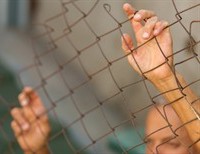
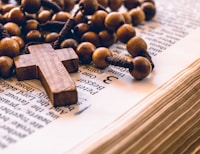
Diocese of Syracuse to Hold Healing Mass For Sexual Abuse Victims
Sponsored

Catholic365 is sponsored by
Road to Purity


On the feast of Saint Joseph this year, Catholic365 hosted a timely and illuminating conversation with Elise Ann Allen, senior correspondent for Crux and author of the forthcoming biography of Pope Leo XIV. Drawing from her rare and extensive access to the Holy Father, Allen offered a compelling portrait of a pope whose leadership is already being tested by global crisis, internal Church questions, and the urgent need for renewal.
Allen’s first encounter with the man who would become Pope Leo XIV took place in Peru in 2018, during her investigation into clerical abuse cases. What she found in then-Bishop Robert Prevost was striking: a leader marked by unusual openness and candor. Rather than deflecting difficult questions, he spoke transparently about abuse not only within the Church but also in broader society, including the abuse of power and conscience. That encounter left a lasting impression. As Allen reflected during the interview, the qualities she observed then—clarity, humility, and a commitment to truth—remain defining features of his papacy today.
A central theme of the discussion was synodality, often associated with the pontificate of Pope Francis but deeply rooted in Pope Leo XIV’s own pastoral experience. Allen described how, long before the term became widely used, Prevost and his fellow Augustinians in Peru had already developed a collaborative model of ministry that relied heavily on lay leadership. Parishes were organized into zones led by lay catechists who worked directly with priests, bringing the faith into remote communities and ensuring that no one was overlooked. This lived experience of “synodality before synodality” now informs the Pope’s broader vision for the universal Church—a vision grounded not in theory but in decades of missionary practice.
This emphasis aligns closely with the unfinished work of the Second Vatican Council, which Pope Leo XIV believes has not yet been fully realized. As Allen explained, the Pope sees his role as continuing the Council’s call for greater collaboration between clergy and laity, as well as a deeper engagement with the modern world. His early catecheses and public statements reflect a desire to renew the Church not by altering its foundations, but by more faithfully living out its teachings in today’s context.
In addressing concerns about doctrinal change, Allen was unequivocal. Pope Leo XIV has made clear that he does not intend to alter core teachings of the Church on issues such as marriage or the priesthood. Instead, his focus is on what he has described as a needed shift in pastoral approach. The development of doctrine, in this sense, is not about changing truth but about deepening understanding—finding new ways to communicate timeless teachings in a world that often struggles to receive them.
The conversation took on particular urgency when it turned to the ongoing war in Iran and the broader instability in the Middle East. Allen offered a revealing look at how Pope Leo XIV understands his role in such conflicts. Despite his global influence, the Pope does not see himself as a political actor. Rather, he views his mission as fundamentally spiritual: to promote peace, to open channels of dialogue, and to call leaders to moral reflection.
According to Allen, Pope Leo XIV has consistently condemned the escalation of violence and has urged a return to diplomatic solutions. Yet he does so without entering into partisan political debates. He has been clear that the Church’s role is not to dictate policy but to bear witness to the Gospel, particularly on issues of human dignity and the sanctity of life. In this light, his appeals for peace are not political interventions but moral ones, rooted in the Church’s enduring mission.
Allen also highlighted the Pope’s strategic reliance on local bishops, particularly in the United States, to engage more directly with political leaders. By allowing bishops to address governments at the local level, the Pope preserves the universal character of the papacy while still ensuring that the Church’s voice is heard. At the same time, he has not hesitated to challenge leaders in a more personal and spiritual way. In one recent reflection, he raised the question of whether those responsible for war have examined their consciences—a pointed reminder that decisions made on the world stage carry eternal consequences.
This approach reflects a broader principle that defines his papacy. As Allen explained, Pope Leo XIV is determined to keep the Church above the fray of partisan politics while remaining firmly engaged with the moral realities of the world. His focus is not on power but on conversion, not on strategy but on conscience. Whether addressing global conflicts, social issues, or internal Church debates, his voice is consistently one of invitation—calling individuals and nations alike to return to the principles of the Gospel.
Perhaps the most striking insight from the interview was Allen’s reflection on the Pope’s spiritual life. Formed as an Augustinian missionary in Latin America, his faith has been shaped not only by prayer and study but also by the lived experience of the people he served. His spirituality is deeply communal, marked by a belief that the Church learns from the faithful even as it teaches them. This mutual exchange, rooted in humility and encounter, lies at the heart of his understanding of synodality.
As the Church navigates a complex and often turbulent global landscape, the leadership of Pope Leo XIV offers a distinct model—one that resists polarization and instead calls for unity, dialogue, and a renewed commitment to the dignity of every human person. As Allen’s forthcoming biography makes clear, this is not a departure from tradition but a return to its deepest roots.
On a day dedicated to Saint Joseph, the quiet guardian and faithful steward, the conversation served as a fitting reflection on a pope who, in many ways, embodies those same qualities: steady, attentive, and resolutely committed to serving the Church in a time of great need.
Catholic365.com is a Catholic-focused article and information portal from Catholic writers and bloggers who write about things Catholics are interested in, with 3 main categories - Faith, Life and What's Going On, from a perspective consistent with the Magisterium of the Catholic Church. We strive to spread the word of God and the Catholic faith by highlighting both the articles and the writers through internet and social marketing campaigns. Our goal is to engage and support the Catholic faithful to evangelize to all Catholics using modern technology. Our mission originated with Pope Saint John Paul II's call to Catholics for a "New Evangelization".