The Reason for My Hope

Contra Contraception


Photo By: Liane Metzler
What’s the big deal? This is often the reaction of Catholics and non-Catholics alike to the Church’s teaching on contraception. Unfortunately, thanks to the work of people like Margaret Sanger, we live in a culture of death that does not give the use of contraception so much as a second thought. Some people even believe that the Church has changed her teaching on this matter to accommodate more “modern” lifestyles.
To adapt Mark Twain’s immortal pronouncement, reports of the demise of the Catholic Church’s teaching on contraception have been greatly exaggerated.
Before understanding the Church’s position on contraception, we must first understand two things: what contraception is and what the Church thinks about sex. Contraception is quite literally something that prevents conception. Without going into too many details, it takes a variety of forms. There is an important difference between contraception and birth control. Though the two are often used interchangeably, birth control covers everything that prevents birth. While this includes contraception, it also includes methods that prevent birth even after conception has occurred i.e. abortion. Certain birth control pills like Plan B sometimes function as abortifacients, despite what Planned Parenthood will tell you. Because it does not involve the taking of a human life, contraception is less wrong than abortion-causing drugs. However, the use of contraception remains a grave moral evil because of the nature of the sexual act.
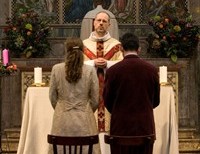
To the Church, sex is not some shameful biological necessity. It is not sinful or the product of human weakness. God created sex, also known as the conjugal act, when he created humanity. It is very much included when we read in Genesis that “God saw all the things that he had made, and they were very good” (Genesis 1:31). Not only is sex good, it is “very good.” In his monumental work, The Theology of the Body, St. John Paul the Great writes that in the conjugal act, “Man and woman expresses themselves in the measure of the whole truth of the human person.”
Our culture has distorted the true meaning of sex. Like anything, the conjugal act, itself something good, can be twisted into something sinful. The so-called “sexual liberation” movement did not promote sex at all. It promoted perversion.
There are three aspects of the conjugal act that make the distinction between sex and sexual sin clear. The conjugal act is faithful, unitive and procreative (CCC 1643). Adultery, premarital sex, and homosexual acts are sinful because they reject one or more of these truths about human sexuality.
The use of contraception, even within marriage, is therefore a grave sin. Though this has always been the teaching of the Church, the moral upheaval of the ‘60s lead Pope Paul VI to write Humanae Vitae, a papal encyclical affirming the Magisterium’s position on contraception: “Similarly excluded [as licit means of regulating birth] is every action which, either in anticipation of the conjugal act, or in its accomplishment, or in the development of its natural consequences, proposes, whether as an end or as a means, to render procreation impossible” (Humanae Vitae 14).
Contraception is wrong because it deprives the sexual act of the potential for fertility. Instead of being open to children, even in barrenness, like Elizabeth, Sarah, Hannah, and many other women in the Bible, we make ourselves barren with contraception. The use of contraception is selfish. It embraces the unitive aspect of the conjugal act, the becoming of “one flesh” (Gen 2:24), but rejects the chance for new life. It makes sex all about the individual or mutual pleasure derived and not about procreative love.
Therefore, as Catholics, we must live out this radical teaching: contraception is morally unacceptable. This puts us in a somewhat uncomfortable position. The promotion and use of contraception is absolutely pervasive. Our public schools teach that its use is “responsible.” Many charities, allegedly including Catholic Relief Services, provide contraception to the impoverished, as if it were as essential as actual medicine. Recently, the Little Sisters of the Poor went to the Supreme Court to challenge provisions of the Affordable Care Act that would force them to be complicit in the distribution of contraceptives. Let’s be clear, contraceptives are not healthcare. Medicine restores or maintains health. Contraceptives prevent conception. As long as pregnancy is not a disease, contraceptives are not medicine. Of course, that doesn’t stop the world from treating contraception like a basic human right. Yes, this is an uncomfortable position, but so was the Cross.
Fidelity to the Truth of Christ means that we must speak out against the sin of contraception. We must equip ourselves with knowledge using resources like Humanae Vitae, The Chastity Project, and Theology of the Body. We must affirm a culture of life in our homes and communities.
Deus Vult!
Recommended Stories
About the Author
Samuel Matthews is a junior in high school. He is the sole writer for The Crusade for Truth, a Catholic teen blog that focuses on modern issues and how to live in the example of Christ. In addition to his writing, Samuel is very involved with his local parish. He is a member of the high school youth group, a Lifeteen group, and helps lead the middle school youth group. He plays guitar for Mass at two different parishes. When not writing, Samuel can probably be found reading. He has a particular love for the works of his patron, St. Augustine.
Links:
Blog - http://thecrusadefortruth.blogspot.com/
Facebook - https://www.facebook.com/thecrusadefortruth/?fref=ts&ref=br_tf
Twitter - https://twitter.com/thcrusade4truth