
Catholic Teaching Forbids Worshiping Graven Images
Sponsored

Catholic365 is sponsored by
Road to Purity



When I enrolled in St. Joseph’s School in Williamsport, Pa., in 1947, nuns of the Scranton Diocese taught every grade (1-12). They were members of a congregation called Sisters, Servants of the Immaculate Heart of Mary (IHMs), widely known for their mastery of teaching techniques.
Before the Vatican II Ecumenical Council in the 1960s, each nun attired herself in a habit covering everything but her face and hands, as in medieval times. Although a stiff white coif pressed against her ears, she could hear everything around her, even the whiz of a flying spitball. And she could identify the flinger. Woe unto him. Such were the seemingly superhuman powers of the nuns. Reports that they could read minds were supposedly untrue, but why was it that they always called on me whenever I didn’t know the answer to a question?
For the most part, the nuns treated students with dignity, respect, and kindness. On occasion, however, you might encounter one who pinched ears, rapped knuckles with a ruler, or ordered a slouch to stay after school to write a hundred sentences demonstrating the correct use of semicolons.
In those days, we students had no computers to ease our tasks. Instead, we used paper, a pencil and a fountain pen that sucked ink from a bottle. In history, geography, and other classes, we could use them to draw pictures of the Great Pyramid, cows, stop signs, leprechauns, pirate maps, and so on. We had no calculators either. To work a problem in long division—say, 102 divided by 37—I almost needed a roll of toilet paper to complete it to the eighth or ninth decimal place. If you did well in an assignment, you received a gold star at the top of your paper.
In English classes, the nuns taught the parts of speech by making students diagram sentences, placing every adverb, every gerund, every copulative verb, and every prepositional phrase in its proper place. Thanks to this method, I could easily identify a dangling elliptical clause or a pronoun that failed to agree with its antecedent. So it was that I became a grammar guru—and a nuisance at the supper table when I interrupted family members to correct their syntax.
Religion, of course, was a major subject at St. Joe. In the elementary grades, our teachers drilled us in Catholic doctrine and other church beliefs as summarized in the Baltimore Catechism, a book authorized by a council of U. S. bishops convening in Baltimore in 1884. It was published in 1885 and revised in 1941 for use in Catholic schools throughout the country until the mid-1960s. It contained 471 questions and 471 answers in simple, straightforward language. It also presented prayers, hymns, and the proper wording for receiving sacraments. For example, at the beginning of the sacrament of penance in a confessional, you were supposed to say, “Bless me, Father, for I have sinned.” One day, when my sister went to confession, she absentmindedly recited grace before meals: “Bless us, oh Lord, and these thy gifts which we are about to receive from thy bounty, through Christ, Our Lord. Amen.” The priest replied, “Are you hungry?”
Latin was the official language of the Eucharistic celebration (mass), as well as hymns, Gregorian chant, some prayers, and benediction (a blessing of the congregation with the Eucharist). St. Joe students had to take at least one year of Latin to help them understand the liturgy. When my older brother was taking Latin, he announced at the supper table one evening that he had received the third-highest grade in his class. My mother rewarded him with a special dessert topped by Alpine peaks of whipped cream. What he didn’t tell her was that there only three students in the class. I myself took four years of Latin because of the fascination for language that the nuns had enkindled in me in the elementary grades when I had to diagram sentences.
During my first year of Latin in the ninth grade, I incurred the wrath of the teacher, Sister Alfred, for making a smart-alec remark for all to hear about a Latin lesson in which a poet is fighting a farmer. (“Poeta agricolam pugnat.”) I said something like, “The poet will win, because the pen is mightier than the pitchfork.” Then I snickered.
I think it was the snicker more than the wisecrack that got me in trouble. Sister Alfred immediately sentenced me to one hour of detention in the convent—the ultimate penalty for misbehavior. When I traipsed to the foreboding abode after school—a three-minute journey—the convent loomed like an accursed dwelling in a Poe story. After a nun greeted me at the door, she said, “Young man, take a seat in the parlor.” The place unnerved me with its lugubriosity. It was dark and phantasmal, with stained-glass windows casting eerie light. A pall of silence was returned from the thick carpeting that muffled my footstep. There was a perfumy, funereal odor—at least to my nose—that conveyed Dante’s message in The Inferno: “Abandon hope, all ye who enter here.”
When Sister Alfred appeared, she told me—horror of horrors—that I had to call home to tell my mother where I was and why I was there.
I was given chores—sweeping, dusting, that sort of the thing. But the nuns—wonder of wonders—did not wield whips or hickory sticks or make me run a gauntlet. And there were no racks, no dungeons, no oubliettes. After I completed my chores, they gave me a bowl of ice cream heaped high and topped with a cherry. At the end of my detention, I apologized for my behavior and off I went, vowing to keep my tongue in check in the future. I had learned my lesson.
After graduation, I was well prepared for the world and its challenges—including flying spitballs and dangling elliptical participles. Later, in my undergraduate and postgraduate classes at four different colleges, I never met a professor who influenced me more than the St. Joe IHMs.
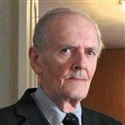
Before retiring, Michael J. Cummings was a public-school English teacher, a journalist for 17 years, an adjunct instructor of English for 19 years at the Pennsylvania College of Technology, a freelance writer, and the author of more than thirty e-books and five print books. He was born in 1941 in Williamsport, Pa.



