
Political Violence: Blaming the Victim
Sponsored

Catholic365 is sponsored by
Road to Purity



When the sparkle of the holiday season is boxed up and put away until next year, routine returns. While there can be a sense of relief in that, the middle weeks of January may seem cloudy and dull. Even sunny days may feel garish and taxing. We miss the days off, the closeness of loved ones, the festive mood, and the general sense of wonder that is Christmas.
The liturgical calendar seems to reflect this letdown. What do we call this season of routine? Ordinary Time. There it is, as Google defines it: “ordinary” means “with no special or distinctive features”. Of course, we must acknowledge that feasts and festivities can last only so long before we are in danger of becoming undisciplined and gluttonous. In the name of temperance, yes, we must return to the routine, to the ordinary.
However, it is difficult to comprehend how a Church which contains so much beauty can name an entire set of Sundays simply “Ordinary Time”. The same institution that produced the Sistine Chapel, the brilliant works of Thomas Aquinas, the sacred music of Mozart and Bach, and the beautifully worded documents of Vatican II could think of nothing more meaningful than the word “ordinary”?
Such were my musings this year, until the feast of the Baptism of Our Lord. The entrance hymn at Mass, “When Jesus Comes to be Baptized”, reflects that on this day, Jesus left his hidden years behind. Those thirty years in Nazareth with Mary and Joseph are over. We know little about those years, but imagine how blessed they must have been: two perfectly sinless humans and one great saint living together. Yet eventually, it is time to leave one season behind and move on. Jesus walks into the Jordan and prepares for his ministry. His Father sends the Holy Spirit upon him, and announces who Jesus really is, “My beloved Son, in whom I am well pleased.”
In this past weekend’s homily, our priest described Ordinary Time as anything but ordinary. During this time, we explore Jesus’ role as Prophet, Priest, and King. He teaches us how to live with greater love; he offers sacrifice to the Father on our behalf; he brings forth the Kingdom of God. The Gospels in these coming weeks lead us forward to the Lenten time of renewal, and ultimately to the feast of Easter, greater even than our recently concluded Christmas season. This journey is extraordinary.
Regarding that word, “ordinary”, it also has a different meaning liturgically. I was surprised to find a most satisfying explanation of the term “Ordinary Time” in Ken Canedo’s column in Today’s Liturgy (an Oregon Catholic Press publication for music ministers and liturgists). Canedo explains that the word “ordinary” stems from the idea of ordinal numbers, such as “first”, “second”, and so on. Ordinary Time is called this because of the numerical terms we use to designate the various Sundays.
The concept of ordinal numbers brings to mind the Scripture verse, “Lord, teach us to number our days aright, that we may gain wisdom of heart” (Psalm 90:12). Naming Sundays numerically keeps us abreast of where we are in the year. There is a kind of wisdom in recognizing the passage of time. A year passes and opportunities for ministering to our children or our parents or our neighbors may be missed. And none of us is here forever. How little time we may have left can inspire us to work harder to achieve whatever it is that the Lord asks of us. These are not bad recollections to have as we follow the Gospels on these Ordinary Time Sundays.
Aside from this, though, the term, “Ordinary Time”, was not intended to indicate that these Sundays are dull or boring. Similar to the preaching in our priest's homily, Canedo says, “This is an exciting liturgical season that is concerned with the words and deeds of Jesus as he proclaims the Kingdom of God to the people of Israel and, through them, to the world.” It is a time for us to learn, to marvel, and to deepen our relationship with Christ.
And this is anything but ordinary.
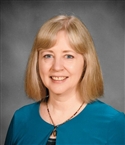
Mary Ennis Meo taught for twenty years at a public high school, and five at a Catholic elementary school. Now retired, she volunteers as a parish music minister and OCIA team member, and directs theater for a community troupe. Mary holds a M.A. in Pastoral Theology from St. Joseph's College, Maine, where she authored a thesis entitled “The Apostolate of the Public School Teacher”. Her blog, www.theuniversalcall.com , explores the universal call to holiness, as described by St. Francis de Sales and the Vatican II Fathers. Mary and her husband live in New Jersey and have four grown children and four grandchildren.



