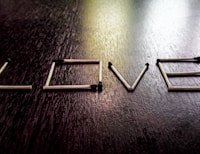
Ash Wednesday and Valentine's Day: A Match Made for Heaven
Sponsored

Catholic365 is sponsored by
Road to Purity



God didn’t have to create anything, let alone the world we live in. He was under no compulsion or necessity to do so. That God did so and eternally holds the world in existence points to an aspect of his being: namely that it is overabundant, as if it were overflowing, as best as we can know - and, again, freely so.
That God’s own being is self-sufficient and complete unto itself is one thing - represented in the First Person of the Trinity: God the Father. That it is so intense and immense that it can be communicated outside itself, as if a thing begotten, is another - represented in the Second Person of the Trinity: God the Son, the Word of the Father. For this reason, as we pray in the Nicene Creed, it is God the Son “through whom all things were made.”
Our very existence and the existence of anything in the universe, therefore, is fundamentally a gift, an outpouring from God’s own being.
Of all material creation, humans were built with the “most” being - “most” meaning, at least in part, that humans possess their being more completely themselves, all else equal, than any other material entities. Part of possessing our own being more completely is having the power for our actions to be truly and freely ours. That is, we have a power of willful choice (i.e., free will) responsive to our possession of knowledge. Thus, having the power of willful choice implies that what we truly, freely choose is something we must compare against ourselves and be willing to want it.
It is in this act of comparison that the possibility of sin arises. What is good is what is truly of God, insofar as God is the ultimate cause of being and, thus, truth and, thus, goodness - all three of these pointing to the same thing, but signifying different aspects of it (existence, the norm of knowledge, and what is rationally desirable). To do what is good is to do what God Himself “wills,” so to speak. But, for us to freely will what is truly good - that is, what is truly of God - we must compare it against ourselves and be willing to accept God’s judgment of goodness as our own.
To be unwilling to do so, absent any other temptation, is to choose ourselves and our own power instead. To choose ourselves over God is to choose something good … yet it is also the choice of a relatively lesser good (ourselves, our own power) over a greater good (God Himself); and that is precisely what sin is, according to St. Augustine. (See De libero arbitrio) Specifically, the choice of self over God is the sin of pride. Hence, it is said, pride is the root of all evil.
Pride is the only sin possible to “preternatural” man, one made perfect without any disordered desires, since its possibility is endemic to our having free will, which follows from the level and manner of humans’ relatively fuller possession of being among all material creatures. For this reason, pride is spoken of as the sin of Adam - the “original sin.”
It is not strictly necessary that the first human, or that any human, sins; hence, we cannot say that we as a species are built to sin at a metaphysical level. That is, we cannot speak of original sin as if it is simply part of our human nature, which God creates us to possess. At the same time, it is equally undeniable that our human condition as we know it today is marked by material frailty and mental and spiritual fatigue. These make it practically impossible for us to be perfect, even if no necessity compels us to act imperfectly at any given time. It is as we, in our human condition, are stained by the effects of sin as a species. To reconcile these two claims - that we are not built to sin, but that sin is practically unavoidable - we have to think of original sin as something our species inherits as if genetically (save for Mary and Jesus) - the ultimate generational trauma, as it were - rather than something intrinsic to our nature as such.
Sin is a misuse of our power of choice that, in an instant, degrades our being and, thus, diminishes our ability to do good, let alone to repair ourselves. It begins the most ultimate vicious cycle, as it were. Sin cannot help but turn ourselves and our desires towards lesser goods and, thus, away from what is most ultimately and truly good (who also is the ultimate desire of our minds as the ultimate source of truth) - namely, God. That is why sin is called a break or rupture in our relationship with God. By original sin, our species is stained by this strain in the relationship. That is, as a species, after Adam’s fall, we stand in need of saving, as our human condition surely does not allow us to save ourselves or reach the ultimate goals or desires still written into our (metaphysical) human nature.
That said, God didn’t have to save the world either. God’s goodness includes justice. And justice implies getting what is deserved, be they rewards or punishments. It does no harm to God’s goodness, therefore, to permit the consequences of sin. While we humans after Adam’s fall did not commit the original sin, our need of saving is a consequence of sin. It would have been just to leave this be.
That God does save the world is, again, fundamentally a gift. God gives the world and our human condition in the fullness of time His Son, Who through his life, teaching, passion, death, and resurrection, shows us the way to the Father and Who gives His own life as a gift for us, so that all who believe in Him and live according to His Words may have eternal life - the life lost to us and our power after Adam’s fall through the stain of sin that came to mark our human condition. (Fittingly enough, the Word “through whom all things were made” is Himself “made flesh” and becomes the one through whom all things are re-made.) The help we need to reach what we are built by nature to desire - reunion with God - is given. This is the gift of Jesus, born into this world at Christmas, in the manger in Bethlehem.
Our very existence and our very ability to reach what our heart most dearly desires - the fullness of all goodness and truth that is God - are gifts. Think of how radically different our outlook on the world would be starting from these premises. They foster gratitude for gifts received as a basic orientation to life. They curb the inclination to envy, fighting, and war, insofar as we are less inclined to see what others have as what we ourselves deserve.
At the same time, they demand for all of us to be more than mere takers but, indeed, gift-givers ourselves. After all, to be good is to be like God, the giver of all gifts. Christ Himself gave all on Calvary and gives us continually what we need in the sacrament of the Altar. The outlook of gift points all of us - rich and poor, privileged and downtrodden alike - outward from ourselves, to our family, friends, neighbors, and indeed all humanity - and they to us. We are oriented to ask more than just, “What do I deserve?” but also, “What can I give?” - both questions just as important to answer in the pursuit of goodness, of Godliness. Whether it is the largesse of Good King Wenceslas or the Widow’s Mite, all are called to a responsibility - to give of themselves for the love of God and our neighbors.
In a broken and post-Fall world, a perfectly gift-oriented society is impossible. There are mere takers, and givers are taken advantage of. Limits, boundaries, and borders of some sorts are practically needed. But each one of us, in our own hearts and in our own relationships and spheres of influence, can foster an attitude and worldview of gift-giving and gift-receiving modeled after what is most fundamental about our own existence, our own kind of being, and what we are able to become through Christ. It is our responsibility to do so - all of us.
May we in our own gift giving and receiving this Christmas see in these exchanges a glimpse of the overabundance of God’s love and mercy and strive to imitate that in our world - not just this Christmas Day, but always.
I am an Associate Professor of Philosophy at Canisius University (Buffalo, NY). My areas of specialization are medieval philosophy (specifically, the thought of St. Thomas Aquinas), ethics, and Catholic Social Thought. My Ph.D. in Philosophy is from Saint Louis University (St. Louis, MO), and my undergraduate degree is from The College of William and Mary (Williamsburg, VA). I am originally from Arlington, VA. I sang in church choirs for many years and now am a lector at my local parish. Also, as the oracle Weird Al Yankovic spoke of me and so many others, I lost on Jeopardy! (2nd place, to Amy Schneider). That said, I got a $2000 clue correct featuring the Basilica of Our Lady of Peace in Yamoussoukro, Cote d'Ivoire; such is my claim to "fame."



