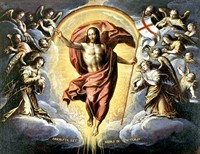
Longing for "Eternal Easter"
Sponsored

Catholic365 is sponsored by
Road to Purity



Now, I Understand!
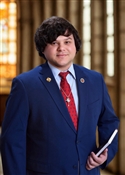
By Prof. Anthony Maranise, Obl.S.B.
The author reserves the right to utilize this piece in a forthcoming publication under the academically integral condition that a notice precedes this reprint indicating the first place and date of publication.
I’ve never really been one to believe in the notion of “coincidence.” Perhaps in the infancy or adolescence of my faith and spiritual life, I might have, like so many of us attributed certain things to “luck” or simply dismissed things as “coincidence”. However, as I rather swiftly (and given my early and further life’s circumstances) advanced in my faith and spiritual life, I simply could no longer reconcile the randomness required of “coincidence” with the order and changelessness of God whose Divine Plan has ever been, always will be, and is simply ever-unfolding around us – who are blessed to be parts of it, and for reasons known exclusively to Him.
The majority who regularly follow my writings are aware of my own personal confrontation with cancer as a young boy. For new readers, I had childhood leukemia from ages five to seven and a half and was treated and cured by the living angels and saints of St. Jude Children’s Research Hospital in Memphis. I don’t mean this to sound so nonchalant and ‘matter of fact’, please don’t misunderstand me. I am forever grateful to God for this miracle and those He providentially placed in my life to facilitate this miracle.
My reason for stating this (and for new readers intrigued by this admission, those unaware, or facing cancer themselves or with their loved ones, I’d direct you to my book, Cross of a Different Kind: Cancer & Christian Spirituality [Eternal Insight Press, 2018]) is as a proof of how and why I more or less advanced so swiftly – read: “grew up quickly” – in the spiritual life.
In the confrontation with something so physically agonizing and life-threatening, there isn’t exactly a ‘middle ground’ on which to stand in terms of faith, spirituality, and relationship to God. It’s either: (1) embrace bitterness and distance from Him (as many do in such cases, though temporarily and especially at first) constantly questioning, “Why, God? Why, if you love me?!” or (2) embrace the cross God has placed upon your shoulders and ask Him to bear it through, with, and in you and draw ever-nearer to God who never punishes, but is certainly just and who is, beyond a shadow of doubt, ‘the Divine Physician.’
For the record, of those two choices: I chose the latter.
Fast-forward several years after attaining to remission from leukemia. For the greatest part, I’ve been able to live a normal life in nearly all aspects. Its still a bit embarrassing for me to admit, but the seemingly most significant physical detriment to cancer treatment (and mine was entirely via chemotherapy, with no radiation) that I’ve had to face is what began with a low likelihood of being able to father children of my own by traditional means and, with increasing age, has veritably increased to what would certainly be deemed ‘a medical marvel’ if I could pull that off.
While that admission alone might seem random, disconnected, or even “too much information” (even more so were I to clarify rather bluntly that “all the plumbing works perfectly well”, but the chemo drugs have merely resulted in minimal to almost non-existent fertility likelihoods) – hold tight and keep reading because it will come full circle as I digress.
A plethora of studies show that long-term survivors of childhood leukemia are often far worse off, physically, intellectually, and emotionally, than I am. I certainly don’t mention that as any sort of ‘brag’ or in a tone-deaf lack of humility, but simply to say that each survivor is impacted and affected differently in the long term.
Within behavioral science, which I have light academic background, but plenty of personal and practical experience, there is an entire therapeutic branch devoted to recognizing, appreciating, and healing by means of what we know as ‘dialectics.’ Simply stated, a ‘dialectic’ is fundamentally recognized when an emotion need not be mutually exclusive or experienced singularly. In other words, ‘dialectics’ and ‘dialectical behavioral therapy’ are ‘behavioral science speak’ for something that really rather reveals itself in common life experience but is often overlooked. It is the idea that a person can, validly and truly, experience two or more emotions – sometimes even in direct opposition to one another – simultaneously.
So, hearken back to my embarrassing (if not TMI) little admission from a few paragraphs ago: I am forever thankful to God for sparing my life from leukemia and I rejoice in the life I have while I am ever-aware and simultaneously disheartened, embarrassed, and sad by the fact that I may never father a child of my own. This is, at once, an example of a behavioral ‘dialectic’ and my own personal example of one.
All that said, “Great!”, my readers may wonder, “But, where is he going with this?”
Well, here: Sometimes God likes to take His time to reveal certain facets of His Divine Plan to us because He has carefully chosen us for specific missions and purposes, as my dear friend, confessor, and spiritual director reminded me recently.
With that in mind, the recent Advent Gospel (from Luke 1:5-25) ‘hit me like a spiritual freight-train’ and literally upon hearing the Dei Verbum, several years of what I might simply refer to as ‘dialectical confusion’ evaporated into the very title of this piece: “Now, I understand!”
Walk with me through a little summary of this Gospel as I connect a dot or two. I think you’ll be grateful if you took the time once this meditation concludes.
My brilliant, and ever-wise theological mentor (for his privacy, I’ll refer to him as DSG) always stressed in my early theological training the importance of understanding Sacred Scripture within ‘total context’, not simply from ‘nitpicking’ lines here and there which are otherwise unrelated. That caution here employed, let us note, with care that the Gospel upon which I muse today comes from Luke’s 1st Chapter. Luke’s 1st Chapter contains a series of interconnected events, after a very brief introduction from the author, Luke himself.
Luke 1 contains: (1) The Announcement of the Birth of John the Baptist (who, we know, is Jesus’ cousin, would go before Jesus to prepare His way, and who would also baptize Jesus) [5-25], (2) The Announcement of the Birth of Jesus (better known as the Annunciation) [26-38], (3) Mary’s Visit to her cousin, Elizabeth [39-45], (4) The Canticle of Mary (better known as ‘The Magnificat’) [46-56], (5) The Birth of John the Baptist [57-66], and (6) The Canticle of Zechariah [67-80].
Luke 1:5-25 is our focal point for this piece, but the other portions of this chapter will be necessary for full understanding.
For those who may have forgotten (as I’m giving you the benefit of doubt) who Zechariah is in the New Testament, he is the husband of Mary’s cousin, Elizabeth, and the father of John the Baptist. Luke, after his very brief introduction, give us the account of The Announcement of the Birth of John the Baptist. In summary, Elizabeth and Zechariah were very faithful persons, unwaveringly devoted to God, but advanced in age and most likely, long ridiculed for their inability to have children. “Back in the day”, infertility, for whatever reason was viewed as a scourge – a punishment – some form of Divine judgment.
In this portion of Luke’s Gospel, while Zechariah is faithfully attending to his spiritual responsibilities and offering incense in the Temple, the Archangel Gabriel (one in the same who would later in this chapter announce Jesus’ conception to Mary) appears to Zechariah and announces that, despite his advanced age, that of his wife, Elizabeth, and the fact that for years they had been infertile, that God Himself has heard their pleading prayers and that Elizabeth will have a child.
Zechariah’s reaction is what almost any of our own would likely be. He questions St. Gabriel, but with the slightest degree of doubt. Zechariah says: ““How shall I know this? I am an old man, and my wife is advanced in years” (Luke 1:18).
Before I hit you with the next part of the Gospel, it is imperative to remember that God does not punish, but that He is Just; we might even say God is Justice itself, but that God’s Justice looks remarkably different than our human and finite conceptions of justice. God had this way of “correcting” rather than “punishing.”
Thus, after Zechariah expresses his ever-so-slightly doubtful question to St. Gabriel, the Archangel replies: “I am Gabriel, who even now stand before God. I was sent to speak to you and to announce this good news. But now you will be rendered speechless until the day these things take place, because you did not believe the plan of God which I spoke to you, which will be fulfilled at its proper time” (Luke 1:19-20).
Perhaps this seems cruel of God through St. Gabriel. Zechariah just asked a question, right? Did not Mary do the same when St. Gabriel announced the conception of Christ to her? Well, this is why close, careful, and contextual reading and study of Sacred Scripture is paramount in importance.
Yes, Zechariah and Mary both initially question St. Gabriel, but where Mary merely asks the question, Zechariah followed his question with an excuse as to how this conception could be impossible.
As a result of Zechariah’s being initially ‘closed-off’ to the work of God’s Divine Plan – no matter how seemingly impossible – God imposed him into temporary silence because no one, however faithful or faith-filled shall speak contrary to ‘the God of the Impossible’.
Later in this chapter, when the Birth of John the Baptist came to pass, Zechariah is questioned by others, via written tablets, what name he wished to give his son. Zechariah wrote on a tablet, “He will be called John”, and as the Gospel reports, “Immediately his mouth was opened, his tongue freed, and he spoke blessing God” (Luke 1:64).
It is not lost on me that a Biblical account about God’s Divine Providence and Intervention concerning a couple stricken with infertility would ‘hit so close to home’ for me who shares in what both Sts. Elizabeth and Zechariah overcame by God’s very will. As I said earlier, there are, in my view, no coincidences. But, this goes deeper still for me…
In late 2022 to late 2023, then again briefly in mid 2024, I suffered greatly in my life again. You are already familiar with the leukemia from my youth. This time, it was treatment-resistant major depressive disorder coupled with severe anxiety disorder, panic, and significantly dark intrusive thoughts the likes of which will not be taken up in this piece. No amount of talk-therapy, psychiatric medication, alternative therapies, friendly or familial heart-to-hearts were helping.
The longer I endured this ‘darkness’, the greater I fell into despair. Do not be misled, for never in and through any of this, did I lose my faith in God or cease to practice my faith. In fact, I know that from out of my faith, emerged resolution to my adversities.
Remember earlier when I spoke of ‘dialectics’? Well, during this period in my life – feeling so long like a genuine living hell from which there was no escape – I was able to simultaneously have faith and trust in God incarnate in Jesus Christ to help me, while simultaneously questioning whether or not He would, and, at a point, simply having given myself over to belief that such poor mental health, from wherever it so suddenly emanated, was simply ‘my cross to carry’.
Prior to this experience with ‘mental health hell on earth’, I always enjoyed the God-given gift of writing, research, academic engagement, and like interests. For as long as I could, I ‘muddled through’ in my written works and other responsibilities until finally, I couldn’t even fulfill those any longer. Sure, in my career, I’ve experienced ‘writer’s block’ before, but this was far worse. This was ‘writer’s collapse’.
Obviously, I have (I contend, miraculously) recovered from these mental health scourges such that they are quite manageable now, after having embarked on a Pilgrimage, which I initially undertook out of utter desperation.
Only recently did all of this finally connect – and it did so in the Proclamation of the Gospel I discussed above. It was instantaneous.
Zechariah and I have more in common than I ever considered. While we both remained faithful and faith-filled in our adversities, we dared, even slightly, to doubt God’s Divine Intervention in our respective ‘scourges’.
Writing has always been my preferred way of communicating – the way in which I best “speak” to and teach others. I admit that it is no gift of my own, but that it is one on-loan from God.
When Zechariah offered his excuse to St. Gabriel, even so slightly, he spoke doubt against the God who St. Gabriel would later describe to Mary as He for whom “nothing will be impossible” (Luke 1:37).
So, until God chose to reveal the Truth of His Divine Intervention to Zechariah, He muted him.
When I all but gave up in my desperation, suffering with such extreme mental health, and began to question if God would ever ‘pull me up out of the hole’, He stifled my writing abilities. He muted me.
When Zechariah proclaimed for himself the Truth of God revealed to Him by the Archangel, St. Gabriel, God restored his speech and Zechariah glorified God as His first spoken word.
When even though still in my own desperation, I intentionally sought after God (through the intercession of His Mother) on Pilgrimage – making in that act, a move away from doubt – God restored my writing abilities and since, I have been glorifying My Lord and My God – Jesus – in writing prayers, articles, academic pieces, letters, consecrations, and other projects.
Doubt is a natural human emotion and tendency and God knows that, but God is changeless. He doesn’t move away from us and He doesn’t punish us. But, we move sometimes, even slightly away from God, and the further we move away from God, the more relentless in His love He becomes for us – going so far as to chase us down by “muting” us from anything other than absolute, complete, utter, and unhesitating reliance on Him.
As we grow nearer to Him again, by means of ‘clever-correction’, He restores, He renews, He makes even better than before.
We should count ourselves as lucky to experience instances of God’s ‘clever-correction’ that leads us back to Him, for as St. Francis de Sales is known to have remarked: “If you find that you have wandered away from the shelter of God, merely glance His way and He will lead your heart back quietly and simply."
It may have taken me a while and I may even have had to learn the hard way, as we all sometimes must, but Now, I Understand!
Lord, I thank you for the gifts you have given (and restored unto) me. This work, as well as all I produce, is Yours. Amen. [-AMJM]
Anthony Maranise is a Christian spiritual theologian, author, and board-certified chaplain specializing in the intersections of sport, spirituality, religion, cancer, and mental health. An Oblate of St. Benedict, he explores how prayer and worship deepen faith, providing spiritual care to those facing life’s challenges. He holds degrees in Religion & Philosophy, Behavioral Science, and Catholic Studies from Christian Brothers University and in Interdisciplinary Leadership from Creighton University. Founder of “Sport & the Spiritual Life” and “The Eternal Insight Group,” he authored best-sellers Sport & the Spiritual Life (2013) and Cross of a Different Kind (2018), with three projects forthcoming (2026-2027). Recognized in Who’s Who in American Education (2025) and the recipient of the Associated Press's Distinguished Humanitarian Award (2025), he inspires through writing, teaching, and compassionate ministry. You may learn more about or connect with Anthony by visiting his website: anthonymaranise.com or his LinkedIn page: www.linkedin.com/in/anthony-maranise.