It is Okay to say, "I do not know." - Job and a Response to Suffering

How and why did silence prevail?: Psalm 69 and the people of Aleppo


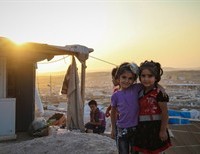
Photo By: Flickr/Bengin Ahmad
All I could do was sit behind my computer screen and watch the headlines pop up as the situation unfolded in what would be the near cease-fire in Aleppo, Syria. Over the course of Monday evening the twelfth of December and the early morning hours of the thirteenth of December 2016, the civilians and journalists still trapped in the city were only able to tweet and share what could have been and may well have been their final moments alive in the horrific crossfire between the last of the Syrian rebels and Syrian militia under President Assad. These civilians, ranging from men in their fifties to young girls in their teens and even under the age of ten, posted videos and tweets to social media informing the international community of the horrors they were facing and the despair over the unrelenting series of bombs striking nearly every corner of the city where civilians still remained.
It was reported that over eighty-two civilian massacres had taken place in the streets of Aleppo as the Syrian army moved in against rebel controlled areas. Some of these were women and children. And I sat behind my computer screen wondering how it could have gotten this bad, wondering why the international community did not step in long ago to urge or force Putin to stop backing the Syrian army and why the Syrian rebels did not concede defeat while they watched thousands of their people die under brutal and senseless murder at the hands of those in power. I realized I had been just as complicit in watching these atrocities unfold and had let them. Is this a sin? Is this a sin of omission? What could I have done and what could we have done?
All I could do, and I believe all the majority of the world could do was to pray to whatever power they sought in their hearts to intervene and soften the hearts of the weapon carriers to lay down their arms for the sake of the innocent. All we could do was beg, plead and trust that God almighty had a plan and would somehow vindicate and free those on the verge of slaughter.
I pulled out the book of Psalms and read Psalm 69, “A Cry of Anguish in Great Distress”. But I didn’t read it for myself. I tried to read it as a way of interceding for the hopeless in Aleppo. “More numerous than the hairs of my head are those who hate me without cause. Those who would destroy me are mighty my enemies without reason. Must I now restore what I did not steal?” (Ps 69:5). Indeed the poor of Aleppo must have felt anguish similar, if not identical, to this. It must have seemed as though the entire world had turned against them – men with bombs dropping them from the sky like rain and men on the ground murdering women and children in cold blood. They must have felt as though they were paying for crimes they did not commit, feeling the vengeance and cruelty of a world that allowed them to suffer their fate at the hands of men.
Again, how could it come to this? How did and do events like this happen in the world? I thank God I was not alive during the Holocaust, but does this not seem like a current reality – people being murdered open in the streets? Is this the reality of demonic involvement or is this the reality of humans forgetting the worth of the other? Or is it a combination of both?
I cannot stop asking these questions, because the situation makes no sense. How could a ruler be so cruel as to murder an innocent child? How could a president be so cruel as to bar entrance of fleeing refugees into a safe haven away from these massacres and terrors? Imagine being a child who felt as though every minute could be death. I believe the world over has heard poor Bana Alabed, the seven year old trapped in the dying city waiting to die at any moment. On December twelfth 2016 she wrote, “My name is Bana, I’m 7 years old. I am talking to the world live now from east Aleppo. This is my last moment to live or die. – Bana.” Can an international community sit silent as something like this unfolds? Can we Christians forsake the poor who are suffering so? This little girl was speaking to the world, and it felt as though the world was hopeless to help her and her loved ones.
These questions cannot stop. Many of us do not know what to do at moments like these. Surely we must keep faith in God, as I pray these innocents still do. In fact, in these last moments of theirs, maybe all they could do was pray that God would welcome them with open arms. These messages from the innocent victims have to be some kind of wake-up call. And regardless of their religion, whether Christian, Muslim, Jew or even atheist, it may have been Christ speaking to the world through them. The Psalm continues a few versus later, “Do not hide your face from your servant; hasten to answer me, for I am in distress. Come and redeem my life; because of my enemies ransom me. You know my reproach, my shame, my disgrace; before you stand all my foes. Insult has broken my heart, and I despair; I looked for compassion but there was none, for comforters but found none. Instead they gave me poison for my food; and for my thirst they gave me vinegar” (Ps 69:18-22).
This is Christ speaking to us through the Psalm. So much of the psalter speaks of Christ’s crucifixion. And in it he is speaking through the people of Aleppo who are experiencing a similar fate. They are in distress, their enemies are around them, they are in disgrace and despair, they have not been met with compassion and have few comforters. And in addition to all this, there are many many reports of lack of food and water. Horrifyingly enough, these cries are not confined to Aleppo, but to all places where there is injustice in the world. And while all this was unfolding and continues to unfold, I sit and sat behind my computer screen baffled and lost for words. I sit and I sat wondering what would and will happen to these poor souls. Will there be justice for them? We know that there will be at the end. But will they find peace or justice in this life? Or will their grief hang over their heads in a post trauma that very well may last the remainder of their days.
If any of you are from Aleppo and have survived, and to those of you who have passed on, I beg your forgiveness for my lack of advocacy. I beg your forgiveness for not recognizing our Lord in you. I beg and beg and beg your forgiveness for sitting behind my computer screen while you sat hiding inside of buildings taking heavy gun fire or stood out in the streets in front of the rifles. I am so sorry. And I know that may not suffice.
But we continue to pray for you and for the courage to come to your aid. If we do not come, it is not God who has failed you but human weakness. I am so sorry. In the United States, we will pray that our leaders will welcome you who continue to suffer injustice. We will somehow rise up to our call to free you, the oppressed and forgotten. May God welcome you into his eternal and merciful arms.
Recommended Stories
About the Author
John Mayer is a recent graduate of the University of Scranton's Masters of the Arts program in Theology and Religious Studies. He is a practicing Catholic who hopes to enter the field of religious education as a teacher of theology. He currently lives at home with his mother and father in northern New Jersey.
More Stories By :