A Christmas Gift from a Bosnian Refugee
Sponsored

Catholic365 is sponsored by
Road to Purity



My husband and I usually throw good parties. So good, in fact, that we find many people forget that they have to go home at some point, not that we mind. So when we noticed one Christmas party a few years ago in which the usual energy was missing, we were both a little surprised and alarmed. It just seemed that everyone was exhausted or distracted and nothing my husband or I did to try to revive the party helped.
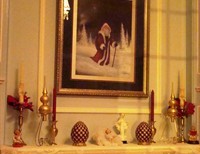
Just as dessert was being served the doorbell rang. Ed opened the door to “Santa Claus is Coming To Town” blaring from a boom box on the doorstep. Everyone at the party became silent and sent quizzical looks at my husband, who was just as perplexed as they were. Suddenly the jolly old elf himself appeared in one of the most beautiful costumes I’ve ever seen. In he came, brushing past Ed, ringing his bell, and ho-ho-hoing throughout the house.
This was a party of all adults—most of whom were over the age of 45, and who were of different faiths—but the energy and joy that seeing Santa created at this party was real. The noise level went up, voices were animated, women squealed when Santa kissed their cheeks, and men’s laughter echoed off the walls. No one knew who he was, until his wife finally rang the doorbell and we realized it was one of our dearest friends, Paul, who had declined the invitation to the party because of a previous commitment.
Paul was bombarded with questions. Where had he been all evening? Why was he late? And why was he dressed as Kris Kringle?
The room quieted again when he told us about his “stint” as Santa at the annual Philadelphia Chapter of the Variety Club Christmas Party for disabled children. My husband and I knew about his involvement with Variety, a nondenominational organization, but hearing him tell stories about these children—some of whom cannot move, cannot speak or communicate verbally in any way—and about how they reacted to him as Santa intrigued us, and although these stories could have been a real killjoy, they had the opposite effect on all of us. We wanted to hear more, know more about the party and the Charity itself.
I was envious of Paul. I confess it. My children were grown, and we had no grandchildren yet, so no more Christmas pageants and school parties for me. I missed that connection with children during the holiday season, and I expressed it that night.
“So be my Mrs. Claus next year,” Paul said. His wife, Kim, smiled and nodded. “Do it,” she said.
I loved the idea, filed it away in the back of my mind, and continued to serve my guests at what was now a terrific party simply because Santa had joined it.
As the following holiday season approached, Paul’s suggestion kept nagging at me. I called him and asked him if he was serious about me acting as Mrs. Claus to his Santa. He was delighted that I was even thinking about it.
I found a really gorgeous red velvet gown trimmed with white “ermine,” a white haired wig, and a finger-tip length red velvet cape.
When the day came, I was terrified. I’m no actress, had little interaction with special needs children, and I was afraid I would fail these kids. How would I talk to them? Would I say and do the right thing?
Once I was in costume, the terror melted away. I wasn’t me anymore, I was Mrs. Santa Claus. As it turned out, Paul wasn’t Santa that year. Instead, as a member of the Variety Club Board, he volunteered to chair the event that year and had relinquished the job to someone else who was going to be a little late. I was flying solo for an hour.
In the moments before I walked into the ballroom, this Mrs. Claus thing was about me—what I wanted to do, how much fun I was going have, how good this was going to make me feel.
When the doors opened and I entered the ballroom, there was a sea of wheelchairs—very serious looking wheelchairs—everywhere, and in those chairs were special children with every possible infirmity imaginable, and some unimaginable. There were others who were able to walk and talk, but with special needs just as momentous—they were hearing and visually impaired, born without limbs, mentally challenged, and living with severe autism.
Many of these children could not communicate verbally, but the moment I started to walk near them, their eyes and smiles communicated everything that I would want to hear. I had worried that they’d be a little afraid of the costume, but I was wrong. They wanted me near them, to talk to them, to hold their hands and kiss their cheeks. And while I was doing it, what had been all about “me” was now all about these wonderful children.
Santa’s entrance was just as enchanting and thrilling as it had been that night at my party.
A band played music for every generation. The dance floor was never empty once the music started. Parents danced with their kids, band members and board members danced with the children and parents, and Santa and Mrs. Claus danced every dance—usually with three to five kids at a time including wheelchairs.
Lunch was served, gifts were given, ribbons flew, wrapping paper crunched, and parents laughed at the commotion.
About the parents: They are amazing. They represented every nationality, race and religion; they were unified through the love of their children and the challenges they face. Dedicated, loving, capable of handling the most grueling situations, and all of them just like the rest of us—parents who love their children and want the best for them. Their journeys in life took a different course than they may have expected, but they are up to the task. They are filled with love and strength, and I am in awe of the patience and happiness they exude.
Some of them are adoptive or foster parents. One woman sitting at a table of eight was accompanied by one of her teenaged daughters, a birth child, who was there to assist her mother with her six physically and mentally challenged adopted siblings who ranged in age from infancy to adolescence. God bless that mother and her beautiful children.
At another table, there were two women in their fifties each with two adopted children with disabilities, no more than five-years-old, who sat in special strollers equipped with oxygen.
I was so impressed and moved by these precious and beautiful children who are living life to its fullest in every way that they can, and more impressed with their parents who never once showed anger, animosity, or an attitude that life was anything but what it is supposed to be for them.
There were no “burdens” in that room, just treasures.
And God was in that room. I felt the love of God and the grace of the Holy Spirit. In those precious faces, in their smiles and in their eyes, I saw Jesus, and I loved Him even more.
I haven’t been able to play Mrs. Claus in the last few years, and it’s a disappointment. For one day out of the year, they were my children, too, and it was an honor and a privilege that their parents shared them with me—and that the Variety Club goes to such lengths to make sure these families are given this wonderful treat.
It was a lesson in compassion, yes, and in recognizing that people who live with differences are people who deserve love and respect and to be treated with dignity. It was also a lesson that some holiday symbols—Santa and Mrs. Claus, Christmas trees, carols—transcend religion and bring joy to everyone who is open to happiness. I wish you a Merry Christmas.
If you have a special needs child and haven't heard about the Variety Club, you may want to visit:
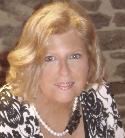
Marie Murphy Duess is the author of three novels, two nonfiction history books, and a Catholic-inspired spiritual book about life after death. She conducts and develops creative writing workshops, motivational presentations, and lectures for local colleges, historical societies, and writing organizations. Marie is married to Deacon Edward Duess of the Archdiocese of Philadelphia and lives in Bucks County, Pennsylvania. In addition to a Marketing and Communications degree, she is also a graduate of the Church Ministry Institute from St. Charles Borromeo Seminary. For more information, visit www.marieduess.com; http://blog.marieduess.com