Auschwitz
Sponsored
Catholic365 is sponsored by
Road to Purity



Oftentimes some of the holiest men and women to serve the Church were not born into the Catholic faith but rather converted later in life. Born in London, England on 21 February 1801, John Henry Newman was raised as an Anglican. In his youth, he learned to play the violin and would continue this music enjoyment throughout his life. At age fifteen, he entered Oxford University’s Trinity College. After earning his degree from Trinity College, Newman applied to become a tutor at Oxford’s Oriel College and was accepted. Newman intended to study for a legal career but then decided to follow a religious calling instead. On 13 June 1824, he was ordained as an Anglican minister and for seventeen years served as Vicar for the University Church of St. Mary the Virgin. He was a gifted theologian who wrote extensively.
While researching the early Church, John Newman began having doubts about the Anglican Church and began considering the possibility that the Catholic Church was the closest to Jesus Christ’s intentions. After several years of intense prayer and study, John Newman converted to Catholicism on 9 October 1845. Two years later, he was ordained as a Catholic priest. His conversion came at a great personal cost as his Protestant friends and relatives ostracized and rejected him. In 1851, the Bishops of Ireland appointed Father John Newman to serve as Founder and first Rector of a Catholic university in Ireland, which is now known as University College, Dublin. As a Catholic priest and theologian, he wrote extensively on the Catholic faith, particularly in the field of apologetics. After leaving University College, Father Newman returned to Birmingham. In recognition of his extraordinary talents and intellect, Pope Leo XIII appointed him directly from priest to Cardinal in 1879. Cardinal Newman died on 11 August 1890.
John Henry Newman was beatified by Pope Benedict XVI on 19 September 2010. “His insights into the relationship between faith and reason, into the vital place of revealed religion in civilized society, and into the need for a broadly-based and wide-ranging approach to education were not only of profound importance for Victorian England, but continue today to inspire and enlighten many all over the world,” said Pope Benedict XVI during Cardinal Newman’s beatification.
On 1 November 2025, Pope Leo XIV declared St. John Henry Newman to be a “Doctor of the Church,” a distinguished honor that recognizes his contributions to theology and his devotion to the Church. This is an honor that has been bestowed on only thirty-seven other Catholic saints. In being declared a “Doctor of the Church,” St. John Henry Newman joins the company of such illustrious saints as Thomas Aquinas, Augustine, Teresa of Avila, Therese of the Child Jesus, Alphonsus Ligouri, Catherine of Siena, and Ambrose. “Newman’s impressive spiritual and cultural stature will surely serve as an inspiration to new generations whose hearts thirst for the infinite, and who, through research and knowledge, are willing to undertake that journey which, as the ancients said, takes us per aspera ad astra, through difficulties to the stars,” said Pope Leo XIV during his Homily for the Mass declaring St. John Henry Newman as a “Doctor of the Church.”
St. John Henry Newman’s educational legacy lives on in many ways throughout the Church, especially as many Catholic Campus Ministry centers proudly bear his name, including my alma mater, Rowan University. My wife and I and many of our friends are proud alumni of Rowan's Newman House.
Saint John Henry Newman, Doctor of the Church, please pray for us, especially students seeking knowledge and truth on our college campuses.
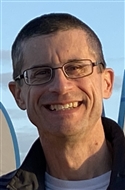
Bryan J. Dickerson is an author and historian specializing in military and naval history, and Catholicism. He earned his BA in History from Rowan University (NJ), MA in American History from Monmouth University (NJ) and a graduate Certificate in Archival Studies from Louisiana State University. His writings have appeared online and in print in such publications as Columbia (the magazine of the Knights of Columbus) and Celebrate Life (the magazine of the American Life League). He is a 4th Degree member of the Knights of Columbus and a Past Grand Knight of a council in New Jersey. His book The Liberators of Pilsen: the U.S. 16th Armored Division in World War II Czechoslovakia was published by McFarland Books in 2018 and his book Dive Bomber Down: James A. Nist Naval Aviator in the Pacific War is now available from McFarland Books. He has also self-published sixeen books, including In the Name of COVID: The Assault on Religious Freedom in 2020. A former U.S. Navy Reserve Religious Program Specialist 1st Class (Fleet Marine Force), he mobilized and deployed in support of Operation Iraqi Freedom twice. He and his wife Lisa have four children and live in southern New Jersey.