How Even Small Gestures — Like Wearing a ‘Pro Life’ Hat — Could Help Lead to the End of Abortion (Eventually)
Sponsored
Catholic365 is sponsored by
Road to Purity



Do you ever fast?
I don’t mean a fast in preparation for a medical procedure (which, as I recall, once involved drinking around a gallon of Gatorade beforehand — so I’m not sure it even counted as a true fast).
Rather, I mean a spiritually inspired fast — involving a full day’s denial of food (thus, one that goes beyond the traditional Catholic Lenten observance of abstaining from meat on Fridays — which, arguably, more people should consider observing weekly year-round).
In my lifetime (now exceeding six decades), I’d never spiritually fasted until trying it earlier this year. In the spirit of Matthew 6:16–18, I kept it close to the vest; however, I’m sharing it here, some weeks later, in the hope it might inspire others to try regular spiritual fasting. Here’s how it went for me:
I had been to confession the day before, prior to a Saturday Vigil Mass near the beginning of Lent. So, my fast was on a Sunday (not a typical day of fasting for Christians). But being right around the start of Lent, I thought the timing was appropriate (plus, my assigned penance, the day before, had been easily fulfilled — leading me to think I should do more).
At the outset, I didn’t know what to expect. I knew only that hunger, at times, can be an all-consuming distraction from whatever I’m doing. It simply becomes difficult to concentrate on mental tasks (such as writing). Surprisingly, however, after getting past the initial pangs, the hunger dissipated. It reminded me of those former frequent late nights on campus when dinner was unintentionally delayed for so long that hunger eventually waned (I don’t, however, recommend this unhealthy lifestyle outside of occasional intentional fasting).
So, it was going OK, physically, for me. That is, until later that evening.
I’m a “night owl.” Most nights my head doesn’t hit the pillow until after 1 or 2 a.m. But by around 10 p.m. or so that night, I was: Cold, tired, weak. In hindsight, this reaction could be attributed, in part, to the time of year: Late winter (when it’s still chilly outside — and indoors, too, for us frugal thermostat watchers). Plus, being a Sunday “day of rest,” I was able to take it easy (unlike a normal workday) — usually a good thing (but not this time).
So, I was off to bed early (for me), thinking the earlier I get to sleep, the sooner (or so it would seem) it’ll be tomorrow … and time for breakfast (which tasted especially good the following morning).
My second-ever fast came at the end of Lent (thus, “bookending” the Lenten season, so to speak). More appropriately, it was on Good Friday. But for me, this most-solemn Christian holiday was a partial workday. I only needed to work a short shift, however, and it forced me to stick closer to a normal routine (such as showering and getting out of the house) than I had on that Sunday a few weeks earlier. So, it went well, as simply being more active — and not thinking all day about not eating — benefited my fasting experience this time around.
I decided to fast a third time on a random weekday in September following an uncommonly large meal the night before. I had gone to bed thinking that maybe after having such a feast I should skip breakfast the next day — before, upon waking, deciding on another full-day fast. I again maintained a generally normal routine (making this fast the easiest one yet).
Then, only around three weeks later I recalled the practice among some Catholics of fasting on the first Friday of each month. “Maybe starting next year,” I initially thought — before deciding there’s no reason not to begin now (especially with knowledge, from experience, of what to expect). Thus, on the first Friday of October I fasted a fourth time.
To those considering spiritual fasting: In addition to my advice to try to stick to a normal routine (aside from eating, that is), I’d add: I allowed myself liquids (water and coffee). Plus, if you take any regular medications (including vitamins — the only things I normally take), they’re also permissible, it would seem (although, since I’m not giving medical advice here, “consult your doctor first, if necessary,” is a prudent recommendation).
Most importantly: Strive, too, to attend Mass (so as to be nourished by the Holy Eucharist during your fast) — and, of course, keep prayer as part of your daily routine.
Ultimately, I hope my Catholic fasting (and yours, too, should you begin — possibly on the first Friday each month) is spiritually efficacious, via moderate (let’s be honest: the “suffering” experienced is minimal), short-term self-denial.
Beyond that, I hope it’s also somewhat physically advantageous (a nice side benefit), too. I’ve actually shed a few pounds (and kept them off).
But the main goal, of course, should be hoped-for spiritual benefit. According to the Bible and the Catechism of the Catholic Church, we’re called to fasting (along with prayer and almsgiving) as penance. Specifically, fasting represents self-sacrifice; thus, we hope the gesture serves as a form of redemptive suffering through which we’re united, in a small way, with the suffering endured by Jesus (thus, by offering it up, fostering greater Christian holiness within us).
My purpose in sharing my experiences isn’t necessarily to help it pass by like a breeze (after all, that would be contrary to its true penitential purpose). Rather, I hope that in knowing what to potentially expect, others, too, might be encouraged to try spiritual fasting — in the spirit of Matthew 6:16–18:
“When you fast, you are not to look glum as the hypocrites do. They change the appearance of their faces so that others may see they are fasting…. When you fast, see to it that you groom your hair and wash your face. In that way no one can see you are fasting but your Father who is hidden; and your Father who sees what is hidden will repay you.”
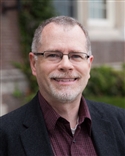
Michael Saffran (M.S. Rochester Institute of Technology) is a “cradle Catholic,” journalist, podcaster and writer. He attends, and serves as a lector at, St. Mary’s Church/St. Boniface Church (part of the Southeast Rochester Catholic Community), in Rochester, N.Y.
He is a semi-retired former college media instructor (and SUNY communication lecturer emeritus). He taught courses in broadcast journalism, media management, newswriting, radio/audio-media production, and public-relations writing. He also has worked as a media columnist, newspaper editor, public-relations specialist (healthcare and higher education) and radio broadcaster.




