I ALWAYS TRUST IN YOU MY DEAR JESUS

From Egypt I Called my Son


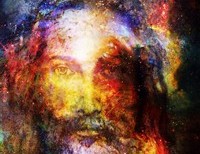
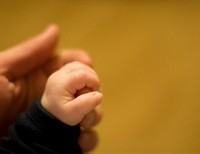
Photo By: Jaime Serrano
After the Magi had gone and adored the Child Jesus in the manger, it was expected that the Holy Family would return to Nazareth, where the Annunciation had occurred, as described in the Gospel according to Luke. The Holy Family’s journey to Bethlehem was nothing more than a civic duty regarding the Emperor’s census. However, the Magi’s visit had unleashed a jealous rage in Herod. Filled with jealousy for power and influence, he decreed the murder of all children under three years of age in his jurisdiction. This came to be known as the Massacre of the Holy Innocents.
As a result, Joseph and his family were forced to flee to foreign lands. Joseph was directed by an angel of the Lord in a dream to “rise and take the child and his mother and flee to Egypt;” he was told to wait there until further notice that Herod’s massacre in search for the King of the Jews had ended. According to scripture, we know that Joseph took mother and child and fled in the night to Egypt where the family remained until Herod’s death. This was to fulfill the prophesy of the Lord that “he shall call his son from Egypt.”
Through Jesus, we too can ensure that our burdens and our struggles become something holy and beautiful.
The story of the Holy Family’s journey to Egypt parallels many contemporary narratives, particularly those of people escaping political or religious oppression, war, or violence in many regions of today’s world. Like the Holy Family who escaped leaving everything behind, today’s refugees and immigrants have left their entire lives behind including jobs, houses, relatives and reputations, in countries and cities that could no longer offer them the security that is needed to achieve self fulfillment. These people have had to root themselves out and start over again in foreign lands from nothing, just as Joseph, Mary, and the Child Jesus did when they fled into Egypt.
Immigrating is often seen as a new beginning; one is full of hope and looks towards the future with youthful promise. Arriving in a foreign land means new opportunities and new experiences, but it also means new challenges. And it is these challenges that have allowed me to see both the good and the bad of an immigrant’s journey.
In my experience, leaving careers and reputations is overshadowed by the almost emotionally insurmountable task of having to leave family members and friends with whom refugees and immigrants have spent years building relationships. I have felt the loneliness of having to go through life without the support of my family; I have experienced the overwhelming task of learning a new language and interacting daily in a foreign society replete with new laws, customs and traditions. I have also had the unfortunate experience of dealing with individuals who attempt to take advantage of newly landed immigrants’ ignorance of their new home’s laws, traditions, and government-provided services. I have experienced ridicule at the hands of many individuals who saw my struggle with their language, my ethnic physical traits, or my unfamiliarity with their customs as reason for critique and shame. All of these have shaped my experience as an immigrant.
I know I am not alone in my struggle. I am not the first nor will I be the last to confront the ignorant, the racist, the xenophobic or the uneducated. There are many like me and, though I cannot speak for them, I can say that in a general sense we are engaged in a common struggle.
Moreover, I feel comforted in my struggle when I reflect on the Holy Family’s exile in Egypt; they went there as refugees, foreigners ignorant of the land’s customs, laws, and traditions. Joseph, Mary and Jesus most likely felt the struggle that modern day immigrants feel, and it is through this experience that we connect with Jesus and his family. He, like so many of us, was a foreigner in a new land. It is as if Jesus were telling us that he understands our struggles and our pain; he has felt it also.
Yet, while living in Egypt, Jesus sanctified it with his presence after a painful history with the Jews and fulfilled the Lord’s plan through his life of redeeming us from our sins and leading us to salvation; Jesus began his life as the Saviour of Humanity in the same place where his people had been enslaved for generations. This points to a renewal of all things, be they tainted by oppression or apparently unsalvageable in sin, through Jesus Christ into holiness, peace, and fulfillment.
Through Jesus, we too can ensure that our burdens and our struggles become something holy and beautiful. Specifically, immigrants’ struggles and pain can become something beautiful, just as Jesus’ exile in Egypt symbolises. We have been given the privilege of living a similar experience to his and we must make the best of it, through him.
In the Bible it is written that the Lord called his Son from Egypt. The angel put Mary and Jesus in the custody of Joseph during their exile in Egypt. Symbolically, all of us immigrants in Canada take Joseph, the patron Saint of our adopted country, as our custodian during our trials and daily struggle; he is our source for courage and inspiration.
Joseph shows us that we must trust in God, no matter how perilous the journey ahead may seem; God called and Joseph obeyed. Similarly, God calls us all to follow the lives he has planned for us. He has called us to live according to His plan to free us from a world of sin into a life of eternal love. We must be open to His call until we can hear it clearly. It may take some of us away from our homes and our comforts, but if we want true freedom, we must listen and obey. God called – and I followed His Word to Canada.
Listen and be attentive. When he calls you, what will you answer?
Reprinted with the permission of the Diocesan Messenger
Recommended Stories
About the Author
I was born in Mexico City into a Catholic family. It was in my family where I first learned to know and love God. There is no doubt that attending Catholic schools from kindergarten to university helped me grow deeper in my faith and made me able to share with others the love that God has shown me.
In Mexico I practiced law for 14 years. Then my husband and I decided to apply for residency in Canada. In 1999, my family and I moved to Canada. With my two boys in tow, I was once again blessed with the gift of motherhood when my daughter was born in Canada.
Unable to practice law in Canada, I looked for another kind of job. But it wasn’t until I started writing that I found a way to pour my thoughts and struggles as an immigrant and as a parent. Mostly it is a way to express my faith and life from a Catholic point of view.
I joined a writer’s group and took writing courses at the University of Victoria. Since then, I have been determined to take my writing seriously, create something, and be more upfront about it.
Writing is my best companion. It is the best way to express my feelings, beliefs and love. Writing for me is the best way of sharing who I am; passing my learned lessons unto the next generation; and to communicate with the rest of the world.
I have published different articles in local newspapers. I received such great reviews from my family, friends and acquaintances that motivated me to continue my writing.
All my books and poems are printed in English and in Spanish.
My motto is: “Be the Inspiration, Find the Inspiration”.
FB: https://www.facebook.com/Mar-Camen-WriterEscritora-613821118768821/?ref=bookmarks