
A Line, Not a Circle
Sponsored

Catholic365 is sponsored by
Road to Purity


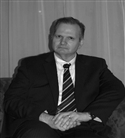

69 years ago today, October 23, 1956, the Hungarian Revolution began.
Forced behind the Iron Curtain by occupying Soviet "liberators" after World War II, by 1956 Hungary was a powder keg ready to explode. Matyas Rakosi, installed as Communist Party boss in 1947, lead a local totalitarian regime every bit as repressive as Stalin in Russia. Under Rakosi, the Hungarian Catholic Primate Josef Mindszenty was subjected to a show trial, convicted, and jailed.
Soviet dictator Joseph Stalin's death led to hopes for liberalization in the satellite states of eastern Europe. Protests against the communist regime in Poland had led to marches and strikes in Poznan that year, which were repressed. Still, there was a change in the national party leadership that some hoped would produce a thaw.
By fall, the thirst for freedom spread to Hungary. October 23 is generally taken as the date of the Hungarian Uprising, because it was the day university students in Budapest appealed to the country to unite to shake off Soviet dominance. That night, Hungarians in Budapest ripped down a statue to Stalin, built over what had been a church destroyed to make way for the monument. The wave of national support led to the 'reformed" communist leader, Imre Nagy, promising even to take Hungary out of the Warsaw Pact. (Nagy would later be secretly executed by the Soviets in Moscow).
Caught off guard, Soviet troops in Hungary seemed initially to pull back but, on November 1, a full-scale Soviet invasion of Hungary was underway, aimed at repressing the freedom movement. By November 4, the Soviets were in complete control. They installed Janos Kadar as their new party ruler, a man who would stay in control of the country until 1988, i.e., roughly a year before freedom finally returned to Hungary.
The Hungarian Uprising of 1956 led to a brief moment of liberty during which Cardinal Mindszenty was freed from jail and appeared publicly in Budapest. With the return of Soviet rule, Mindszenty sought and obtained asylum at the American Embassy in Budapest.
The cardinal literally lived in the American Embassy from November 1956 until the fall of 1971. The Hungarians wanted to get rid of or punish him. His presence was an "obstacle" to bilateral U.S.-Hungarian relations. And by the early 1970s, with the Vatican practicing Ostpolitik (an accommodationism to the communist regimes of the East), it seemed Rome wanted him gone, too. It was Cardinal Mindszenty who wanted to stay, seeing himself -- as Primate of Hungary -- as the legitimate continuation of lawful authority in that communist-ruled land. Eventually, the Vatican pressured Mindszenty into departure: he would spend the rest of his life (he died in May 1975) in exile in Vienna, Austria. During his exile years, he made a pilgrimage to visit the Hungarian diaspora in the United States. The repression of the Hungarian Uprising led to a large exodus of Hungarians from the country, renewing Hungarian ethnic communities around the world, including America. The bitter exile of those refugees is described in James Michener's still-classic nonfiction book describing their escapes through Austria, The Bridge at Andau.
John Grondelski (PhD Fordham) was former associate dean of the School of Theology, Seton Hall University in New Jersey. He is a Catholic theologian with special interests in moral theology and the thought of St. John Paul II. All views are his own.



