
What an Old Testament Jew Can Teach Us about Not Giving Scandal
Sponsored
Catholic365 is sponsored by
Road to Purity


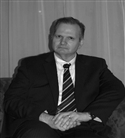

October 22 was the Optional Memorial of St. John Paul II. Some Catholics might wonder why the Church marks his feastday in October. Isn't it usual for the Church to honor a saint on the day of his death, i.e., his dies natalis, his "birthday" into heaven?
Yes, but not always. Sometimes a saint's feast gets preempted. Take St. Peter Chrysologus. He was a fifth century bishop and great preacher. It was thought he died (and so his feast was traditionally observed) in early December. But when the liturgical ("Roman") calendar was revised after Vatican II, historians argued that, in fact, Peter had died on July 31. The calendar reform tried to stay true to history but, in 1969, July 31 was already long taken as the obligatory feast of St. Ignatius Loyola, the founder of the Jesuits. So, first come, first served: even though Peter lived more than a millennium before Ignatius, by the time it came to fixing a date of the calendar, the right date was already taken. That's why he's observed as closely to July 31 as possible: his feast is July 30.
John Paul died April 2, 2005. Early April is a difficult time liturgically. It can be a weekday of Lent, a weekday of Easter, Holy Week, the Easter Octave, or even Easter itself. Any one of those would take precedence liturgically over a saint's feast, especially an optional memorial. So, rather than place the feast on April 2, when it had a better chance than not of being preempted, the Church looked for a more suitable time.
Oftentimes, the fallback in such cases is the person's actual birthday. In John Paul II's case, that would be May 18. But May 18 is already taken by Pope John I, a sixth century papal martyr. Don't want dueling popes!
Sometimes, the date of a person's ordination is then chosen. John Paul II was ordained a priest on November 1, meaning that day would always be taken by All Saint's Day. He was consecrated a bishop on September 28, which was already the feast of St. Wenceslaus.
So why October 22?
John Paul celebrated his Mass assuming pastoral leadership of Rome on that day, the day of his famous homily calling on Catholics to "be not afraid!" It's not the day he became Pope -- Popes become pope the day they accept their election, in his case, October 16. Nor is it an "inauguration." The Pope has all the authority of the papacy once he accepts the papacy.
But up until Pope John Paul I, the formal public ceremony marking a new pontificate used to be the papal coronation. John Paul I chose to do away with the monarchical trappings of the papacy, declining to be crowned with the papal tiara. He chose, instead, to mark the start of his pontificate with a Mass for his ministry as bishop of Rome (thanks to which a man is the pope). That's what John Paul I did on September 3, 1978. He died at the end of that month, setting the stage for the conclave that elected John Paul II on October 16, 1978 as the first non-Italian pope in over 450 years. Upon his election, John Paul II chose to continue his predecessor's model so, having been elected on a Monday, he celebrated this public Mass marking his new ministry the following Sunday, October 22. Hence, his feastday!
Recent popes, wanting to preserve papal primacy without appearing to engage in papal triumphalism and to foster better relations with the Orthodox (with whom Petrine primacy remains a sticking point) have sought to remind the Church that the Pope is pope because he is bishop of Rome, and thus to accentuate their pastoral responsibility for the archdiocese by virtue of being whose bishop makes them pope. John Paul II was particularly sensitive to finding common ground with the Orthodox, as his encyclical Ut Unum Sint made clear. So, it's appropriate we mark his feastday with the day marking his public role as Bishop of Rome!
John Grondelski (PhD Fordham) was former associate dean of the School of Theology, Seton Hall University in New Jersey. He is a Catholic theologian with special interests in moral theology and the thought of St. John Paul II. All views are his own.



