
Peter's First Easter Sunday
Sponsored

Catholic365 is sponsored by
Road to Purity



SOME THINGS NEED TO BE SAID
Lk. 17:11-19
An old farmer and his wife were celebrating fifty years of married life. Their children gave them a party. Friends came to congratulate them. It was a festive occasion. They looked at old photographs and reminisced about happy events. Someone put on a CD and they even danced a little. When the party was over, everyone went home and the happy couple was left alone. It was a tender moment, so tender that the mostly-silent husband was moved to speak. He said: "You know, Love, over these fifty years, sometimes I have loved you so much that I could hardly keep from telling you." She dabbed at her eyes with a tissue, and said, "Thank you."
Wouldn't you like to turn him over your knee, and just spank him?
It took him fifty years to say "I love you" and even then, it was more of an explanation than a declaration. Why are we so reluctant to say the things we really feel? Why are we so frugal with our words of praise?
Jesus wondered that same thing. He had healed ten men who were afflicted with leprosy. It came about in a rather unusual way. The lepers had shouted from a distance, "Jesus, have pity on us." He told them to go and show themselves to the priests. That was a requirement of the law. A healed leper had to be examined by a priest before he could return to society. So, these ten men, acting on faith, went to show themselves to the priests. Along the way, they were healed. One of them, but only one, turned around and went back to say thank you. On seeing him Jesus wondered, "Where are the others?"
My guess is that those nine men did not mean to be ungrateful. I would even say that they were genuinely grateful. How could they not be? One moment they were trapped in a living hell, outcasts of society, living away from home in a leper colony and the next moment, they were free, clean, and starting life all over again. They must have been grateful, but they failed to express their thanks to Jesus. Why did they not come back to give thanks?
Could it be that they were so resentful of their illness that they thought healing was their just due. If so, that's sad. Could it be that these men never knew the joy of genuine gratitude? On the other hand, they may have been deeply grateful, but like many fail to realise what an expression of thanks means to their benefactor. But we'll never know, because they didn't say. Some things just need to be said.
Why is this so? It is because there are times when we all need words of praise and approval. Once in a while, it helps to hear it from someone else. Some Sundays a priest finds nothing seems to be right. Attendance at Mass is down, and so it seems is the enthusiasm of the people. The best thing to say about the homily is that it is over. But after the service, a little child hugs his legs and says, "I love you," and that just makes his day. He visits an old woman in a nursing home. They chat for a few minutes. As he starts to leave, she takes his hand in both of hers, and thanks him for coming. That lifts his spirits. It tells him he is doing something worthwhile.
All of us never outgrow this need for praise and approval. It starts in early childhood. When we take our first steps, someone cheers and tells us we are doing well. That keeps us going through all of the falls and bumps, until we really learn to walk. We start school and learn to spell C-A-T. Someone cheers. That keeps us going and we eventually learn to spell "hippopotamus". We go to work. The boss notices the good work we are doing and gives us a rise. That motivates us to try even harder. Some things need to be said because we all need to hear them.
We also need to say them. When you teach your child to say "thank you", you're not thinking about the people who will hear those words. You are thinking about your child. He needs to tell them. It is part of becoming civilized. It is one tiny step in realising that the world does not owe him a living. Your child will never be a whole person until he feels real gratitude. Part of becoming a grateful person is learning and using grateful words. If a child keeps on saying "thank you", it will shape his character and he will be a genuinely grateful person. Some things need to be said, and we all need to say them.
The good news is that all of us can do that. It does not take a silver-tongued orator to say the things that need to be said. We do not know the precise words of the one man who returned to thank Jesus. Our reading reports that he "came back praising God with a loud voice". He need not have expressed his mood with a loud voice but he did for he was genuinely grateful and happy. He may have just said "thank you". That would have certainly been enough. He didn't need to make a speech and the loud voice was not required. He could have whispered "thank you". The truly important words seem to work best when we whisper them. My point is that we can all say the things that really need to be said. Even if we are totally incompetent at public speaking, we can still do that.
Actually, the greatest speech I ever heard is also the greatest speech I ever made. I am not boasting about my oratorical skills. This speech can be made by anybody, even a child. It is only three words long and those three words are, “I love you”. That is probably the most profound thing that one human being can say to another. When was the last time you said that to your spouse or to your child? Have you spoken those three words to your wife today, or this past week? You may say, “She knows I love her”. Yes, she may, and I sincerely hope she does, but some things need to be said. Jesus seemed to think so. He said, "Where are the other nine?"
Lord Jesus, thank You for curing those ten lepers, and through the gratitude of one of them, we learn the importance of expressing our thanks.
MY WEBSITE IS HERE
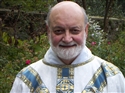
I am a Capuchin Franciscan priest who wants to spread the Gospel of the Lord.



