What Does An Old Priest Do In Retirement?
Sponsored

Catholic365 is sponsored by
Road to Purity




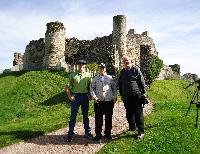
A short distance from my home and close to an ancient village called Bawtry, which is located on the Great North Road (a road originally built by the Romans), are the remains of Roche Abbey.
The abbey was founded in 1147 when the stone buildings were raised on the north side of the beck. When the monks first arrived in South Yorkshire from Newminster Abbey in Northumberland, they chose the most suitable side of the stream that runs through the valley, on which to build their new Cistercian monastery. Twenty-five years later, at the end of the century, the Norman Gothic great church had been finished, as well as most of the other buildings. The control of the abbey was vested in the de Vesci family, lords of Rotherham, who in turn sub-feuded the land to Richard FitzTurgis, Lord of Wickersley.
From the start, the Abbey of Roche, built for the so-called White Monks, as the Cistercians were known, had an almost otherworldly air. It was, after all, built at the northern end of an area once covered by Sherwood Forest, and it was said that Robin Hood himself went to Mass here.
Eventually, on the death of FitzTurgis, control of the abbey passed to his son Roger, and then eventually to granddaughter Constantia, who married William de Livet, a family of Norman origin who were lords of the nearby village of Hooton Levitt. The abbey continued in the Levett family until 1377, when John Levett of Hooton Levitt sold his rights in the abbey to a London merchant named Richard Barry. By the time of the dissolution full control of Roche Abbey was held by Henry Clifford, 2nd Earl of Cumberland, who came in for numerous grants at the Dissolution as he was married to the niece of King Henry VIII.
The records of Roche Abbey were lost or destroyed in the dissolution, so there are no accounts of what went on in the abbey, other than there were 14 monks and an unknown number of novices in the year 1538. It was the dissolution by King Henry VIII of England that rendered the abbey to ruin, but the walls of the north and south transepts are still impressive. The local community, at the time of dissolution, decided they had first right of claim on Roche Abbey and its possessions. A very detailed account exists citing the terrible destruction of the abbey and its valuable artefacts. Timber, lead and stone were removed in vast quantities. The remarkable chronicle of the despoliation was written by Michael Sherbrook, a priest and rector of nearby Wickersley who watched the pillaging. "The church was the first thing that was spoiled; then the abbot’s lodging, the dormitory and refectory, with the cloister and all the buildings around, within the abbey walls," wrote Sherbrook in his eyewitness account. "For nothing was spared except the ox-houses and swinecoates and other such houses or offices that stood outside the walls - these had greater favour shown to them than the church itself."
"This was done on the instruction of Thomas Cromwell, as Fox reports in his Book of Acts and Monuments", wrote Sherbrook in his remarkable account. "It would have pitied any heart to see the tearing up of the lead, the plucking up of boards and throwing down of the rafters. And when the lead was torn off and cast down into the church and the tombs in the church were all broken (for in most abbeys various noblemen and women were buried but their tombs were no more regarded than those of lesser persons, for to what end should they stand when the church over them was not spared for their cause) and all things of value were spoiled, plucked away or utterly defaced, those who cast the lead into fodders plucked up all the seats in the choir where the monks sat when they said service."
In 1540, Thomas Cromwell fell into disfavour and was beheaded by Henry VIII. His death was a matter of great celebration among the remaining Catholics in England, but the damage and destruction Cromwell had initiated on countless monasteries and abbeys all across England was irreparable.
The site is now in the care of English Heritage. The cliff path walk provides access to a view across the abbey grounds where its layout can be appreciated. Many of the buildings are low-standing but the walls of the church still stand to full height and the gothic French idealism thrust into its design and architecture is visible. Later additions to the buildings included a kitchen area and abbot's quarters that were built on the other side of the beck. These quarters were accessed by a bridge which still stands. Showing great ingenuity, the monks had built latrines over Maltby Beck so the running water took away the waste. They had dammed the stream higher up to ensure fast flowing water: quite a modern facility for the 13th century. There are several local legends concerning ghosts, tunnels to other buildings, and even a lost wishing well.
Beautifully set in a valley Roche Abbey has one of the most complete ground plans of any English Cistercian monastery, laid out as excavated foundations. The soaring early Gothic transepts of this Cistercian monastery still survive to their original height and are ranked in importance with the finest early Gothic architecture in Britain. It remains one of my favourite destinations.
If you'd like a tour along with visiting priest, Fr. William C. Bush from Lexington, Ky, go to http://youtu.be/61sXhb0q_jc
I am a retired priest who lives quietly in his native England. I have a YouTube channel at:http://www.youtube.com/user/