Sponsored

Catholic365 is sponsored by
Road to Purity


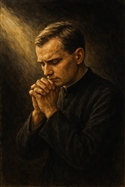

Karol Wojtyla, who would become Pope John Paul II, was anointed by grace through suffering. Born into a Poland torn apart by German and Russian oppression, he grew up amid chaos and grief. His mother died when he was young, followed soon by his baby sister and elder brother. Yet in these shadows, a light began to form.
As a young man, Wojtyla immersed himself in the writings of the Carmelite reformers, St. John of the Cross, and later St. Thomas Aquinas. These voices taught him that Christian life is radically Christ-centered, echoing Mary’s words at Cana: “Do whatever He tells you” (Jn 2:5).
His early losses became stepping stones toward a greater purpose. Like St. Paul, who called himself “a prisoner for Christ Jesus for the sake of you Gentiles” (Eph 3:1), Wojtyla surrendered his youthful dreams — including a promising acting career — to become a servant of the Gospel.
His father was his first teacher, his “first seminary,” shaping his devotion to faith, culture, and prayer. Through literature he learned to communicate with clarity; through culture he learned the endurance of a people who clung to God through centuries of trial; through prayer he found strength, freedom, and truth.
These three gifts — literature, culture, and prayer — prepared him to rise from the shadows into the world’s light. As George Weigel writes in Witness to Hope, Wojtyla became an “imitator of Christ,” gathering the multitudes as Jesus once did by the Sea of Galilee. His poetry, acting, and philosophy gave him both the heart of a shepherd and the voice of a prophet.
In this way, Poland shaped his destiny, and suffering prepared him for greatness. John Paul II stood not as an actor playing a role, but as a true messenger of God — a shepherd who spoke to the world of freedom, truth, and hope.
I am a devoted Catholic writer passionate about exploring faith, family, and the timeless teachings of the Church. I write articles that inspire spiritual growth, clarify Church teachings, and engage readers seeking wisdom for daily life. With a foundation in theology, philosophy, and practical experience, I aim to communicate the beauty of Catholicism in a way that is both clear and meaningful.



