
Who Is Jesus?
Sponsored

Catholic365 is sponsored by
Road to Purity



The year 1517 turned out to be an extremely significant one for the not yet formed Society of Jesus, which is more commonly known as the Jesuits. For one, that year marked the beginning of the Protestant Reformation when Martin Luther nailed up his 95 theses to the church door in Wittenberg. Shortly after the death in 1556 of the founder of the Jesuits, St. Ignatius of Loyola, some of his followers, including Jeronimo Nadal, began to see their founder as having been called by God to serve as the counter to Luther: “God called our Father Ignatius in about the same year that Luther left his convent and contracted his scandalous marriage…From this fact we understand in a special way how the Society was raised up to help the Church in Germany, in India or where ever. And so: in that same year that Luther was called by the devil, Ignatius was called by God.” The year 1517 also saw the birth of Juan de Polanco, whom Ignatius would personally appoint to be the secretary of the recently created Society of Jesus in March 1547.
The importance that Polanco played in the development and organization of the early Society is not in dispute. From the founding of the Jesuits in 1540 until Polanco’s appointment seven years later, Ignatius had cycled through a number of secretaries, even though it was becoming increasingly clear that running the Society was moving beyond the capabilities of one individual. The choice of Polanco proved to be an excellent one. One of the most important tasks facing Ignatius after the formal establishment of the Jesuits by the papal bull Regimini militantis ecclesiae was to compose the constitutions that the papal document instructed the Jesuits to establish and follow. However, despite the importance of this task, Ignatius made no substantive progress in the job until after the appointment of Polanco as secretary. Polanco also established the practice of sending letters to all the houses of the Society several times a year. While these letters were meant to inform officially the communities of what was going on in Rome, they also had a much more significant purpose, namely to show Jesuits, and anyone who would hear or read the letters, what it meant to be a Jesuit out in the world. It is also because of Polanco that the first biography of Ignatius was written in 1547 and, further, Polanco was instrumental in convincing Ignatius to “recount his life story” in what became his Autobiography. John O’Malley characterizes Polanco as, along with Jeronimo Nadal, “without doubt the two Jesuits who, after [Ignatius], most effectively animated the young Society and gave it shape.” Other Jesuit scholars are in agreement: “Of the Jesuits involved in the development of the early Society, it was probably Polanco who took the greatest number of significant decisions.”
The importance, then, of Juan de Polanco is not in dispute. However, what is questionable and what this paper will attempt to address, is the nature of Polanco the man and the kind of relationship that he actually had with Ignatius. Officially, Polanco held Ignatius in very high regard, describing Ignatius in almost hagiographic terms: “Ignatius possessed in an uncommon degree certain natural gifts from God: great energy in undertaking extraordinarily difficult tasks, great constancy in pursuing them, and great prudence in seeing them to completion.” Polanco, also, possessed “a remarkable ability to understand the mind and heart of Ignatius, and to make his efforts complement those of Ignatius in an extraordinary and effective manner.” However, despite his praise for Ignatius, Polanco would often complain that in his nearly decade long service to Ignatius, which was carried out in close proximity, that he rarely, if ever, heard a good word from Ignatius.
That situation may say more about the personality of Ignatius, which was known to be difficult, than anything else. Two other examples, however, cast further questions on how close this relationship really was. In the year after his appointment as secretary, Polanco composed a manuscript entitled “Doce Industrias,” which was meant to serve as, essentially, a blueprint for the not yet composed Constitutions and a guide for how the members of the Society could direct their efforts. In that document, Polanco, for his part, made it very clear that the main goal should be the active recruitment of new members and, indeed, he put this immediately beneath the title in the manuscript draft. However, Ignatius, who had been adamant that the Society should not be actively recruiting new members and should make admission to the Society difficult, crossed out this entire chapter in the manuscript. Obviously, Polanco would need time to learn the mind and desires of Ignatius. However, it is curious how, after a full year as being secretary, Polanco would not know Ignatius’ mind on such an important and fundamental matter.
The second example occurred with the death of Ignatius in 1556. Polanco himself had noticed how Ignatius’ health had been declining and had acknowledged this in a November 1554 letter to the provincial in Sicily: “…on the one hand the multiplicity of affairs, from the increase of our Society, and on the other, the many and, so to speak, constant sufferings of our Father, which keep him almost always in his bed, and this last year particularly, make us want more help and relief for him than he has yet had.” Given the reputed closeness of Polanco to Ignatius and his previous experiences with Ignatius’ illness, it would seem that Polanco would take seriously a request by Ignatius to be given the last rites, a request which was made in July of 1556. However, this is not what happened. As Polanco himself reports in a letter to the provincials, on Thursday July 30, 1556, “…[Ignatius] sent the infirmarian out of the room, said it would be well that [Polanco] should go to St. Peter’s, to inform his Holiness that [Ignatius] was near the end and had no longer hardly any hope of life.” Polanco pressed Ignatius on this and asked him if it was really necessary for him to go see the Pope right away. To this, Ignatius responded that he was so “ill that nothing remains for me but to give up my soul” and that he “would rather it were done today than tomorrow and the sooner the better.” However, despite these fairly firm requests by Ignatius, Polanco “thought it best in human prudence to wait till the Friday [to do what Ignatius asked].” The consequence of this indecision was that Ignatius, who died the next day, did not get blessed by the Pope and did not receive the last rites, all because Polanco felt it more important to prepare letters to be sent to Spain.
Given the importance of Polanco in Jesuit history, the paucity of scholarship directly on him in English is striking. Indeed, Robert Maryks in his Companion to Ignatius of Loyola notes that “many potential topics for future studies [in the early Jesuits] come to mind immediately: almost entirely missing is, for instance, a serious assessment of Juan Alfonso de Polanco Ignatius’ most important administrative aid.” Andre Ravier SJ in his history of the early Jesuits says much the same thing: “A detailed monograph regarding the role and the person of Polanco is still much to be desired…” One of the few studies directly on Polanco in English is Richard Dowling SJ’s overview of Polanco’s life, which was published in 1940. Most of the scholarship that does exist centers on the specific role of Polanco in the composition of the Jesuit Constitutions, which were presented to the Jesuits in 1550-1551. Carlos Coupeau SJ in his work on the issue suggests that “most historians have considered Polanco’s contribution to have been mainly mechanical, dull and hardly original.” Others, including Antonio M. de Aldama SJ, have argued that “composition, expression and diction and perhaps even division and order are generally Polanco’s.” Regardless of which argument one accepts, the question is largely unanswerable and will not be examined here. Polanco is also studied when the discrimination against Jesuits of Jewish ancestry, or the conversos, is examined, particularly in relation to the Third General Congregation of 1573. However, this remains also an indirect treatment of Polanco.
Fortunately, the writings that Polanco and the early Jesuits left behind are extensive and these, whether in the original or quoted in other sources, are the primary sources that are used for this paper. After the General Congregation in 1573, Polanco spent the next two years, until February 1575, in Rome dictating what became the Chronicon, which recounts the history of the Jesuits from 1537 through 1556. Spanning six volumes and forty-five hundred pages, this work chronicles the early history of the Jesuits in a way that would only be possible from someone like Polanco who was at the center of Jesuit governance for a significant part of that period. However, the work is written in Latin and the only printed editions were published in Madrid at the end of the nineteenth century, situations that have led the Chronicon to be inaccessible to many. Also, as mentioned above, the early Jesuits composed voluminous correspondence, much of which is preserved. Polanco had a role in most of the letters that were sent out under Ignatius’ name, with Ignatius providing the outline and Polanco composing the actual text of the letter. These letters are contained in the twelve volume Monumenta Ignatiana. Polanco’s own correspondence, along with his brief history of the Jesuits from 1564 through 1573, are found in the two volume Polanci complementa. Together, these resources can provide the answers to the questions that we are examining in this paper.
It is helpful to provide some background information on Polanco’s life up to March 1547 when he began his duties at the side of Ignatius. Polanco was born on December 24, 1517 in Burgos to Gregorio, who was on the Burgos city council, and Maria de Salinas. Polanco was named for his paternal grandfather, Alfonso, who died in 1491, who had married the daughter of Juana Garcia de Castro and Martin Rodriguez de Maluenda. The latter’s father was a cousin of Maria Nunez, who, in turn, was the sister of the rabbi turned bishop of Burgos, Salomon ha-Levi/Pablo de Santa Maria. Salomon (1351-1435) had been the chief rabbi of Burgos but converted to Christianity immediately prior to the pogroms of 1391 and eventually was elected bishop of Cartagena in 1402 and Burgos in 1415. His wife, for her part, continued to practice Judaism.
Like his later Jesuit companions, Diego Lainez and Francisco Suarez, most of Polanco’s sisters became nuns, although Polanco was the only male in his family to pursue an ecclesiastical career. To this end, Polanco was sent at the age of eighteen to study humanities and philosophy in Paris under Francisco de Astudillo, who, like Polanco, came from a Spanish family that had converted to Christianity from Judaism. It was during these years that Polanco first encountered the early companions of Ignatius and Polanco also spoke of his connection there with Martin de Olave who had become well acquainted with Ignatius at Alcala. However, Polanco was not inclined to join the companions of Ignatius in Paris and went instead to Rome in 1539 where, in short order, he was appointed as Apostolic Secretary, Count of the Sacred Palace and of the Lateran aula. Further, on March 20, 1541, he purchased for himself the important position of Notary of the Holy See for one thousand ducats. However, in the early summer of 1541, at the urging of his friend Francisco de Torres, who himself became a Jesuit in 1567, Polanco made Ignatius’ Spiritual Exercises. The experience obviously made a significant impression on Polanco, as on August 15, 1541, he expresses in writing to Ignatius and Laynez his desire to enter the Society of Jesus and take the vows of poverty, chastity and obedience.
After professing the three vows, Polanco next reports in a letter of May 18, 1542 that he had been sent to Padua to study theology. After spending the next four years there studying theology, Polanco was ordained to the priesthood in the summer of 1546 and was sent first to Venice and then to Bologna to “preach, hear confessions, and perform other pious works” and was eventually posted to Pistoia to continue the same work. Before long, Duke Cosimo of Florence expressed a desire for the Jesuits to come to Florence and open a college. As Polanco puts this episode in the Chronicon, “…when the duke confirmed what he had said earlier, he [Polanco] went to Florence. After inspecting the various properties that were shown him, he preferred a place with its own church over the other possibilities” and he drops the matter, implying that the college was never established.
However, there is much more to the matter and this incident earned the first rebuke that Polanco received from Ignatius. Polanco had enjoyed great success preaching in the cities of Tuscany, even preaching up to three times a day on the streets of Florence and other cities. Word of his work had made it to Duchess Eleanor who asked for Polanco to give her some spiritual instructions. While she was pleased with Polanco, Duke Cosimo was not and he found Polanco to be overzealous and difficult to work with. This impression of Polanco is entirely plausible. Indeed, around the same time and in Florence as well, Polanco had drawn the ire of his family for preaching on the streets and the family demanded that he stop because they found it embarrassing to them. In response, Polanco claimed that his preaching was proof of the authenticity of his vocation and indicated that he would continue to preach, even doing so in front of the Florence merchants where Polanco’s family made their money by selling wool. Regardless of the reason, Duke Cosimo decided to abandon the possibility of having a Jesuit college in Florence. Polanco, however, gives the impression in the Chronicon that he had decided himself to abandon the project because of a lack of suitable facilities.
This, however, was certainly not the case, especially when one considers the letter that Ignatius sent to Polanco in either February or March of 1547. In that letter, Ignatius expressed frustration to Polanco over Polanco’s February 1 letter to Lainez telling him that “other more important undertakings ought not be slighted in favor of the planned house and business at Florence.” This, of course, suggests that Polanco felt that the Florence project should not be given any kind of priority. However, this is explicitly contrary to Ignatius’ wishes on the matter: “I [Ignatius] fail to see how it could have been right, when I was trying to get Master Lainez free for Florence, that you should write him urging the contrary without letting us know here first.” Suggesting that Ignatius knows the real reason why the project was not completed and why Polanco wrote to Lainez without permission saying that he should not make the Florence project a priority, Ignatius writes “…modify your [Polanco] manner of dealing with the sovereigns there. When dealing with such exemplary rulers…to hand them sheets of paper with precepts or counsels for the reform of their consciences and state without first having obtained the requisite love, credit, and authority with them is a course more apt to ruin everything that to achieve your goal.” Thus, this suggests that Ignatius understood Polanco to have been overzealous and to have overstepped his instructions and Ignatius was seeking to rein him in. However, Ignatius ends the letter by providing Polanco with encouragement: “And so do not be discouraged, but endeavor to go forward in the Lord of all.”
In late 1546 and early 1547, Polanco certainly needed all the encouragement that he could get. At that time, Polanco’s brother, Luis Polanco, was becoming established as a merchant in Florence and, like the rest of the family, wanted his brother to follow his original career path and abandon his connections with the Jesuits. Luis tried to persuade Juan to return to Burgos and give up the Jesuits. When Juan refused, Luis had his brother locked in his house. However, Juan escaped the house by sliding down a rope from the window and went to Pistoia, where he found sanctuary in the house of the Bishop. However, Luis worked his connections in Florence and was able to compel the Bishop to give up Juan, who was then sent back to Florence as a prisoner. In this situation, Juan turned to Ignatius for his assistance. Ignatius used his influence with Duke Cosimo to get Juan released and he was summoned to Rome immediately after his release. Polanco presents this entire situation in one sentence in the Chronicon: “After he [Polanco] had dealt privately with the duke and duchess [of Tuscany] about some works of charity for their own spiritual advantage and that of their subjects and had preached in many parts of Florence, Father Ignatius called him to Rome in March because his [Polanco’s] blood relatives were causing him a great deal of bother.”
However, as with the situation with the Jesuit college in Florence, there is more to this situation than Polanco is willing to let on. Indeed, as recounted in a contemporaneous letter between two Jesuits, Ignatius himself communicated with Polanco’s brother and his associates to get Polanco released and indicated that, if Juan were released, he would come to Rome to present himself to Ignatius. According to the letter, though, it appears that it was more due to Ignatius personally than it was to Duke Cosimo that Polanco was released and was able to come to Rome. In any event, in March of 1547, Polanco was in Rome “poniendo todas sus cosas en manos de nuestro Padre.” By the middle of the next month, in a letter to his brother Gregorio, Juan expressed the firm desire to remain in the Jesuits and not do what his brother Luis wanted of him: “Quanto a mi proposito, tengole firme de vivir y morir en esta congregacion, y de no querer mouerme de lo que juzgo claramente mayor seruicio de Dios por ni[n]guno amor ni temor que me combata…” Evidently, Polanco’s family came around to his desires to spend his life in the Jesuits, as Polanco recounts in the Chronicon that his father, upon his death in 1553, “left in his will five hundred gold pieces or a smaller sum [to the Society] that his sons [Polanco’s brothers] might dispense as they saw fit.”
Polanco, then, arrived in Rome in March of 1547 at the age of thirty and assumed the role of Secretary to the General, a post which he was to hold for the next twenty six years, more than a decade and a half after the death of Ignatius. By this point, Polanco, given his activities in Tuscany after the completion of his studies in Padua, had also completed the final stage of Jesuit formation. In his position as secretary, Polanco, who earned the nickname Padre Cobos, after the royal secretary Francisco de los Cobos y Molina, who, not coincidentally, also had Jewish ancestry and who died in 1547, “became the best informed and, thus, most influential Jesuit in the early Society.” Ribadeneyra, one of the original companions of Ignatius, went so far as to claim that Polanco “seemed to sustain on his shoulders the entire Society.” One of the ways that Polanco managed to attain such influence was due to his intention “to reflect with the greatest possible exactitude the thought of Ignatius,” even if that meant questioning Ignatius extensively and being corrected by him. One of the first works that Polanco produced after becoming Secretary was his “Rules of the Secretary,” which defined the general nature of the position, although the text focused principally on the Secretary’s role in sending out Ignatius’ correspondence and which codified this intention. Fr. Scaduto, who made the primary study of the “Rules,” indicated that Polanco’s understanding of his position, as spelled out in the rules, reflected the “integrity of identification between the person and the institution.”
Clearly, then, representing Ignatius as closely as possible was very significant to Polanco and, at least, was presented as being a fundamental part of his job description. Ignatius, for his part, must have felt that Polanco was doing an adequate job of this. As one example of the faith Ignatius put in Polanco, in a letter of December 4, 1549, Ignatius writes to a Girolamo Croce after his son Lucio had recently been admitted to the Jesuits that “Master Polanco customarily examines those wishing to follow our Society.” Ignatius then went to recount that, during the examination of this candidate, “I myself did not speak with him,” but that, even with the candidate being only nineteen years old, Polanco felt that, “in view of [Lucio’s] excellent dispositions and the testimony of his confessor and believing that God was inspiring him,” Lucio should be admitted to the Jesuits and reported as much to Ignatius. Despite the candidate’s father being very angry at his son’s admission to the Jesuits, Ignatius felt secure enough in Polanco’s recommendation to not only admit Lucio to the formation process but also to admit to Lucio’s father that he had essentially yielded the authority to admit or deny someone to the Society to Polanco.
However, it is at best curious as to why Ignatius would have had so much trust in Polanco’s decision making with regard to admitting candidates to the Jesuits. Only two years before this letter, Ignatius had instructed Polanco to write a letter on October 31, 1547, to the Jesuits that were stationed outside of Rome, in which contained extensive comments on Ignatius’ thoughts on the process that one should undergo before they are admitted to the Society:
Our Father [Ignatius] is very careful to admit no one who is unsuited to our Institute and to dismiss those who after admission prove difficult or unwilling to do their duty, although he helps such persons to strive to serve God better elsewhere. He refuses to tolerate not only actual sins obvious to all (which by God’s grace never occur) but also others which, being interior, are often not known or avoided even by some who consider themselves spiritual persons and servants of God, such as stubbornness of one’s own judgment and will, which, even if greatly counterbalanced by other good qualities, is absolutely not tolerated in this house.
Ignatius was determined, then, that not just anyone should be admitted to his order and that the Society should examine applicants in such a way that “would make their access very difficult” and that the Society should not go out and actively recruit people to join.
However, one will recall from the example at the beginning of this paper, that Polanco, at the start of his service as Secretary at least, took a decidedly different view of whether or not the Jesuits should go out and actively recruit people. One of Polanco’s first jobs as secretary was to synthesize the writings of Ignatius and from the other first companions in preparation for the composition of the Constitutions. The main purpose of this work, then, was to produce a document that would serve as a basis for establishing what the Jesuits were and what their priorities were when Ignatius and Polanco formalized that into the Constitutions. The document that Polanco produced was entitled “Doce Industrias con que se ha de ayudar la Compania, para que meior proceda,” and listed, in order of precedence, the twelve “industries” that the Jesuits should be invested “for the good of the Company and the glory of God.” The first industry that Polanco listed for the Jesuits was to go out and get people and the second industry was to choose between those that had been caught. These two were listed significantly above other industries such as assisting those who were already in formation to grow and develop in the Society (the fifth industry), to assign people effectively to work in “God’s vineyard” (the seventh industry) and to assist the superior in the governance of the Society (the eleventh industry). Thus, to Polanco, writing the “Industries” in 1548, the most important thing for the Jesuits to do was to go and get people, a wording that indicates that the Jesuits should be actively recruiting people to join the order. This, of course, was not what Ignatius wanted and certainly not consistent with his letter of the previous October. Such an inconsistency, then, would certainly explain why, in his notes, Ignatius wrote next to Polanco’s first and second industries “do away with it all” and crossed out the entire first chapter from Polanco’s text. However, despite this fundamental disagreement on a very significant issue, Ignatius still, by 1549, was having all those who were seeking admission to the Society interviewed by Polanco.
As Ignatius and Polanco’s working relationship continued, the extent to which Ignatius genuinely trusted Polanco continues to be unclear. The publication of the Short Directory for Confessors in 1554, a text which has Polanco listed as the author, is a good case in point of this tension. Ever since the founding of the Jesuits in 1540, and even prior to that, the hearing of Confessions had been one of the primary ministries that the early companions of Ignatius performed. Polanco mentions that, in early 1540, the main ministries for the Jesuits were: “…general confessions leading to the frequent use of penance and Holy Communion; and through the Exercises, now given to larger numbers of people…and through teaching Christian doctrine…” Polanco also indicates that at times Jesuit confessors were in such high demand that they were even willing to forego the saying of mass in order to meet that demand, an indication of how highly the early Jesuits viewed the place of hearing confessions. Not surprisingly, then, the Jesuits felt strongly that only certain, very highly qualified priests should be able to hear confessions. Indeed, regarding confessors in the Constitutions, it is stated that “…[for the confessor there should be] an instruction helping toward the good and prudent exercise of this ministry in the Lord without harm to oneself and with profit to one’s neighbors.” On this section, Nadal commented that it was preferable that, if one could not hear a confession properly, then it would be better to let the confession go unheard.
Given how important it was to the Jesuits to have good confessors and to perform the sacrament as well as possible, Ignatius would clearly not pick just anybody to write a manual on confession immediately subsequent to the Council of Trent’s 1551 session on penance. In the preface to the Directory, Polanco claims that Ignatius personally tasked him with composing the manual:
Since it seemed good to explain that the priests of the Society that had spread in different parts of the world should follow one and the same way in doing this ministry [of hearing confessions] – since they are moved by one and the same spirit to promote men’s salvation – I have received a task from our Reverend Father Superior to compose, as far as I am able in good order, a compendium of what I had learned to be useful for both confessors and penitents, in part from lecture and in part from observation, and more so from my own personal and other people’s experience.
One of the activities that Polanco had done during his tertianship, as mentioned above, was hearing confessions and he had done so successfully. Given this, considering Polanco’s position in the Society, and that Ignatius’ trusted him to interview everyone who sought admission into the Society, the choice of Polanco to write the Manual would seem to make sense.
However, if one looks at a series of letters that Polanco sent out in January 1554, which was just after the first publication of the manual, it is not at all clear who the actual author of the Manual was. In the first of these letters, which was dated 13 January 1554 and was sent out to the Jesuit schools, Polanco writes that Ignatius wanted a manual for Jesuit confessors to be produced so that, to the extent possible, the sacrament could be done in a uniform way throughout Jesuit works. In response to this instruction, “a group of Fathers” worked together to produce the book and that Polanco’s name was appended as the author because it was prohibited to “print a book without an author’s name.” In a letter from ten days later, Polanco says much the same thing: Ignatius directed that a manual for confessors be written, a group of Jesuits in the house in Rome came together to produce such a work and Polanco’s name was then listed as the author of the work. From the letters, then, it appears that Polanco’s role in writing the Manual was very limited and he may have only lent his name to the final product in order to satisfy the censorship requirements that a book could not be published without naming a specific author.
What to make of this situation then? It appears that, especially given Polanco’s propensity to not necessarily represent the entirety of the situation in his published writings, that the evidence from the letters be given more weight than what appears in the preface of the Manual. The content of the Manual represents not the ideas of Polanco but rather the general consensus of the Jesuits in Rome, most of whom were the early companions of Ignatius, on the issue of what constituted proper confession. In all probability, Ignatius decided to name Polanco as the sole author of the book in order to indicate that, given the position of Polanco in the Society, the contents are authoritative and not because Polanco necessarily contributed anything of consequence to the book. Such an arrangement could also explain why Ignatius allowed Polanco to interview all the candidates seeking admission to the Society despite Polanco having very different views on how easy or difficult it should be for one to be admitted: that Ignatius could not interview everyone and, as a result, he needed to delegate the task to someone who was regularly in Rome and whose position would convey the sense of importance that the task required and Polanco, given his position and that he was mostly in Rome, was a logical person for it.
One of the more curious instances in the relationship between Ignatius and Polanco is the latter’s actions immediately prior to the death of Ignatius in 1556, events which were briefly mentioned at the beginning of the paper but bear more thorough examination at this point. By the summer of 1556, it was clear that Ignatius had become very ill and that it was entirely possible that he would not live through the summer. Polanco himself notes that “On June 11 [1556, Ignatius] began to feel indisposed, and, during the month of July, he manifested some signs of fever, in addition to his stomach ailments. Since bad health prevented him from carrying out his duties of governing…he gave full powers to the Secretary of the Society [Polanco himself] and Father [Cristobal de] Madrid…” The fact that Ignatius was willing to yield the running of the Society to someone else by itself indicates the extent to which Ignatius felt that his health had slipped. Further, during that same summer of 1556, Ignatius wrote a letter to Dona Leonora Mascarenhas, who had asked Ignatius to pray for her foster son King Phillip II, saying that he prayed daily for the King and added: “I trust in His Divine Majesty that, during the few days which remain to me, I shall do so also more and more.” Further, in a remark to a group of Jesuits who had gathered with him that summer, Ignatius seemed to his express that he was prepared to die: “Three things I have especially desired, and, thanks be to God, I have seen them all granted to me: that the Society should be established by the Pope’s confirmation; that the book of the Spiritual Exercises should receive the approbation of the Holy See; and that the Constitutions should be completed, and observed by the Order everywhere.”
In both the Chronicon and an extensive letter that Polanco sent out to the worldwide provincials on August 6, 1556, Polanco presented his version of the events surrounding Ignatius’ death, a version that is at variance with some of the other available evidence of those events. According to the letter, on July 29, 1556, Ignatius asked Polanco to have Dr. Baltasar de Torres, who was a doctor and also a Jesuit, to examine Ignatius. The next day, July 30, both Dr. Torres and another physician, Dr. Alessandro Petronio, went to examine Ignatius again. At this point, the Chronicon and the August 6 letter presents two different versions of what happened after this examination. According to the Chronicon, Polanco instructs Dr. Petronio to inform Polanco if he felt that Ignatius was in danger so that Polanco could go immediately to get the blessing of the Pope. There is no mention of any remarks by Ignatius. However, in the letter, Polanco reports that Ignatius asked him explicitly to go to the Pope and “to inform His Holiness that [Ignatius] was near the end, and had no longer hardly any hope of life and that [Ignatius] begged His Holiness’ blessing for himself…” To this, Polanco responded by saying to Ignatius that “Father, the physicians see no danger in this illness…Do you find yourself so ill as this?” Ignatius responds that he wishes that Polanco would go see the Pope that day rather than on Friday “and the sooner the better. But do what you think best; I leave myself entirely in your hands.” The reason for Polanco’s desire to wait was that he wanted to send a number of letters to Spain and the mail was being sent out that evening. It is curious here why Polanco would have simply disregarded a specific instruction by Ignatius, although when looked at in conjunction with the previous instances of Polanco disagreeing with Ignatius on major matters it may not be so curious. In any event, that whole dialogue between Ignatius and Polanco is not found in the Chronicon.
Polanco reports in his letter that this conversation with Ignatius occurred at approximately four in the afternoon on July 30. However, in the August 6 letter, Polanco says that it was not until “that evening [that] I begged [Dr.] Petronio to tell me candidly if our Father were in danger, because he had charged me to announce this to the Pope.” This suggests that there was a period of time in between when Ignatius gave Polanco the instructions to go to the Pope and when Polanco actually spoke to Dr. Petronio to get a professional opinion as to whether or not Ignatius was as ill as he claimed. In the Chronicon, though, there is presented as being no time gap: “…[Dr. Petronio] went in and noticed nothing in [Ignatius’s condition] to suggest that death was near, so he reported to the secretary that he could make no predictions about the immediate danger…” Obviously, it is not possible to know for sure which version is correct or if there is even any significance to the discrepancy. However, the fact that such a discrepancy does exist could give further credence to the idea that Polanco was not as entirely faithful to the mind and wishes of Ignatius as has been claimed.
Both the August 6 letter and the Chronicon then relate that Polanco and “close associates” had their regular dinner with Ignatius, with the Chronicon even reporting the subject of discussion: “…among other things [Ignatius] discussed at some length some questions about the house that (as we said) was purchased from Donna Giulia Colonna for the use of the Roman College.” After dinner, Polanco and the others went to bed, “without suspecting any danger from this illness.” Upon waking in the morning of July 31, however, “we found our Father was dying, and [Polanco] went immediately in all haste to the Vatican [to get the Pope’s blessing.” However, Polanco was unable to get back in time to give Ignatius the papal blessing, and Ignatius died “in the presence of Father Doctor Madrid and Master Andre des Freux.”
It is not entirely clear, though, whether Polanco’s account of Ignatius’ death in both the letter and the Chronicon is entirely accurate. The letter states that Ignatius died “before the second hour after sunrise.” However, it was only a little after daybreak that “two medical men and three Fathers who were also physicians” went to see Ignatius, as he had specifically not called for anyone during the previous night. These doctors, then, examined Ignatius after daybreak on July 31 and “felt his pulse, and found that he was exceedingly weak, but they had no idea that he was near his end. They bade Brother Tommaso to beat up two fresh eggs and cook them for the invalid.” Given this, and considering that Polanco had explicitly stated that he would wait until he had heard a more full prognosis from the doctor, it is not likely that Polanco would have gone at this point to get the Papal blessing. However, while the eggs were being prepared, “Father Madrid arrived [and] he touched Ignatius, and recognized that he was on the point of death. He sent off Tommaso in all haste to call Father Pedro Riera [who was] the Saint’s confessor. Tommaso went at once, but he could not find Riera, and when he came back he found that Ignatius had died meantime.”
This account contradicts the Chronicon, in which Polanco reports that “before dawn [on the morning of July 31], when someone went in to Father Ignatius as usual, he noted that he was already very quietly slipping away…others came running to help if they could…but before the secretary, who was coming back [with the Papal blessing], returned to Father Ignatius, he had passed on…” However, if it had only been discovered by the second doctor to go into see Ignatius that he was probably dying and that doctor had only called for Brother Tommaso to go and get Ignatius’ confessor, then there is no reason to believe that Polanco would have gone to see the Pope for the blessing since he would not have been given a full prognosis from the physician and would not have had time to get to the Pope and be on his way back in the first place because it was only discovered that Ignatius was probably dying very shortly before that actually happened. As above, it is not possible to determine definitively which account is accurate. However, it ought to be noted that Polanco refusing to follow Ignatius’ wishes and get the papal blessing on July 30 so that Polanco could send out the mail and Ignatius then dying without receiving the blessing would certainly put Polanco in a bad light. As such, Polanco would have had reason to present himself in a more positive light in what became essentially the official history of the early Jesuits.
The importance of Juan Alfonso de Polanco, then, in the early history and development of the Society of Jesus is not in dispute. He was at the center of the great majority of events in the formative years of the Jesuits and he was the one who was responsible for the communication of Ignatius with the rest of the worldwide Society. Also, Polanco’s circular letters, which were sent out regularly to the members of the Society, established a firm picture of what Jesuit is and what a Jesuit should aspire to be. The capabilities and talents of Polanco are also beyond question. Indeed, “Polanco had a way with the people of the world. He was on easy and friendly terms with all manner of men – businessmen, nobles, canon, and cardinals. He seems to have won the affections of all he met.” Peter Canisius even wrote to Polanco: “You will always be fixed and engraved in my heart; it is beyond my power not to love and cherish the very thought of you in your absence.” It is certainly true, then, that, along with Lainez and Nadal, Polanco ranks right below the great Jesuit saints of Ignatius, Xavier and Borgia as the group to whom the early Society owed the most.
However, Polanco the man seems to be a much greater mystery. A number of writers, in commenting on Polanco, have characterized him as “Ignatius’ right-hand” and “had probably known more of the inner working of the founder’s mind and spirit than any of the younger generation of Jesuits” and was “a man according to Ignatius’ own heart.” These descriptions of Polanco are probably less correct than they have generally been accepted to be. What is probably more accurate to say of him is that “to live and spread the spirit of the Society of Jesus was the summation of his life.” This could very well explain why Polanco decided to try and get the letters out to Spain rather than go immediately to the Vatican to get the Pope’s blessing when Ignatius specifically asked him to do so. Polanco, to be sure, owed Ignatius a great deal after he rescued Polanco from his family when they were opposed to his joining the Jesuits and then brought Polanco to Rome to serve as secretary. However, as mentioned above, in a letter immediately subsequent to this, Polanco wrote about how enthusiastic he was to live his life in the Jesuits and not simply as Ignatius’ secretary. This, coupled with Polanco’s strong will, which was certainly in evidence when he told his family that he would preach in their place of business specifically against their wishes, and his clear intelligence and capabilities, perhaps led Polanco to take matters a step beyond what Ignatius would have wanted. A clear example of this is when Polanco listed as the first industry for Jesuits as trying to recruit people, despite Ignatius stating explicitly that he wanted admission to the Jesuits to be difficult. Ignatius could very easily have responded to this situation by recognizing the quality of Polanco’s work but also recognizing that he had to essentially keep Polanco on a short leash and had him associated with things such as the Manual for Confessors in order to simply lend the authority of his office and reputation to the work in order to give it more credibility. The Jesuits, then, owe much to Polanco. It is questionable, though, exactly how much Ignatius owes to Polanco.
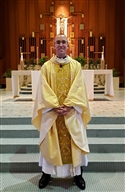
Fr. Carlton is a priest for the Archdiocese of Chicago. Before joining the Archdiocese, he served in the Navy and was a high school theology teacher. Currently, he is engaged in pastoral ministry in Chicago.



