A Variety Christmas
Sponsored
Catholic365 is sponsored by
Road to Purity



I love being a Catholic. There has never been a moment in my life when I thought of leaving my faith. That does not mean that I haven’t held my head in my hands and thought, Why? It would be so much easier to not be a Catholic.
I’m a product of the Sixties. I believe in women’s rights and equal pay. I am a feminist—so was my mother—and I experienced those bra burning days (if only in my mind). And as an American I believe that a woman has the right to worship as she wishes even if her faith’s teachings are contrary to a secular or a “feminist” environment.
Proclaiming to be religious—and especially being Catholic—can create hostility in a room that is almost palpable. Just saying, “My husband is an ordained Deacon in the Catholic Church,” is met with cold stares or rolled eyes. It often brings on a barrage of questions, some of which come from genuine curiosity, but others come from suspicion and even anger.
For instance, “How can a married man with children even think about serving a Church that disenfranchises women and abuses children?” “How can you belong to a Church that represses women?”
I’ve learned to live with those questions, and I try to answer them reasonably—apologetics has become my life’s yoke.
As a writer—a novelist and a nonfiction writer—I have found that being a Catholic can be disadvantage in my career. People seem to think that the only place the product of Catholic woman writer should be is in a Catholic publication or bookstore.
“You don’t put Catholicism in your novels, do you?” I’ve been asked with horror. “You’ll never sell them. There’s no place in the publishing industry for it.”
Being Catholic is who I am. It’s as much a part of my being as my blue eyes, Irish-American ancestry, and womanhood. So, naturally, the stories I write have a thread of Catholicism through them, whether I do it deliberately or not. It’s never overt, but nuanced. Sometimes the characters in my stories are Catholic, sometimes not. They don’t always practice if they are Catholic. Some are curious about Catholicism, some couldn’t care less. I have had characters in my book convert. Others wouldn’t even think about it.
In one book I deal with abortion, homosexuality, divorce and remarriage, adultery, and domestic abuse—yes, all in one book—all of those topics are written with compassion. I wouldn’t know any other way because my faith has taught me to look upon others without judgement. Instead I try to show hope in situations where it looks as though there is no hope; I strive to show where hurt comes from and how the injured can be healed and the abuser forgiven.
The novels are character driven...not religion driven. And that leaves me stuck between two rocks. Catholic family members and friends wonder why my books aren’t more Catholic inspired, stricter to the teachings of the Church.
Others—members of book clubs, writing organizations, agents, editors—tell me I should leave any reference to the Church out; unless, of course, it’s interesting, and by that they mean throw a pedophile priest into it. (Yes, an agent asked me to do that once.) An editor suggested that I change the priest, a very minor character in one of my books, to a Rabbi or a protestant minister because they are more politically correct in the secular world. I didn’t do it, but I thought about it. I thought about it much longer than I should have.
I find that I am allowing myself to be silenced. I am afraid that I’ll offend someone I care about; that I’ll lose friends who think differently than I do. I keep my thoughts to myself about abortion in public. I am afraid. I’m afraid of being verbally attacked by those who disagree with me, by looking like a neo-con, conservative maniac, or religious fanaticas I’ve heard many pro-life supporters called.
I’ve been afraid of having other people think that I am not compassionate, not a person who cares about the issues women face—unwanted pregnancies, rape, incest. None of that is true about me, so why should I speak about an issue that will denigrate me in the eyes of other people and make me look like just one of those pro-life Catholic idiots, as some have labeled us?
I want to be seen as a woman who does believe in equal rights, equal pay, and fair play in all aspects of our culture, because that is who I am. Does being pro-life contradict being a feminist? No, because you may believe in the sanctity of life and not believe in one group being more in charge than another. Especially egregious to me is late-term abortion; yet that does not mean that I believe that women should be the property of men and accept a misogynist society that denies them equal rights. I have a daughter. I have nieces. Would I really want that for them? Absolutely not.
There are many Catholic women who are prochoice, including popular politicians and even some outspoken activist nuns. I recognize where they are coming from. The Catholic Church—mainly, Catholic religious women—have been caring for the poorest of the poor in every country. They have seen the worst of humanity, cruelty, results of back-street abortions, sex-slavery, and children barely out of infancy themselves giving birth to babies. I hear their arguments and I understand. And they are right when they say many advocates for life are really just pro-birth and don’t want our taxes to pay for the children born into poverty or unable to be raised by their birth parents. We need to think hard about that, and come up with solutions—especially those of us who are pro-life.
As a Catholic woman—but more so, as a thinking and compassionate woman—I believe we need to teach our daughters to be leaders, educated, responsible, thoughtful, strong, and not be afraid to let their faith, whatever that faith may be, guide them to truth, not accept spin for expediency’s sake. The truth is we do have a choice over our bodies, and we should not choose to share our bodies in lust, but rather in love and trust that we will be cherished and that we will cherish in equal amounts.
A very uncomfortable truth is that a child in the womb is a human being who feels pain. This is not religious slant...it is scientific truth. And we need to teach girls not to be silenced by any other group who shouts them down and labels them “wrong-thinking.”
I can’t be anything but a Catholic woman. I refuse to be labeled a “sexist” or a “misguided fool.”
And so here I am with my dilemma, a Catholic woman in a feminist world. And as of this publication, no longer silenced.
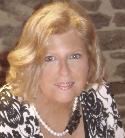
Marie Murphy Duess is the author of three novels, two nonfiction history books, and a Catholic-inspired spiritual book about life after death. She conducts and develops creative writing workshops, motivational presentations, and lectures for local colleges, historical societies, and writing organizations. Marie is married to Deacon Edward Duess of the Archdiocese of Philadelphia and lives in Bucks County, Pennsylvania. In addition to a Marketing and Communications degree, she is also a graduate of the Church Ministry Institute from St. Charles Borromeo Seminary. For more information, visit www.marieduess.com; http://blog.marieduess.com