Greed, Selfishness and envy: Merry Christmas!

The Greatest of These


Photo By: Flickr/Tri Nguyen
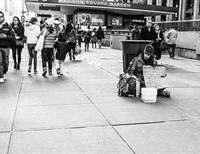
Nearly every city has one or more sections of town with big, ridiculously expensive houses. They usually have many bedrooms and several baths. Very often, these houses are inhabited by only one couple, their children grown and gone. This results in the inhabitants having far more living space than they need. I suspect that in most instances, the large mansions are there for show, not for necessity. Compare the huge expensive houses in your town with the photograph above. It depicts a squatter's shanty on the outskirts of Manila. They are commonly constructed of scrap lumber, corrugated iron, and tar paper. It is not unusual to have one or more extended families living under the same roof: adults, children, grandchildren and a dog or two. Individual space is very small and cramped.
Recently, I watched a television commercial which advertised a company that offered to buy women's no-longer-used designer purses. Out of curiosity, I went online and researched the prices of those purses. I found that brands such as Prada and Gucci, along with others can easily cost several thousand dollars! This led me to ruminate on people who pay that much for an accessory, and later, keep it in the closet. I assumed that many of those women who buy these purses most likely get new ones each year to remain current on the fashion scene. The same can be said of designer dresses and shoes, and other accessories.
I don't intend to single out women here. Many men, too are guilty of such conspicious consumption, spending thousands of dollars on high end shoes, suits, and jewelry. And let's not forget the luxury cars. Many of the same people have several expensive automobiles. Living such an ostentacious life style seems to be thumbing one's nose at others, showing off how great a person one is because of his or her possessions.
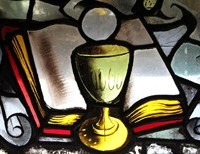
When I was a boy, attending Catholic school, my classmates and I were taught about the Corporal Works of Mercy, and the three Theological Virtues: Faith, Hope and Charity. Where do these virtues come from?
St. Paul, in 1st Corinthians 13:13 says "So faith, hope, love remain, these three; but the greatest of these is love" The preceeding quote comes from The New American Bible. The same three virtues are found in other modern translations: The NKJV, The NIV, and The Jerusalem Bible. In older versions of the Bible, whether it's the King James Version, or the Catholic Douay-Rheims version, the word Charity is used rather than love. Which is interesting, because in the original Greek, Agape is used.
In the Synoptic Gospels, a rich young man approaches Jesus and asks what he can do to achieve eternal life. Jesus tells him to go, sell what he has, and give to the poor. The young man goes away, saddened, "because he has many possessions." (MT 19:22)
In Dickens' A Christmas Carol, the Ghost of Christmas Present shows Scrooge two small figures hidden under his robe. They are two ragged, starving children. The spirit tells Scrooge their names are Ignorance and Want. The lesson being taught by the ghost is that the wretched condition of the world's poor could be alleviated by everyone practicing simple Christian charity.
I don't doubt that a good number of people who spend their fortunes on material comforts and possessions call themselves Christian. But are they, really?
How many of us are guilty of this conspicious consumerism, while ignoring those among us who are deserving of our charity, our love?
Recommended Stories
About the Author
I live in Lubbock, Texas and have been married for 47 years and counting. We have 5 children, 6 grandchildren, 1 great-grandchild, and 1 due soon. I served 4 years in the Air Force as a Medical Service Specialist during the Vietnam conflict and served 14 months at USAF Hospital, Clark AFB, Phillipines, taking care of Marines and Republic of Korea soldiers who were wounded in Vietnam. I completed undergraduate studies at University of Houston and obtained a Bachelor's Degree from Midwestern State University, graduated cum laude. Following that, I did post-graduate studies at Texas Tech University and Loyola Institute of Ministry,Extension Program. i am a Retired Educator,and have taught History and English at the secondary level. I am also a Retired Permanent Deacon, and for several years I wrote a Q&A column for a diocesan newspaper about the Catholic faith. In addition, I taught Church History for a diocesan Diaconate Formation Program and was director of the RCIA program in my parish for several years.