Defending Mary: Part Four
Sponsored
Catholic365 is sponsored by
Road to Purity



As we continue on our journey into the Catholic Church building or parish, I reflect on comments made on the previous article. First. one must understand how Catholics view the seven Sacraments. Secondly, the presence of our Lord in the Liturgy is most definitely necessary. I do however want you to look at the features in your church building and appreciate them as not merely wood and stone configured in a predetermined patern. They will, if constructed and located properly, possess a Sacramental presence.
"For Catholics, the Sacrament of Baptism is the first step in a lifelong journey of commitment and discipleship. Whether we are baptized as infants or adults. Through Baptism, we are freed from sin and reborn as sons of God; we become members of Christ, are incorporated into the Church and made sharers in her mission: "Baptism is the sacrament of regeneration through water in the word." The anointing with sacred chrism, perfumed oil consecrated by the bishop, signifies the gift of the Holy Spirit to the newly baptized, who has become a Christian, that is, one "anointed" by the Holy Spirit, incorporated into Christ who is anointed priest, prophet, and king."
"Catholics believe the Eucharist, or Communion, is both a sacrifice and a meal. We believe in the real presence of Jesus, who died for our sins. As we receive Christ's Body and Blood, we also are nourished spiritually and brought closer to God."
Confirmation is a Catholic Sacrament of mature Christian commitment and a deepening of baptismal gifts. Anointing, in Biblical and other ancient symbolism, is rich in meaning: oil is a sign of abundance and joy. it cleanses (anointing before and after a bath) and limbers (the anointing of athletes and wrestlers); oil is a sign of healing, since it is soothing to bruises and wounds;104 and it makes radiant with beauty, health, and strength. Anointing with oil has all these meanings in the sacramental life. The pre-baptismal anointing with the oil of catechumens signifies cleansing and strengthening; the Anointing of the Sick expresses healing and comfort. The post-baptismal anointing with sacred chrism in Confirmation and Ordination is the sign of consecration. By Confirmation Christians, that is, those who are anointed, share more completely in the mission of Jesus Christ and the fullness of the Holy Spirit with which He is filled, so that their lives may give off "the aroma of Christ." It is one of the three Sacraments of Initiation for Catholics. It is most often associated with the gifts of the Holy Spirit.
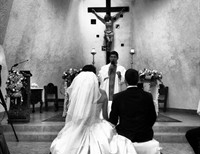
For Catholics, the Sacrament of Marriage, or Holy Matrimony, is a public sign that one gives oneself totally to this other person. It is also a public statement about God: the loving union of husband and wife speaks of family values and also God's values.
In the Sacrament of Holy Orders, or Ordination, the priest being ordained vows to lead other Catholics by bringing them the sacraments (especially the Eucharist), by proclaiming the Gospel, and by providing other means to holiness.
The Catholic Sacrament of Anointing of the Sick, formerly known as Last Rites or Extreme Unction, is a ritual of healing appropriate not only for physical but also for mental and spiritual sickness. "The celebration of the sacrament includes the following principal elements: the "priests of the Church"- in silence - lay hands on the sick; they pray over them in the faith of the Church - this is the epiclesis proper to this sacrament; they then anoint them with oil blessed, if possible, by the bishop.
Continuing on, I notice the Ambry, which reverently reserves the holy oils in a special place in the Church. The Ambry should be locked and secure. "It is a sign of the special of the community to which the holy oils have been entrusted." It may take different forms in the parish church, in the baptistery, on the wall of he sanctuary or in a case.
Before taking our seats I appreciate the Nave, it conveys the image of a gathered assembly, should allow the faithful to take up the required postures for the different parts of the celebration as well as allow ease when coming forward to receive Holy Communion." Lastly "it should not resemble "the audience space in a theater or public arena"
Join me again next time as we continue to examine The Altar. The Ambo and The Chair.
Christopher Brown resides in Missouri with his wife of 18 years. He and his wife enjoy their three children and are expecting their first grandchild in October. Christopher is a third year theologian in formation the Permanent Diaconate in the Catholic Church.