"I Thirst" A Lenten Reflection on Terri Schiavo

The Virgin Mary by Fr. Raymond de Saint Laurent Book Review

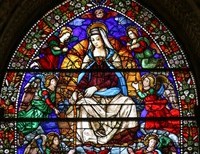
Spiritual stagnation is not uncommon for those who strive for Christian perfection. The remedy often comes from a book that one just happens to pick up, not realizing it as a vehicle for grace. Darkness is dispelled as we turn the pages and are enlightened with truths of the faith that are presented in an attractive way. The Virgin Mary, by Fr. Raymond de Thomas de Saint-Laurent is this type of book. It not only provides the reader with a greater understanding of who our Lady is but more importantly the debt of gratitude we owe her.
From the moment of her birth, he explains how our Lady possessed the use of reason and at the tender age of three, was taken to the temple and consecrated to God. He describes her charming unpretentiousness in dealing with the other children. Never drawing attention to her own qualities, she chose to highlight the youthful virtues of her classmates instead. “It never occurred to her,” Fr. Saint Laurent affirms, “to prefer herself over the least among them.”
Her humility shown forth also in the way she listened to the Doctors of the law with great attentiveness, “and submitted to their opinion,” in spite of the fact that she “was incomparably more advanced than they.” This was but a preparation for the august vocation for which she was created and the principle reason for which we should give thanks: She gave us our Savior.
It would be hard to find a more moving description of the Annunciation than that provided by Fr. Saint Laurent. Taking what we know from scripture about this stupendous event, his comments leave the reader in awe. The Angel Gabriel appears to our Lady and announces that she will conceive and bring forth a Son “and thou Shalt call him Jesus.” Our Lady knew perfectly well that the Christ Child would be born of a virgin but wondered “How shall this be done, for I know not man.” The Angel Gabriel responds, “The Holy Ghost will come down upon thee and most High shall overshadow thee.” All that is necessary is a response and it is hear that the reader is left if awe.
“Profound silence filled that small room in Nazareth,” the author explains, “one of those dramatic silences wherein the world’s destiny hangs in the balance. The angel had ceased speaking and Mary was quiet.” While the reader knows the rest of the story it is impossible not to pause, even close the book temporarily, in order to absorb the significance of this moment.
Fr. Saint Laurent them puts the reader in the mind of the Blessed Virgin. She contemplates the joy of holding the Christ Child close to her bosom, but also sees the death He is to suffer and the “awful martyrdom that would rend her soul.” The sufferings she endured were such that she is considered by some to be Co-Redemptrix, an honor which the Church may one day dogmatically grant her. One of those sufferings which the author highlights is the pain our Lady endured after the loss of the Child Jesus in the Temple. It would be easy for one who considers only the Divinity of the Child to downplay this mystery. Our Lord was more than capable of arranging his needs and finding the way back to His parents.
Fr. Saint Laurent puts this episode into the perspective. He points out how our Lady had seen her Divine Child suffer from the cold and hunger like other children. Like any mother she feared he might be in need. More importantly the author explains how our Lady knew the prophecies of Isiah regarding the cruel death of the Messiah and remembered the prophecies of St. Simeon. During the search which lasted for three days she endured the excruciating fear that His time had come. Perhaps he had already fallen into the hands of those who sought his death. Such was her humility that the suffering of her loss was only increased by the sense of her unworthiness as a mother of such a treasure.
The finding of the Child Jesus was only temporary reprieve from what was to come. Regarding His passion, Fr. Saint Laurent explains how, “Mary loved Jesus even more because He was her God,” but quickly adds, that to attain perfection, “love of God is stronger than maternal love.” This is what allowed her to accept God’s will as she follows our Lord during his dolorous passion: “hearing the heavy hammer driving sharp nails into the adorable hands and feet of her Child and seeing the tearing of His flesh and the shedding of his precious blood.”
The author concludes his treatise with the our Lady’s death, or dormition as it is more commonly referred to in the Church. Here again is a reflection that inspires. With few exceptions all men fear death and cling to this earthly existence. This was not the case with our Lady. She wanted to be reunited with her Son. “To allow her to die,” Fr. Saint-Laurent explains, “God had only to suspend the miracle that kept her on earth. Love for her Son consumed her; the desire to join Him burned within her.”
Fr. Saint Laurent finishes this biography of our Lady by narrating an ancient tradition. After our Lady’s death the apostles visited her tomb but did not find the “body of the Immaculate. On the stone where they had laid her, they found only freshly blooming flowers, whose sweet fragrance delighted and consoled them.” The author explains how this legend not only attests to the unshakeable belief in our Lady’s Assumption but also shows the joy which devotion to our Lady gives those who are struggling in this life. He finishes with a counsel.
“Preciously safeguard the love of Mary in your heart, and in this heart, at times so anguished, perhaps so guilty, she will cause flowers to blossom that will never die.”
Recommended Stories
About the Author
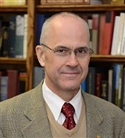
Mr. Norman Fulkerson was born in 1962 in Owensboro, KY. After completing his secondary education at Owensboro Catholic High School, he continued his studies by completing a degree in Tool Engineering from ITT Technical Institute in 1983. He has also studied writing and journalism with Long Ridge Writing School in West Redding, Conn.
Shortly after completing his degree, he began working as a full-time volunteer for the American Society for the Defense of Tradition, Family and Property (TFP) in 1984. Since then he has developed his skills as a writer.
He currently contributes to Crusade Magazine, and tfp.org with his “Only in America” column that highlights the cultural riches of our country and stories of American heroism that focus on members of the Armed Forces who have distinguished themselves in battle. He has also contributed to the illustrious fifty-five-old Brazilian periodical Catolicismo. His articles have also appeared in the Australian magazine Quest and the Polish magazine Polonia Christiana and the Marine Corps Leatherneck Magazine. In October, 2009 he published his first book, An American Knight: The Life of Col. John Ripley, which has received praise from several Medal of Honor recipients and former Marine Corps Commandant, Gen. Carl E. Mundy. In 2018 he co-authored Lighting the Way: Stories that Show How Our Culture Went Wrong and How We Can Restore Order with John Horvat.
His speaking accomplishments include giving lectures to TFP action groups in Rochester, N.Y., Cleveland, Ohio, New Castle, Penn., Louisville, Ky. and Boston, Mass. He has spoken at TFP conferences in Queenston Ontario at a Pro America rally. He has also appeared on several radio programs such as Radio Mambi in Miama, Fla., The Stan Solomon Show in Indianapolis, Ind., The Ron Ford Show in Boston, Mass., and With Jay Fox and Friends show in Willoughby, Ohio.
He now resides in Spring Grove, Penn. Where he continues to employ his various skills for the American TFP.
More Stories By :