The Story
Sponsored

Catholic365 is sponsored by
Road to Purity


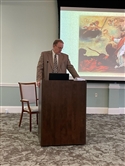

His talk was titled Gospel of John: Wedding or Funeral? (Jesus as the Eschatological Bridegroom)-- big word that just means Last Things.
------------------------------------------------------------------------------------------------
First my reflections: 1) John is obsessed with Genesis, think of "In the Beginning', or "Light and Darkness". He sees Jesus starting a New Creation. If the other Gospels see Jesus as a New Moses or new Solomon, John primarily sees Him as New Adam (see 1 Corinthians 15:45), but also there is some imagery of Solomon.
2) All of the "relationships" presented are SYMBOLIC, not literal. Jesus had no romantic relationship with anyone, in fact, like Paul (1 Corinthians 7), He was celibate (see Mattthew 19:10-12). John is presenting Jesus as the new Bridegroom, to "espouse" His bride, the Church.
Let's begin:
---------------------------------------------------------------------------------------------
Dr. Bergsma posits that the two most important scenes in John are Chapter 2, the Wedding at Cana, and John 19, the Passion narrative. He believes they even reference back to one another, and to Genesis 2 & 3. His Passion has "marriage elements" in it.
--John 1:1 through John 2:1, he says are specifically alluding to a new Creation. There is the Second Day, (1:29), then the Next Day, (1:35), etc etc until you get to Jn. 2:1, which adds up to 7 days, the Sabbath! This was the day of the "wedding" of Adam and Eve:(-see Genesis 2:2 and 2:22-23). And so, on this 'Seventh Day", John has a Wedding scene. There are only 2 people named: Jesus, who provides the Wine (the role of the Bridegroom!) and His Mother, called here "Woman" (a clear reference to Eve in Genesis 3:15). This is the "Wedding" of the New Adam and New Eve, symbolically!! But, at this wedding, He refers to "His Hour", the hour of His death.
--Moving up to John 4-The Woman at the well. Think of the Old Testament, what happened at wells? You met your wife!! This is marital imagery. Samaria is in the North kingdom. The only prophet sent to the North specifically, was Hosea, with his prostitute wife. In Hosea 2, God will "speak to her heart". He speaks of her 5 husbands, the word in Canaan territory for husband was Ba'al. There were 5 gods, called "Baals", that the Samaritans falsely worshipped. He is calling her back from her adultery/idolatry.
--John 20, the post-Resurrection appearance to Mary Magdalene. Jesus is coming back from the dead, but here meets this "woman" disciple, seeking "Him whom her heart loves". Jesus follows the Song of Songs (or Solomon) 3:1-5, nearly exactly in this scene. Look at verse 4, "I held him, and would not let him go".
-John 19:2--Jesus is crowned with Thorns. This is just before His death. See where Solomon is "crowned" at his wedding in Song of Songs 3:11, with which the (queen) mother crowned him at his wedding day.
-Compare John 19:28 with John 4:7--I thirst!! The same phrase Jesus uses to the Woman at the Well. This is a "pickup line' in the OT!! (Again, this is symbolism, I am not Dan Brown). "I thirst" is addressed to all of us. The responder, as symbolically in John 4, IS THE BRIDE.
-John 19:25--Jesus is dying, He introduces His mother to her new son. When, and only when, is a son "presented" to his mother? When she GIVES BIRTH!!
John, that is the beloved disciple--you and I--is the symbolic "child" of the New Adam and New Eve.
--Soured wine--He gives us the finest wine, in great abundance, at Cana in John 2. Our response: We give Him soured wine, on a nasty sponge, in Jn.19:29. In Mark 14:25, He promises not to drink the fruit of the vine until the Kingdom comes. The Cross brings in the Kingdom, it is already here, we are not waiting for some future Kingdom of Christ. What does He say, after drinking the wine? John 19:30--"It is CONSUMMATED". A man only consummates a marriage. His death, and his wedding, are consummated.
I am a native Kentuckian, currently living in the Bible belt, thus my apologetic bent. I recently graduated with a Masters in Theology from the Franciscan University of Steubenville (online). I am a former seminarian with the Marian Fathers (MIC), out of Stockbridge, MA. I am still trying to figure out what I want to do when I grow up!!! This is all about souls, for me.