Lord Send Out Your Spirit: Reflections on the Readings for Pentecost Sunday, Mass During the Day, Cycle C
Sponsored

Catholic365 is sponsored by
Road to Purity




Genesis 18:20-32
Psalm 138
Colossians 2:12-14
Luke 11:1-13
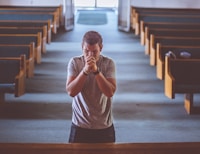
The Catechism of the Catholic Church (CCC) lists five basic forms of prayer: blessing, petition, intercession, thanksgiving, and praise. (CCC 2644) It also quotes St. John Damascene who said, “Prayer is the raising of one’s mind to God or the requesting of good things from God.” (CCC 2590) Today’s readings are examples of prayers, especially of petition and intercession. Jesus gave us the example to follow as He prayed to the Father both in public and in private. And although we make our prayers through Jesus, all prayer goes to the Father.
The first reading picks up from last week with Abraham meeting God who is on His way to Sodom and Gomorrah to confirm the graveness of their sin. In fact, the sin of Sodom and Gomorrah is so grave that it is listed as one of the sins that cry out to Heaven (CCC 1867), despite the efforts of many today, including clergy, who want to downplay its seriousness.
Abraham, however, is concerned over the possible destruction of the innocent with the guilty. Remember that his nephew Lot is a resident of Sodom. Read on beyond today’s selection and you will understand the graveness of the lifestyle in these two cities. Abraham then gives us the meaning of today’s readings as he petitions the Lord while interceding for the innocent who might be living in the targeted cities. Not only does he plead with the Lord, but he persists (part of the lesson Jesus gives in the gospel reading).
Dictionary.com states that persistence is to continue steadfastly especially in spite of opposition, which Abraham does even though he knows he is speaking with the Lord, Who appears reluctant at first. And, as Jesus implies in the gospel reading, God finally agrees with Abraham’s persistent petition. Note that God did not agree to forgive their sins, only to spare the cities for the sake of the innocent. Sadly, as you would find out reading ahead, even this is not enough to save these cities from their sinfulness.
“The point of the story is not to tell us that God does not will sodomy. That is assumed, that is taken for granted … The point is not God’s judgment but God’s mercy. If only ten people were righteous, he would spare the whole city.” (Dr. Peter Kreeft, Food for the Soul, Cycle C)
As an aside, Dr. Kreeft also notes: “There is a Jewish legend that at any time there must be at least ten righteous men in the world so that for their sake God does not destroy the world. If the number goes down to nine, the whole world will receive its just punishment.”
The responsorial is also about prayer (crying out for help) and the Lord’s answer. “Lord, on the day I called for help, You answered me.” Not only for this, but for all the good things God has given us we should give thanks and praise in our prayers. Indeed, as the psalm says, this is one of the reasons we go to Mass, to worship the Lord and give thanks and praise. The Mass is the greatest form of prayer. “In the liturgy, all Christian prayer finds its source and goal.” (CCC 1073)
Through prayer we build up our spiritual strength. Prayer is a form of humility. The psalmist says, “The LORD is exalted, yet the lowly he sees, and the proud he knows from afar.” The Catechism echoes this, “humility is the foundation of prayer.” (2559)
Prayer is also an expression of faith. St. Paul’s letter to the Colossians notes that, despite our transgressions, our faith has saved us. Many of Jesus’ healings were accompanied by the words, “your faith has saved you.” Paul mentions the need for “faith in the power of God.” This can be taken to allude to the sin against the Holy Spirit which is basically unbelief in God’s ability to forgive any sin when asked (prayed) with heartfelt sorrow and contrition. Paul is speaking mostly to Gentile converts who, by their baptism, have entered into spiritual circumcision with Christ. But despite the fact that we were dead in our sin, salvation has been effected through Jesus’ sacrifice by which He nailed all of our transgressions to the Cross.
The gospel selection tells us many things about prayer. It opens with Jesus in prayer, setting the example. When He finished, the disciples asked Jesus to teach them how to pray. In response He gave them the Lord’s Prayer, the Our Father. Luke’s version is slightly shorter than that found in Matthew’s gospel (Matthew 6:9-13) but contains the same elements.
There are several key points to the Lord’s Prayer. The Catechism (2763) quotes St. Thomas Aquinas, “The Lord’s Prayer is the most perfect of prayers ... In it we ask, not only for all the things we can rightly desire, but also in the sequence that they should be desired. This prayer not only teaches us to ask for things, but also in what order we should desire them.” It is said as part of every Mass. In it we ask for our daily bread, implying that we should pray it daily (the early Christians prayed the Our Father three times daily).
By saying “Our Father” we join ourselves with all other Christians who regularly recite it, leaving our individualism behind. Quoting Tertullian, the Catechism (2774) notes that “it is truly the summary of the whole gospel.” For more on the Lord’s Prayer, see the Catechism articles 2759-2776.
After giving the disciples the Lord’s Prayer, Jesus gives them a lesson in persistence (possibly the basis of the thrice daily practice of the early Church). First he uses the example of the friend who relents and helps someone because of their persistence and then He gives some examples of a human father who, though a sinner (wicked) knows how to answer the prayers of his children. So, too, our perfect heavenly Father knows how to answer our prayers, when properly asked in faith and humility.
Note that Jesus tells us that we should be seeking the Holy Spirit. In John’s gospel, Jesus tells us more about the Spirit, “the Spirit of Truth” ... Who will guide you to all truth.” (John 15:26, 16:13) “And when he comes he will convict the world in regard to sin and righteousness and condemnation: sin, because they do not believe in me; righteousness, because I am going to the Father and you will no longer see me; condemnation, because the ruler of this world has been condemned.” (John 16:8-11)
St. Paul’s letter to the Colossians implies that God is always seeking us. Bishop Sheen notes, “He seeks us before we dream of seeking Him; He knocks before we invite Him in; He loves us before we respond.” In the gospel reading, Jesus tells the disciples that if we persist (of which endurance is an element) in seeking the Lord, we will find Him. Similarly, Jesus tells us the importance of this when He warned the disciples about false prophets, “But he who endures to the end will be saved.” (Matthew 24:13)
Mr. Klocek is a retired Naval Officer, systems engineer, and physical scientist with over 30 years involvement in Catholic teaching in various parishes and a Fourth Degree Knight of Columbus and a member of St. Stephen Martyr Catholic Church in Chesapeake, VA. Visit his website: actuallycatholic.com