
Understanding our Faith, and the Domestic Church!
Sponsored

Catholic365 is sponsored by
Road to Purity


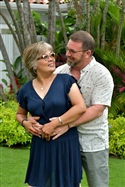

Within the divine design of salvation, God not only desires to redeem individuals but to form them into a people—a communion. Two sacraments, Marriage and Holy Orders, uniquely serve this goal. They are known as the Sacraments at the Service of Communion because they do not simply sanctify the individual recipient, but are ordered toward the sanctification and service of others. Through these vocations, Christ continues to love His Church: through the fruitful union of husband and wife and through the self-gift of ordained ministers.
Marriage: The Sacrament of Covenant and Life
From Creation to Christ
Marriage is inscribed in the very order of creation: “Male and female He created them… and the two shall become one flesh.” (Genesis 1:27, 2:24). Jesus elevates this natural institution to a sacrament: “What God has joined together, let no man put asunder.” (Matthew 19:6). The union of man and woman reflects the mystery of divine love. St. Paul compares it to Christ’s union with the Church (Ephesians 5:25–32), revealing marriage as a visible sign of divine fidelity, sacrifice, and fruitfulness.
The Uniqueness of Christian Marriage
Christian marriage is a covenant, not a contract. It is an exclusive, lifelong partnership between one man and one woman, oriented toward the mutual good of the spouses and the procreation and education of children (CIC can. 1055 §1). As the Catechism affirms: “By its very nature, it is ordered to the good of the couple, as well as to the generation and education of children.” (CCC 1660).
The Church’s defense of marriage as between one man and one woman is not born of prejudice but of faithfulness to the truth about human nature, rooted in reason and revelation. Same-sex unions, polygamous relationships, or “open” marriages do not reflect this divine design and therefore cannot be sacramental.
The Indissolubility of Marriage
Because it is a sacrament, marriage is permanent: “A marriage which is ratified and consummated between baptized persons can never be dissolved by any human power or for any reason other than death.” (CIC can. 1141). The unity and indissolubility of marriage are not burdens but signs of hope: that true love is possible, faithful, and fruitful unto the end.
What Is Marriage Nullity?
While a divorce claims to end a valid marriage, a declaration of nullity (annulment) affirms that no valid marriage ever existed due to a grave defect at the time of consent. This is not “Catholic divorce,” but a juridical investigation into whether a sacramental bond ever truly formed. Grounds for nullity may include:
The Church upholds the sanctity of valid marriage, but also compassionately discerns when one was never validly entered. This process protects both the integrity of the sacrament and the rights of the faithful.
Marriage in the Real World: The Grace for Daily Life
Marriage, while beautiful and sacred, is not free from struggle. It unfolds in the midst of real life—amid bills, sleepless nights, careers, health issues, misunderstandings, and the complex and holy work of raising children. The journey of married life is not always romantic, neat, or easy. There are seasons of joy and seasons of burden. Some days feel like victory; others, like survival. The Church does not deny this reality—she enters it. And she proclaims that marriage is not sustained by sentiment alone, but by grace. Every sacramental marriage is upheld by a permanent infusion of grace, given not once, but continually—precisely for those ordinary and extraordinary moments when love is tested. The grace of the sacrament:
As the Catechism of the Catholic Church teaches: “This grace proper to the sacrament of Matrimony is intended to perfect the couple’s love and to strengthen their indissoluble unity.” (CCC 1641). When spouses strive, however imperfectly, to live a sacramental life—frequenting the Eucharist, going to Confession, praying together and individually, teaching their children the faith, serving others—they begin to see how God is not distant, but very present in the midst of laundry, homework, arguments, and hospital visits. He is present in their laughter, in their endurance, in their aging hands held together at the end of a long day.
It is often not until years later that many couples, looking back, recognize that it was not their own strength that carried them, but the grace of the sacrament lived faithfully over time. In this way, Christian marriage becomes a true path to holiness—a vocation that shapes ordinary people into saints through daily love, self-sacrifice, and the quiet work of perseverance.
Marriage: A Living Sacrament
Married couples are not only witnesses of God’s love—they are participants in His mission. Their daily love, sacrifice, forgiveness, and faith form the foundation of the domestic Church. Pope St. John Paul II called the family: “The first and vital cell of society” (Familiaris Consortio, 42). In their openness to life, in raising children in the faith, and in living the Gospel in the world, spouses participate in Christ’s redemptive love.
Holy Orders: Christ Shepherding His Church
The Threefold Ministry
Holy Orders is the sacrament through which the mission Christ entrusted to His apostles continues to be exercised in the Church. It exists in three degrees:
These three are not different sacraments, but different degrees of one sacrament, ordered toward the building up of the Body of Christ (CCC 1536–1600).
The Deacon: A Permanent Order
The diaconate was established in the apostolic Church (Acts 6:1–6). Deacons served the poor, proclaimed the Gospel, and assisted in liturgy.Over time, the diaconate became a transitional stage before priesthood. But the Council of Trent (Session XXIII, Chapter 17) reemphasized the ancient tradition that Holy Orders is conferred in steps, and recommended that men be formed in the lower orders, especially the diaconate, for several years before priestly ordination. The Second Vatican Council, in Lumen Gentium and Ad Gentes, restored the permanent diaconate, affirming that: “Deacons are ordained not unto the priesthood, but unto a ministry of service.”
Deacons may preach, baptize, witness marriages, assist at Mass, and serve the poor, symbolizing Christ the Servant (Christus Servus). Married men may be ordained permanent deacons; celibacy is required for single candidates.
Formation for Holy Orders
Following Trent, seminaries became the normative way to form priests. Today, seminary formation is governed by Pastores Dabo Vobis (St. John Paul II) and The Program of Priestly Formation (USCCB).
There are four pillars:
This formation typically spans 6–8 years, often including a pastoral internship or transitional diaconate year before priestly ordination.
Celibacy: Sign of the Kingdom
Celibacy is not a doctrinal necessity but a long-standing discipline in the Latin Church. While married clergy exist in the Eastern Churches and through special dispensations, the Church has affirmed clerical celibacy as a powerful sign of total self-gift. As Pope Paul VI affirmed in Sacerdotalis Caelibatus (1967): “The celibate priest, by virtue of his celibacy, manifests the reality of the Kingdom of God.”
Though not imposed in the early Church, celibacy was promoted from the 4th century, mandated in the West by the First and Second Lateran Councils (1123, 1139), and consistently upheld thereafter. Today, it remains a joyful sacrifice undertaken for the sake of Christ and His Church.
Why Only Men?
The Church teaches definitively that only men may be ordained: “The Church has no authority whatsoever to confer priestly ordination on women.” (Ordinatio Sacerdotalis, St. John Paul II, 1994). This is not because men are superior, but because Christ, acting in freedom and love, chose only men to be His apostles. The priest stands in persona Christi capitis—as Christ the Bridegroom of the Church—and this sacramental symbolism cannot be set aside.
Vocation: Communion for Mission
Both Marriage and Holy Orders are sacraments of communion and mission. Each reflects Christ’s love and serves the growth of the Church:
As Pope Benedict XVI once said: “The world promises you comfort, but you were not made for comfort. You were made for greatness.” In Marriage and Holy Orders, the greatness of love becomes a path to holiness—not by comfort, but by daily self-gift, with Christ at the center.
Fostering Vocations: It Begins at Home
The call to Holy Orders does not usually arrive in thunderclaps or visions. It is more often whispered in the heart of a young man who has learned to pray, to serve, and to listen—and this listening usually begins at home. Parents, especially fathers and mothers of faith, are the first and most powerful influences on a child’s openness to a vocation. When the home is lived as a domestic Church, children learn that their lives are not their own—they are meant to be given. That might mean marriage. But it might also mean priesthood.
The Church calls on Catholic parents to actively foster openness to vocations. This includes:
If a son begins to wonder if he may be called to the priesthood, parents should not dismiss it or brush it aside with “You're too young to know” or “But I want grandkids.” Instead, they should respond with joy and honesty, asking:
These simple conversations can bear eternal fruit.St. John Paul II, whose own father was a widowed man of deep prayer and devotion, later said: “The seminary is... like a spiritual greenhouse. But the seedbed is the family.” Even if a child does not ultimately pursue priesthood or religious life, a home that makes vocation part of everyday conversation is a home that forms disciples ready to listen and respond to God's call—whatever it may be.
Encouraging vocations is not the job of seminaries alone. It is the mission of every family, every parish, and every faithful Catholic. When we pray, speak, and live with this intention, we open the door for God to do what He has always done: call men to serve, and give the Church the shepherds she needs.
God Bless
Deacon Wally was born and raised in Michigan. In 1987 he joined the United States Marine Corps. Originally, he was not planning on making a career with the Corps, however as time moved on, Calabrese spent 20 years on active duty and retired in 2007 as a Gunnery Sergeant. During his time in the Corps and while stationed overseas in Okinawa Japan, he met his bride, Amy. They married on April 11, 1992, and were blessed with two daughters, Lori (Thomas) and Leeza (Kevin). Both daughters are married and have children. Upon retirement from the Marine Corps, Calabrese began working for the local community college as the campus chair. Calabrese spent 13 years with the college and decided to leave full-time work to pursue writing and speaking extensively. Deacon Wally was ordained to the diaconate June 26, 2010. He was in the second class for the Diocese of Raleigh. Upon ordination, Calabrese was assigned to Annunciation Parish in Havelock, NC. Calabrese authored The Apostles and Me! Deacon Wally also has authored booklets titled, Confirmed and Ready! and Living a Catholic and Moral Life. Calabrese has a passion for spreading the great love of Christ and the Catholic Faith. Deacon Wally earned his bachelor's degree from Embry Riddle Aeronautical University, and he holds a master's degree in Pastoral Theology from St. Joseph’s College, Standish, ME. For more information on Deacon Wally Calabrese please visit his website: www.deaconwallycalabrese.com



