He Didn’t Just Die. He Loved Me to Death
Sponsored

Catholic365 is sponsored by
Road to Purity




By Madeline Mauro
The First Week Rules of Discernment (1–14)
Have you ever wondered how to stand tall, be strong, and live without fear in this life? Or how to continue to stay afloat in the storms of life?
There is one saint who offers us a roadmap for just that—St. Ignatius of Loyola. He gave us two sets of rules to help us grow in wisdom, clarity, and spiritual courage.
In the first week, he lays out fourteen rules. In the second week, there are eight more.
This article focuses on the first set of rules—the First Week. In Part Two, I’ll share my reflections on the Second Week.
While some of you might be hearing about these Rules for the first time, others may have shelves filled with books on them. This won’t be another in-depth theological breakdown. Instead, think of it as a kind of CliffsNotes companion—a soul walking beside you, offering what has helped her along the way.
Rules 1 & 2 – Direction
Which way are you going?
These rules help you ask one foundational question: Am I moving toward God—or away from Him?
When you’re heading toward God, the enemy shows up with his usual antics:
“This is a waste of time.”
“You’re not holy enough.”
“God is too busy for you.”
But when you’re drifting away from God, it’s the Lord who pricks your conscience. Like a yellow caution flag waving in your soul, He invites you to pause, reflect, and turn back.
Rules 3 & 4 – Definition
Name it.
These two rules are about standing tall or shrinking inward.
People often get tripped up thinking that being in consolation with God means everything should feel “hunky-dory.” But consolation isn’t about feeling good—it’s about a deep knowing that you are in His presence.
Sometimes, even in suffering, we are fully in consolation. That’s why we need to name it clearly.
St. Paul reminds us in Romans 5:1–5:
“Therefore, since we have been justified through faith, we have peace with God through our Lord Jesus Christ... And we boast in the hope of the glory of God. Not only so, but we also glory in our sufferings, because we know that suffering produces perseverance; perseverance, character; and character, hope. And hope does not put us to shame, because God’s love has been poured out into our hearts through the Holy Spirit.”
That is consolation—even while suffering—because our hope is in God.
In contrast, desolation is when we turn inward and forget His promises.
We shrink.
We pull away.
We stop making space for Him.
One draws us toward the heart of God.
The other isolates us from Him.
Rules 5 & 6 – Action
Do something.
This is where the rubber hits the road.
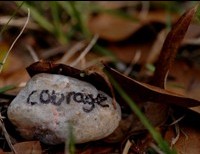
Here’s where the soul is tested—not by knowledge, but by fortitude and courage.
So many stall out in fear right here—right when God is asking us to jump the hurdle.
Don’t turn back. Don’t give up.
Stay the course, especially when desolation begins to show itself.
Consolation: Stand in the conviction to go forward with grit.
Desolation: Not seeing the results you want, giving up shows a lack of patience.
The action is spiritual conditioning—like an athlete training for the big game. These rules develop endurance.
Even when you don’t feel anything in prayer—keep going.
Examine more. Pray more. Fast.
Stay faithful to the practices that keep you close to Him.
Focus on a virtue. Commit to a rhythm.
And when consolation returns—then, and only then, should you reexamine whether a change is needed.
I’ve lived this. I’m still living this.
My endurance has stretched across years of unknowns.
I thought I was doing what God wanted—the ministry is blessing people—but I’m still waiting for an answer. I’ve tried to name it, like in Rules 3 & 4… but for now, I am only hearing silence.
Sometimes it feels like I’m far out in the deep, with no shoreline in sight—unable to get my bearings on where we are headed.
It’s hard. But I stay the course, allowing God’s current to direct me. Because when you give yourself over to God completely, you start to hear the echo that St. Peter heard:
“You will stretch out your hands… and someone else will dress you and lead you where you do not want to go.” (John 21:18)
Or, in my case, clueless.
That’s what this part of the Rules is about:
Endurance that doesn’t always feel good.
Prayer that doesn’t always feel fruitful.
And surrender—real surrender.
Letting go.
Being led.
Trusting God anyway. Following Jesus is mysterious.
Rules 7 & 8 – Hurricane Preparation
Rules 7 and 8 are something every Southeast coastal resident is familiar with. We know how to get ready for hurricane season. We keep a list of things we need in case of disaster: flashlights, bottled water, non-perishables, batteries, gas in the car, and some cash.
These two rules are just that — spiritual disaster prep.
Rule 7 tells us to be prepared for the storms of life while we are in peace.
This helps protect you from making rash decisions when things get chaotic — like overbuying toilet paper at the last minute. You’re at peace knowing you got everything in order.
Rule 8 is simple: Keep calm and carry on.
When the storm hits, don’t go reinventing your faith.
Go to your storm kit and start using it. That’s what it’s there for. So many forget they even have one.
Jesus is still on your boat, and most likely sleeping — go and curl up next to Him and rest. Or you can react like the disciples (Matthew 8:23–27).
If anything, use Rule 8 to survey your foundation.
It’ll show you if you’re anchored on something solid — or just standing on sand. (Matthew 7:24-27)
Desolation doesn’t create the cracks; it exposes them. And if it does?
Have a heart-to-heart with Jesus, who will help you rebuild it — like the third little pig who built his home with brick.
Rules 9 & 10 – Humility, Humiliation, and Humble Pie
Rule 9 helps us realize that the grace we have is a gift from God.
Taking the log out of our eyes is what God is working on with us in this rule. This is where the ego of pride gets a wake-up call. We get knocked off our high horse.
The lesson is in how we respond when our Father takes away our desires — like taking candy from a baby. It feels harsh, but it’s a holy weaning.
God is weaning us.
Do we trust Him to know what’s best?
Can we admit that not everything we have or do is good for us?
Rule 9 helps trim the excess fat — not to shame us, but to free us.
Oh, thou art humiliation,
who feeds me with humble pie,
so that I can once again stand in humility.
One thing to reflect on is 1 John 2:3–6.
Rule 10
Remember the earlier rules about desolation: Don’t change course.
And you won’t — if you’re working with Jesus on the foundational bricks of your castle.
Don’t allow desolation to plunge you into fear, but use it to change patterned behaviors.
This is the stage where faith isn’t proven by fire — this is the fire.
This is where you are placed in the holy furnace — not to destroy you, but to burn away and purify.
The following four rules are about how the enemy steals our peace.
Rules 11 & 12 – Tomorrow Is Only a Day Away
Rule 11 reminds us that everything is transitory.
If you can wait long enough, you will see the new growth that was hidden underground. Yet we all know waiting is easier said than done.
Shifting towards desolation makes you forget you need the roots to sustain the growth. So your eyes are saying nothing is changing, but roots are forming where your eyes can’t see. Just because you don’t feel the sun doesn’t mean it’s not there.
This is the rule that calls for unwavering trust.
It asks you to believe what you cannot taste or see: just like doubting Thomas (John 20:24–29).
Tomorrow is only a day away.
Rule 12
For you to stand tall, you have to know the enemy's tactics.
Think of the enemy as the big bad wolf, trying to blow your house down.
This rule will show you the type of structure you have.
And it will let you know that the enemy will back down when he sees that your face is set like flint!
Rules 13 & 14 – Run to Jesus
Rule 13 simply wants you to keep secrets. The more you hide, the more the enemy taunts you. His MO is surrounded by shame and fear.
Now that you know who is behind it — run to Jesus!
Rule 14
Rule 14 helps you recognize that you have some structural damage that needs to be fixed. The enemy will study you like a lion waiting to pounce.
Your job is to stay calm, and when you feel your peace slipping away — it’s time to run to Jesus.
Reexamine yourself by bringing it to the surface. To the light of mercy.
Conclusion
These rules help you not to give up when you feel you are lost at sea. In chapter 47 of Ezekiel, we read about the angel showing us the depths of the living water flowing from the temple.
When we reach the point of swimming, we become tired and realize there is no place to put our feet. This is where we must trust that God’s Spirit is the one holding us up, protecting us through the storms.
Let these rules be your guide in the waters, and when the storms hit, let them anchor you in God’s goodness.
My name is Madeline Mauro, and I am the foundress of The Triage Ministry—a ministry dedicated to offering spiritual direction, prayerful accompaniment, and healing through the grace of Jesus Christ.
I hope that my articles inspire you and encourage you to keep the faith, live in hope, and feel the love, joy, and peace of God within you.