Sponsored

Catholic365 is sponsored by
Road to Purity



A few weeks ago, Bill Gates, founder of Microsoft and AI apologist, appeared on Late Night with Jimmy Fallon and boldly predicted that within a decade, AI will have replaced most doctors and teachers, among others. The rise of artificial intelligence and other emerging technologies has raised questions about the future of various career paths across every industry sector. As a university professor in the Liberal Arts, I’ve had many worried students and parents ask “what career will this degree prepare me/my child for?” These are good questions, borne out of desire to know your direction, or in the case of parents, to know that your child will be financially secure. Yet, as Gates’ prediction indicates, the old implicit promise that a degree in a specific major is a pathway to lifelong career hasn’t been true for a long time. The career a young person prepares for, the career around which they organize four years of study, can disappear in the next economic cycle. The days of working for the same company for most of your career are long gone, as are the days of working in the same field.
So what is a young person to do in a world where the technological and economic frontiers are rapidly shifting? In a world with more AI, more apps, and more alienation, the way forward is to become more human. This is the great good of a Catholic liberal arts university education: to “know thyself,” as Socrates counseled, and to become the kind of person who delights in learning and in understanding God, others, and the world around them, even if that world is rapidly changing. It’s a world in which we will have a tremendous need for thoughtful, wise people to lead businesses, families and our civil society--people who have a deep understanding their purpose and the purpose of the world around them. In his encyclical, Dilexit Nos, Pope Francis urged us to be people who ask and seek answers to those deeper questions of meaning and purpose, questions that can't be answered by a chatbot, but only in communion and conversation with the truly human found in study with professors and fellow students, and with the truly divine found in contemplation and in prayer.
Given the rapid technological advances of the last two years and those that are to come, it is an interesting moment for my university, Catholic International University, to launch a Bachelor’s in Liberal Arts. For us, launching this program is a commitment to the truly human and an act of optimism and hope because of our deep belief in the need for well-formed young people to be at the forefront of these emerging trends, shaping the conversation. By blending the classical liberal arts tradition with practical, career-focused instruction from our distinguished faculty, our program enables students to become wise, well-formed, effective leaders in the new cultural, economic, and technological landscapes.
Catholic International’s Bachelor’s in Liberal Arts program immerses students in the Catholic intellectual and liberal arts tradition while encouraging them to tailor their education by choosing a minor in business, education, theology, or philosophy, with more minors and accelerated MAs to come. Fully accredited and recognized by the Cardinal Newman Society as authentically Catholic, Catholic International University’s liberal arts curriculum is designed to meet students where they are—both geographically and educationally—offering a flexible and accessible pathway to academic success. And our online platform, combined with our person-centered approach, gives students the opportunity to obtain a faithful, rigorous liberal arts education from anywhere in the world.
The demise of the liberal arts is greatly exaggerated. CEOs from Goldman Sachs to Silicon Valley see their liberal arts backgrounds as giving them the creativity and flexibility needed to greet challenges and succeed. They also see employees with liberal arts degrees as essential to a changing business landscape. Scott Hamberger, Vice Chairman of the Zweisel Fortessa Group and a trustee of Catholic International, underscores the value of a liberal arts education in the professional world: “In my hiring process, I look for durable traits acquired through education or experience, such as intellectual curiosity and critical thinking skills. I can think of no better preparation for this than the degree path offered at Catholic International, an education which forms both the habits of the mind, and practical skills needed for success.”
The world needs young people with the vision and wisdom to think and to act with joy from the Truth and with clarity of purpose.
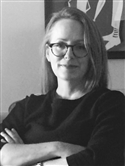
Dr. Ann Brodeur is the Chair of Liberal Arts & Education at Catholic International University. She has taught at Catholic universities and researches and writes on history, education, and the intersection of religion and culture.



