A Message of Mercy: The Delicate Dance Between Doctrine and Pastoral Practice in Amoris Laeticia

Liturgical Catechesis: The Community As Transformational

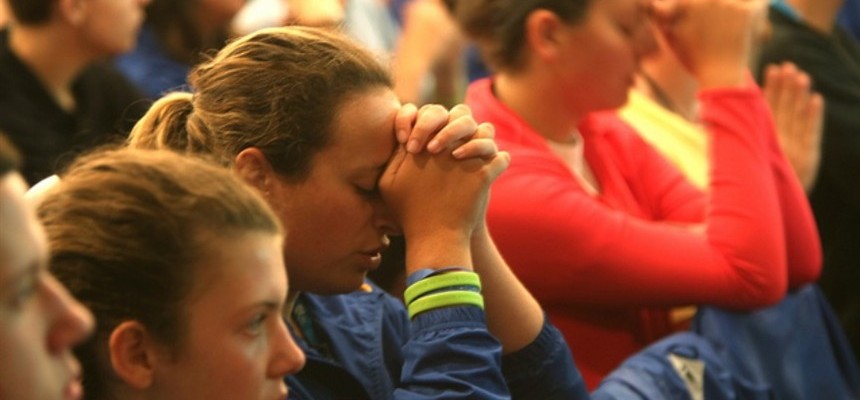
The term “Liturgical Catechesis” has been a buzz- word in liturgical and catechetical circles for many years. But what exactly is its relationship to the RCIA? From the earliest years of Church history, catechesis and liturgy have demonstrated a strong bond. This connection is clearly present in the RCIA process. The RCIA is profoundly liturgical and catechetical, and these two ecclesial activities are intricately interwoven as adults journey forward to encounter Jesus Christ and his Church.
Liturgy is “theological” in that it contains profound yet sometimes obvious theological insight. Since this understanding is commonly accepted today by both liturgists and theologians, it is not too difficult to see a similar relationship between liturgy and catechesis. If liturgy is theological, it is also catechetical, for it is through the actions of the liturgy - the rites and prayers - that we are transformed.
This transformation is intellectual, spiritual, and moral. Liturgy forms and transforms, it catechizes us about what we believe and who we are as Catholic Christians. A principle goal of liturgy is to preach the truth accurately. Current theologians affirm that liturgy, including its rituals and prayers, has profound insights to offer believers.
Any truth about humanity is not for private use and thus no revelation from God can be any one person’s individual truth. It must be proclaimed to all. One of the ways that this is effectively accomplished is through liturgy. Liturgy is a product of human understanding. It correlates the past and present revelation of God in the threefold relation of God, Jesus and us. This correlation shines forth in our liturgical celebrations. Through the prayers and the rituals of our liturgical services, we not only worship but we also convey theological truths, sometimes in very simple ways.
Occasionally, initiation ministers view the different rites in the RCIA simply as steps that must be completed to move onto the next stage in the process. This is incredibly shortsighted. The rites are the RCIA. These mostly simple liturgical celebrations are distinctly catechetical in nature. Through them, the catechumens truly experience what it means to become a Catholic Christian.
There are also many examples of catechetical moments in the Mass. By bowing deeply at the point of the Creed when we mention Jesus’ conception in Mary by the power of the Holy Spirit, we indicate and emphasize a fundamental theological truth.
Thus, liturgical catechesis takes place not only as “teaching” through the spoken and written word, but through the experience of liturgy with its myriad of symbols and rituals. This “knowing” is not just an intellectual exercise, but one of the whole person.
In the years since the Second Vatican Council, the baptismal catechumenate has become the model for all catechesis, especially of adults. Catechesis enriches life experience. It is deeply connected to both life and liturgy. The General Directory for Catechesis (1997) states: “ongoing formation requires a catechesis that is inspired and derives its principles from the baptismal catechumenate.” Doctrine is not to be separated from liturgy or from life. In the RCIA, all of these aspects converge in a manner that can be called nothing less than spiritually dynamic. The Paschal Mystery is the whole liturgy and the Paschal Mystery is my own life---the passion, death, resurrection and ascension of Jesus for our sanctifica
This initiatory catechesis is liturgical not only in that it is punctuated by the rites, but most of all in that it flows forth from the liturgical year and takes place in the context of the worshipping community. Liturgy is the most perfect manifestation of the Church. When we are gathered together, we each have our own roles. The catechumens will come to understand their role as they journey with us. They, too, will recognize liturgy is the source and summit of the Christian life. Everything flows to it and from it.
The liturgical reality is specifically manifest through symbols. There is a process of reflection on the symbolic actions of a particular community. The purpose of this symbolic reflection is to enable people embrace the Christian life.
In creating us, God made human beings symbol-makers. Each of us sees reality through many layers of meaning that are uniquely our own. Symbols are purposely ambiguous because each of us interprets them from our own experience, our own lifetime of meaning making. Thus, symbols are transformational. Symbols are also multivalent…..they cannot be precisely defined. Symbols take us beyond……beyond the present, beyond the obvious, beyond ourselves into the realm of the spiritual. The following story from my personal experience, demonstrates the compelling power of symbols in everyday life.
One day I went to my grandmother’s house after being away for many years. It was Christmas time and she had Christmas ornaments that held strong memories for me. She had a redbowl that she had always used for pierogii when I was five year old….there were pictures, statues and furniture that all brought me back and transformed this moment into a powerful symbolic experience. I was overwhelmed and no word had been spoken. I was taken back in time and I relived experiences from many different periods in my past. It was not only powerful….it was transformative.
If one of you had entered the home of my grandmother, it would have been a totally different experience. None of these items would have had significance for you. These objects would not have been symbolic, they would be mere objects.
They became symbolic for me, not by what was said or explained to me, but by my lived experience with my grandmother, with my family….through the passage of time. All my tears, all my laughter, all my reality….was somehow embodied in these simple objects which would mean nothing to someone else.
Think about this for a moment. This is what we are about in catechesis, specifically baptismal catechesis. We are not just about explaining the “what” and the “why”, but we are about living the symbols, living the experiences that make them come alive. The assembly, the Word of God, the true presence of Christ in the Eucharist, the crucifix, the stations of the cross, the tabernacle candle and on and on. Through their experience with us, our catechumens and candidates come to identify with our symbols and come to understand the reality of what it means to be a Catholic Christian. We reverberate the Catholic truth in their lives and it becomes real to them on a level that goes beyond the intellectual.
Symbols and ritual have great power. The famous German theologian Karl Rahner tells us that symbols are that through which reality is made present, that but reality is always MORE than the symbol can ever express.
Symbols, in their ability to take us to the beyond, open us to new perceptions. They give us insight into ourselves, others, or the world around us that we didn’t have before. Symbols are relational and they call us to relationship; they don’t exist in a vacuum. While symbols are historical, it is important to realize that because of this inherent truth they can become outdated or empty.
Our catechumens and candidates, truly all of us, come to experience God through our signs and symbols. We never come face to face with God in this life, but it is through our symbols that we see Him through a veil as it were. What do water, oil and fire tell us about the reality of who God is and his relationship with us? In the essence of these symbols we are transported from the visible to the invisible.
Signs and symbols speak to the whole person, not just to the intellect:
- Symbols consist of a proclamation of God’s love that never fails in our effectiveness.
- Symbols and symbolic language are the language of faith.
- Symbols are interactions, they always put us in relationship.
- Symbolic language is intuitive, universal.
- We cannot explain symbols, but can explore them.
- We don’t remove the ambiguity.
- The non-verbal and experiential nature of rites have ability to form and inform.
The community is a key symbol and it is no coincidence that our liturgical celebrations and our locus for catechesis is the community. Just like the symbolic story of my grandmother’s house, it is in the context of our Church and most especially the people who ARE the Church that catechumens and candidates experience the process of growth in their relationship with Christ.
As initiation ministers, we must always remember this. We are teaching them the person of Christ, more than any fact or element of knowledge. We are preaching Christ in the catechumenate! The process is transformational and formational.
This transformative process is also multi-dimensional. The community forms and transforms the candidates and in turn the community evolves itself. This is because, again, the community is the primary symbol. May our communities be worthy of their significant and powerful role in life-giving catechesis.
Recommended Stories
About the Author
My name is Patricia Mann. I have a Ph.D. in Religious Education and Catechetics from The Catholic University of America. I have been a catechetical leader on a parish level for twenty two years and have also done work for dioceses. I particularly enjoy adult formation. I am the author of two books including Sent Forth in the Spirit, which is a textbook to prepare baptized Catholic adults for the sacrament of Confirmation.