The Face of Mercy to Those in Misery Part #3

A Movement of Mercy

Since Vatican II, we have seen an emphasis of looking at Liturgy as a work of the People of God. There is some truth to this, but when the emphasis is placed on the work of the people, it eschews our seeing the primary work of Liturgy as God’s work, and the people’s work as a participation in the work of God.
The Catechism defines Liturgy as “the participation of the People of God in the work of God. Through the liturgy Christ, our redeemer and high priest, continues the work of our redemption in, with, and through his Church.” (#1069) Note the words “participation in the work of God” and “Christ continues the work.”
The work of our redemption is accomplished by the Paschal Mystery (1067). This Mystery is primarily celebrated in the Church’s Liturgy. Not only do we recall the events that saved us but they are actualized and made present (1104) for us to participate in. They are not repeated but, through the Holy Spirit being poured out, they are made uniquely present.
A key paragraph in the Catechism explaining this work is found in #1076. It states that “Christ manifests, makes present, and communicates his work of salvation through the liturgy of His Church.” In every liturgical celebration this work becomes present and real. It “participates in the divine eternity”, “transcends all times”, while being “made present” in time. This sacrifice, Christ offered once for all on the cross, remains “ever present.” (1364) It is in the Church, principally through the Liturgy, that Christ continues to live and act in the world but in a new way. This new way of acting is “through the sacraments.” (1076)
Quoting Lumen Gentium #3, we find that “As often as the sacrifice of the Cross by which Christ our Pasch has been sacrificed is celebrated on the altar, the work of our redemption is carried out.” (1364)
I am often asked how all this can be possible. In #1108 we read, “In every liturgical action the Holy Spirit is sent in order to bring us into communion with Christ and so to form his Body.” This joint mission between Jesus and the Holy Spirit is the work of God. It is continued in the Church. Our participation in this work is seen in #1071 that speaks of a communion between God and men in Christ as engaging us to be involved in a “conscious, active, and fruitful participation.” So Liturgy is first and foremost a work that God does and that we participate in.
How does this tie in with the Year of Mercy? The Catechism defines mercy as the loving kindness, compassion, or forbearance shown to one who offends. In this light, the presence of Christ and the work of the Liturgy is really a movement of mercy. It is within the Liturgy that the sacraments which are “ever living and life-giving” (#1116) are celebrated. Thus every Mass and sacrament is a work of mercy presented and offered to us who do not deserve this kind of love. Within the Mass, God gathers us sinful, broken and hurting people to Himself where He offers opportunities for us to repent of our sins, and to have our venial sins remitted. The Father makes present and real the work of His Son on the altar through the prayers of consecration, inviting us to participate in this saving work. This movement of mercy leads us, who do not deserve such a gift, to be filled with His love through the Eucharist and to be sent forth as agents of mercy to share this love and mercy with others. The movement of mercy within the Liturgy continues when God, who chooses to contain Himself in the Eucharistic species and to dwell in our midst in the tabernacle, gives us occasions to adore Him outside the Mass in times of Eucharistic Adoration.
It is in the Liturgy that we encounter the loving kindness, compassion, and forbearance of God which we do not deserve. Liturgy is our participation in and acceptance of the work of God; a movement of mercy.
Recommended Stories
About the Author
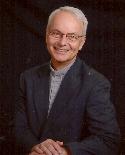
Deacon Michael Knuth was ordained a permanent deacon for the Diocese of Duluth, Minnesota in 1991. He has served the Church for the last 40 plus years in various educational roles as a volunteer catechist, a Director of Religious Education for two parishes (13 years), Director of the Office of Word for the diocese (1 year), and Diocesan Vocation Director (16 years).
He is a certified spiritual director having received his certificate from the Cenacle of Divine Providence’s School of Spiritual Direction in Clearwater, Florida. Deacon Mike has taught at all levels from cradle to grave; enjoying adult education, RCIA, and the formation classes for the permanent diaconate program of his diocese. He has conducted numerous seminars, in-services, workshops, and retreats.
He is currently doing spiritual direction, working with his wife caring for his elderly mother with Alzheimer’s, and writing a number of short stories and articles to be published. He is currently living in Pequot Lakes, Minnesota with his wife of 41 years. They have five adult children, two daughters who are consecrated, a son and two daughters who are married and providing them grandchildren.