The Importance of Tradition in the Liturgy: Ad Orientam

Making the Daily Divine: The Divine Office Explained

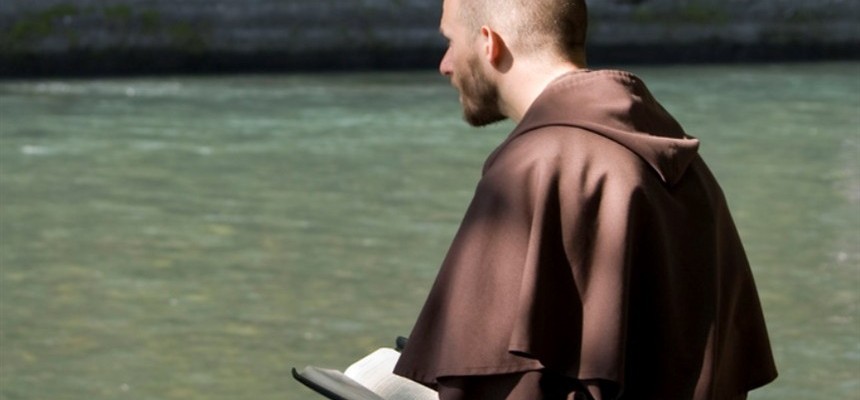
Photo By: Flickr/r Lawrence Lew, O.P.
When Catholics are asked what they struggle with most, the answer is often prayer. Prayer is an especially difficult practice for us to keep because it is often understated and easy to forget about in the bustle of our everyday lives. We often forget to pray before meals, and we most certainly forget to pray throughout the day.
Luckily, Mother Church has an answer! She has given a prayer to be said throughout the day: The Divine Office. The Divine Office (depending on which version one prays) is made up of eight “Hours”: Matins, Lauds, Prime, Terce, Sext, None, Vespers, and Compline. Each Hour is about 10 minutes of antiphons, psalms, and prayers that are to be said (or sung) at a certain time in the day, and each Hour serves to keep our relationship with God alive and well despite the busy world we live in.
Silence is so strongly abhorred in today’s world because it forces us to slow down. It forces us to think. This is why it helps us to pray. The Divine Office helps us use this silence by dedicating it to Our Lord. The Hours are spread throughout the day in 3 hour intervals, so that praying all 8 completes a 24 hour day. This daylong prayer keeps God in the forefront of our thoughts all day long.
The Divine Office is tried and true. Monks in community often sing all 8 Hours together throughout the day, and all priests are required to pray The Office every day so that they can be close to God at all times. If that’s not evidence enough, evidence of Christians praying the Divine Office has been dated back to the second and third centuries! A practice so long lived and long loved must hold some value if it still survives today!
Skeptics often claim that they don’t have the time to pray for 10 minutes every 3 hours.
“We have jobs! We can’t just stop working for that long!” What I like to think about is how much time each of us spends on social media or surfing the web while at work. I would say the time we spend on social media well exceeds a measly 10 minutes every 3 hours. If only the time we spent using our phones was instead spent on prayer, we would all be Saints!
The Office is flexible for lay people! Because we laypeople are not required to pray The Office, we can pray the hours that best suit us and our schedules. If we don’t have time at lunch to pray, we can pray the Hours in the morning and the Hours at night. If the mornings don’t work well for us, we can pray the Hours that come after noon!
The only thing that limits our prayer during the day is our conviction. We must desire to pray and believe in the power of prayer in order to take time out of our day to do something that our culture so strongly discouraged: worry about something besides ourselves. Our society tells us that the only thing that matters is ourselves and our worldly desires. We have become so obsessed with satisfying ourselves that we have forgotten what selflessness is.
The Divine Office reminds us that there is someone greater than us: Jesus Christ! He demands greatly, but he loves greatly. The Divine Office is a daily reminder that we are not the center of the universe. Contrary to our society’s prodding, a Catholic’s world is everything but himself. A Catholic lives every day in service of everyone but himself. A Catholic gives of himself for the good of others, both spiritually and physically. A Catholic lives every waking moment of his live in service of Christ. The Divine Office helps we sinners achieve that way of life by constantly reminding us why that way of life is worth living.
There are several different versions of The Divine Office, and all are suited to different lifestyles:
Shorter Christian Prayer: This small book is perfect for starting out: it contains Morning Prayer and Evening Prayer for the week.
Christian Prayer: This one volume edition of the newer Divine Office contains Morning Prayer, Daytime Prayer, Evening Prayer, and Night Prayer. It’s perfect for people who want more than just Morning Prayer and Evening Prayer.
The Liturgy of the Hours: This four volume collection contains all of the Hours for the whole year.
Antiphonale Monasticum: This one volume contains all of the Hours for the year according to the Rule of St. Benedict. The text is in Latin and is set to Gregorian Chant, and is still used by many Monasteries and lay people throughout the world.
Recommended Stories
About the Author
Marcos Lopez lives in Tampa Florida and attends the University of South Florida. His Catholic education and his zeal for the faith are a core part of his life, and he writes so that others can enjoy Christ's love in a world where it is so desperately needed.
Some of my links that I like are:
onepeterfive.com
New Liturgical Movement