Brexit and Stemming the Tide of Secular Globalization
Sponsored
Catholic365 is sponsored by
Road to Purity



When you’ve attended Catholic schooling your entire life as I have, there are things that are engrained in you from an early age that non-Catholics or public school Catholics might not fully grasp in the same manner. Along with terminology—monstrance, vespers, narthex, sacristy, adoration and scapular, just to name a few at random—we learn the meaning and the concept of “vocation” quite early on. As an altar boy who took his job seriously, the idea of the priesthood was something that was always at the forefront of my mind. I was well known for my willingness to serve multiple Masses on a Sunday morning—including the 10:00am Italian Mass which was one of my personal favorites. I loved being in Church. I loved the incense, the music, the fact that as an altar boy, I could enter the sacristy while “regular” parishioners couldn’t. I felt important.
Shortly after college, I began strongly discerning the possibility of entering the priesthood. My uncle had been a priest at the Cistercian, aka Trappist monastery in Spencer, Massachusetts, St. Joseph’s Abbey for over 50 years and I had been a frequent retreatant there for many years. There was something otherworldly about the silence, the prayers, the inner peace that I experienced when I was on retreat there. It was the brilliant writer and monk, Thomas Merton (Fr. Louis) who brought the Trappist order into the American mainstream back in the 1940’s, 50’s and 60’s. I was fortunate enough to have been granted permission to spend a weekend in the remote hermitage on the grounds there during a particularly intense period of my discernment. In many ways, it was my “dark night.” That experience will stay with me for the rest of my life, as I went through the entire gamut of emotional and spiritual struggles over the course of three full days. It is something that I cherish and I don’t think it would be an exaggeration to say that it solidified the foundations of my faith.
In the end, the Lord led me to the vocation of marriage, rather than Holy Orders. Much like the military, the monastic life is not for all men (or women). But the men and women who are,in fact, cut out for that life are a varied lot, eclectic and as different as snowflakes, but possessing a clarity and an understanding of oneself that few people in the outside world can fully comprehend. Upon moving to Northern California, one of the first things my wife and I did was to visit our local Trappist monastery, the Abbey of New Clairvaux in Vina, CA. It came as no surprise that the feelings I got when I arrived there were reminiscent of the feelings I would always receive at St. Joseph’s. The monks who call it home possessed a very similar joie de vivre to the monks at Spencer, and the peace and tranquility of the monastery grounds is equally inspiring.
Monasteries are inherently self-sustaining, or at least they attempt to be so by having a specific trade in which to support themselves. While Spencer produces acclaimed jams, jellies and preserves, as well as world renowned altar vestments, Vina’s niche is their wines which, as a chef, I must say are exquisite. They are currently in the process of reconstructing an 800-year old monastery Chapter House from Ovila, Spain; the stones were brought to the United States by William Randolf Hearst in 1930 and eventually found their way into the hands of the Trappist order. It is this very appreciation of the rich spiritual and artistic history of our Church that has always endeared me to the Trappists.
So what exactly is a vocation, some might ask? To put it quite simply, it is the pursuit of one’s purpose for living, as intended by God Himself. All of us have been created by our God with a purpose. We have all been given talents and skills that God has instilled in us for the sake of making the world a better place. Though it is a small part of the whole, it goes beyond simply what we do for a living. Vocation is the full picture of who we are and what we do. For some of us, it is getting married and having a family while supporting that family by using our God given talents in our daily labor. For others. it is a life of active service in one capacity or another. But in most cases, when we hear petitions for an increase in vocations at Mass every Sunday, the vocation we have in mind is to the priesthood or religious life. It is no secret that these vocations are dwindling compared to a few decades ago. Why this is the case is the topic for another discussion, as entire books have been written about it. What I will say, however is that for men who are in fact considering a vocation to the religious life, the Trappist life is something truly worth looking into.
It is a life that is immensely different than life in the outside world. For starters, the day begins at 3:30am and ends around 7:30pm. While the day is, in fact, centered around prayer, make no mistake, work is an equally important aspect of life. St. Benedict, the patron of the order, preached the equal importance of Ora et Labora, prayer and work. It is a humble life to be certain. But as I have seen in my personal experiences, as well as through my uncle, it is an infinitely rewarding life. And what so few people seem to understand is that it is a vocation whose importance goes far beyond the individual who lives it; it is we, the laity and the world at large who need the prayers of those living the monastic life. Their prayers are our direct line to heaven. In a world that has grown so fast and so disconnected from God due to our collective preoccupation with ourselves, we’ve reached a point where the continued prayer and work of the global monastic communities is needed more than ever. I would implore any man who is even remotely considering a vocation to the religious life to take a retreat to the Abbey of New Clairvaux and see for themselves the beauty and the importance of this particular vocation. If you live on the West Coast and you would like to take a retreat for the purpose of vocational discernment, please contact Brother Christopher, Vocation Director at the Abbey of Our Lady of New Clairvaux at godseeking@newclairvaux.org or (530) 839-2161.
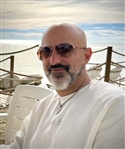
Joseph Michael is a social worker and writer from Brooklyn, NY. Born into a Sicilian immigrant Catholic family, he attended parochial school throughout his childhood. He studied Journalism at Arizona State University and completed a Culinary Arts degree through Le Cordon Bleu, working for over a decade in restaurants and country clubs throughout California, New York and Wisconsin. He then earned an M.A. in Pastoral Counseling at Fordham University followed by a Master of Social Work degree from New Mexico State University. A writer since high school, his work has focused primarily on faith-based and political commentary. He has worked extensively in the mental health field, providing therapy in residential treatment facilities, behavioral health hospitals and clinics and now works as a crisis interventionist in correctional healthcare. He and his wife, also a social worker, reside in Arizona. Joseph is a Knight of Columbus and has strong devotions to Our Lady, St. Padre Pio and St. Michael. He plays ice hockey, watches baseball, cooks and does martial arts in his free time. Feel free to contact him at jdimarius@fordham.edu.