
Is It a Sin to Not Fast on Good Friday?
Sponsored

Catholic365 is sponsored by
Road to Purity


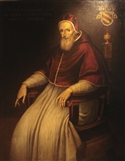

The first ecumenical council of Nicæa was convened by emperor Constantine (272-337) at Nicæa, Asia in the year 325 in order to end the dispute over Christ’s divinity. The disputers were Arius (256-336) and his followers, who believed Christ was a creature, in opposition to St. Alexander, bishop of Alexandria (250-326), and others who believed in Christ’s divinity. The council condemned Arianism and set forth a profession of faith: the Nicene Creed. It decreed 20 canons, 1 encyclical, and was attended by 318 bishops. This was the profession of faith set forth by the council [Nicene Creed]:
We believe in one God, the Father Almighty, maker of all things visible and invisible; and in one Lord Jesus Christ, the Son of God, the only-begotten of his Father, of the substance of the Father, God of God, Light of Light, very God of very God, begotten, not made, being of one substance with the Father. By whom all things were made, both which be in heaven and in earth. Who for us men and for our salvation came down and was incarnate and was made man. He suffered and the third day he rose again, and ascended into heaven. And he shall come again to judge both the living and the dead. And [we believe] in the Holy Ghost.
Arian Condemnation: And whosoever shall say that there was a time when the Son of God was not, or that before he was begotten he was not, or that he was made of things that were not, or that he is of a different substance or essence or that he is a creature, or subject to change or conversion — all that so say, the Catholic and Apostolic Church anathematizes them.
This is a condensation of the 20 canons:
I If a sick man has surgery by physicians or castrated by barbarians, he may retain clerical status. But if anyone in good health castrates himself and is a cleric, he should be suspended may not be promoted in the future. Moreover, if any are made eunuchs by barbarians or by their masters, but are worthy for the clergy, they may be admitted.
II A catechumen of short time may not be admitted into the clergy, for a catechumen needs time and further probation after baptism, for the apostle’s words are clear: “Not a recent convert, or he may be puffed up and fall into the condemnation and the snare of the devil.” If some sensual sin is discovered in that person and is convicted by two or three witnesses, he should be suspended. If anyone transgresses this law, he is liable to forfeit his clerical status.
III A cleric may not live with a woman besides his mother, sister, aunt, or such persons.
IV A bishop should be appointed by all the bishops of the province. But if this is difficult because of urgent necessity or distant travel, let at least three come together and perform the ordination after the absent bishop(s) have voted and given their written consent. The right of confirming the proceedings belongs to the metropolitan.
V A sentence of excommunication is to be respected by the bishops of each province according to the canon which forbids those expelled by some to be admitted by others. Let inquiry be held to ascertain whether anyone has been expelled from the community because of pettiness or any such ill nature. For proper inquiry, synods should be held each year in each province twice a year (one before Lent, one after autumn), so that inquiry may be conducted by all the bishops of the province, and in this way by general consent those who have offended their own bishop may be recognised by all to be reasonably excommunicated, until all the bishops in common may decide to pronounce a more lenient sentence on these persons.
VI The customs of Egypt, Libya, and Pentapolis shall be maintained, according to which the bishop of Alexandria has authority over all these places since a similar custom exists with reference to the bishop of Rome. In Antioch and the other provinces the prerogatives of the churches are to be preserved. If anyone is made bishop without the consent of the metropolitan, he shall not be a bishop. However, if two or three by reason of personal rivalry dissent from the common vote of all, provided it is reasonable and lawful (ecclesiastically), the vote of the majority shall prevail.
VII Since there prevails a custom and ancient tradition to the effect that the bishop of Aelia is to be honoured, let him be granted everything consequent upon this honour, saving the dignity proper to the metropolitan.
VIII Concerning Cathars and those who, from time to time, come publicly to the Church, they may remain among the clergy after receiving an imposition of hands. Before this, they must give a written undertaking that they will accept and follow the decrees of the Church, namely, that they will be in communion with those who have entered into a second marriage and with those who have lapsed in time of persecution and for whom a period of penance has been fixed and an occasion for reconciliation allotted, so as in all things to follow the Church. Where all the ordained in villages or cities have been found to be men of this kind alone, will remain clerics of the same rank. But if some transfer where there is a bishop or priest belonging to the Church, it is evident that the bishop of the church will hold the bishop’s dignity, and that the one given the title and name of bishop among the so-called Cathars will have the rank of priest, unless the bishop thinks fit to let him share in the honour of the title. But if this does not meet with his approval, the bishop will provide for him a place as chorbishop or priest, so as to make his ordinary clerical status evident and to prevent there being two bishops in the city.
IX If any have been promoted priests without examination, and then upon investigation confess their sins, and if after their confession men have imposed hands upon such people, being moved to act against the canon, they may not be admitted.
X If any have been promoted to ordination through the ignorance or connivance of the promoter, they must be deposed.
XI Those who have lapsed in the reign of Licinius must repent, and for 3 years be hearers, 7 years prostrators, and 2 years communicate with the people in prayers without oblation.
XII If anyone returns to his sinful life, he must be a hearer for 3 years and a prostrator for 10 years, unless he has given evidence of his conversion by deeds, tears, and other proofs, he only needs 3 years as hearer.
XIII Those who are departing are not to be deprived of their last viaticum. But if one whose life has been despaired of has been admitted to communion and has shared in the offering and is found to be no longer dying, he shall be among those who take part in prayer only. Anyone who is departing and seeks eucharist, the bishop upon examining the matter shall give it.
XIV A catechumen who has lapsed, after 3 years of being a hearer, may pray with the catechumens
XV Clerics may not transfer to another city. If one attempts such, it will be annulled and he will be taken back
XVI Any clerics who depart from their church recklessly and impiously or in ignorance of the canon, ought not by any means to be received in another church, but all pressure must be applied to them to induce them to return to their own dioceses, or if they remain it is right that they should be excommunicated. If anyone steals away one who belongs to another and to ordain him in his church without the consent of the other’s own bishop among whose clergy he was enrolled before he departed, the ordination is to be null.
XVII Since many clerics have been induced by greed to forget the sacred text, “who does not put out his money at interest” (Ps. xv. 1-5), and to charge one percent a month on loans, if they are found to receive interest by contract or to transact the business in any other way or to charge a flat rate of fifty percent or in general to devise any other contrivance for the sake of dishonorable gain, they shall be deposed.
XVIII Deacons do not have the authority to give communion. Moreover, deacons may not receive communion before the bishops. Deacons must remain within their limits as ministers of the bishop and subordinates to the priests. Let them receive the eucharist according to their order after the priests from the hands of the bishop or the priest. Deacons may not sit among the priests. If a deacon does not comply, he is to be suspended.
XVIX The former Paulinists who seek refuge in the Church must be rebaptized unconditionally. Those who in the past have been enrolled among the clergy appear blameless are to be baptized and ordained by a bishop. But if they are shown to be unsuitable they should be deposed. With regard to deaconesses and all in general whose names have been included in the roll, the same form shall be observed. We refer to deaconesses who have been granted this status, for they do not receive any imposition of hands, so that they are in all respects to be considered lay.
XX Since there are some who kneel on Sunday and the season of Pentecost, the same observances should be everywhere. One should offer prayers standing.
[translations from both Decrees of the Ecumenical Councils, Norman Tanner & Nicene and Post-Nicene Fathers, Second Series, Vol. 14., Henry Percival]
GLOSSARY FOR I NICÆA
Aelia - a Roman colony founded at Jerusalem after its destruction (70 A.D.) as a supplanter of it
Cathar - lit. pure one; a Novationist who calls himself a “cathar,” (not to be confused with the Cathars of the high Middle Ages)
Chorbishop - the bishop of a rural area
Deaconess - an unordained female cleric, often a widow, with the task of catechesis or something similar, usually among other women
Hearer - a catechumen who could only listen and not share in prayer
Lapse - to temporarily fall in a time of persecution
Metropolitan - the bishop of the metropolis of an ecclesiastical province; archbishop
Paulinist - a follower of the heresiarch, Paul of Samosata; the heresy being adoptionism and monarchianism
Pentapolis - lit. five cities; the five northeastern cities of Cyrenaica in Libya (i.e., Apollonia, Cyrene, Ptolemais, Taucheira, and Berenice)
Prostrator - a penitent who was required to remain in prostration as penance
Viaticum - holy Eucharist given to a dying person



