Better Than Green Beer and Shamrock Shakes: Ten Interesting Facts About Saint Patrick, the Master Evangelizer
Sponsored

Catholic365 is sponsored by
Road to Purity


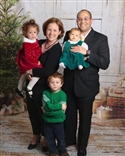

For some reason, it seems to surprise some that Jesus had anything to say about marriage. The possible source of this surprise is another consideration for another day, but suffice it to say that Jesus’ teachings regarding marriage were counter-cultural even two-thousand years ago. This is not even to mention the setting within which Jesus chose to perform his first miracle – turning water into wine at the wedding feast at Cana (John 2:1-12). In case you were previously unaware of what Jesus had to say about marriage, well – surprise! – here you can read it in its totality (Matthew 19:1-12):
When Jesus finished these words, he left Galilee and went to the district of Judea across the Jordan. Great crowds followed him, and he cured them there. Some Pharisees approached him, and tested him, saying, “Is it lawful for a man to divorce his wife for any cause whatever?” He said in reply, “Have you not read that from the beginning the Creator ‘made them male and female’ and said, ‘For this reason a man shall leave his father and mother and be joined to his wife, and the two shall become one flesh’? So they are no longer two, but one flesh. Therefore, what God has joined together, no human being must separate.” They said to him, “Then why did Moses command that the man give the woman a bill of divorce and dismiss [her]?” He said to them, “Because of the hardness of your hearts Moses allowed you to divorce your wives, but from the beginning it was not so. I say to you, whoever divorces his wife (unless the marriage is unlawful) and marries another commits adultery.” [His] disciples said to him, “If that is the case of a man with his wife, it is better not to marry.” He answered, “Not all can accept [this] word, but only those to whom that is granted. Some are incapable of marriage because they were born so; some, because they were made so by others; some, because they have renounced marriage for the sake of the kingdom of heaven. Whoever can accept this ought to accept it.”
The Marcan version of this passage (Mark 10:1-12) is briefer, and features a few noteworthy distinctions, but can easily be considered alongside the Matthean version above. However, the Matthean version is more extensive, which makes sense, given the Gospel of Matthew’s status as the “teaching Gospel.” In any case, the reader will note that Jesus did not simply have something to say about marriage – he had something to teach about marriage. Thus, marriage is far from some semblance of a human construct; rather, it is a divinely-originated and -oriented endeavor. For nearly two-thousand years, there has been more written within the Catholic Church about the remarkable nature of God’s plan for a husband, a wife, and the possibility of new life than one could hope to read in a lifetime. However, knowing the Lord’s words is a necessary starting point for anyone wishing to take his or her faith ever more seriously.
On that note, Catholics have an abiding responsibility to learn and comprehend the inherent beauty of the Sacrament of marriage. Now that you know how seriously Jesus takes marriage, be sure to take a moment to review sources such as the Catechism, which covers marriage extensively in paragraphs 1601-1666. Take some time – perhaps even a few days – to slowly, methodically, and patiently grasp the Church’s teachings on marriage as outlined here. Then, meditate on a few questions, such as: What did you already know about the Church’s teachings on marriage? How do the Church’s teachings reflect Christ’s teachings as they appear in Matthew 19:1-12 and Mark 10:1-12? What characteristics of marriage stood out to you?
The United States Conference of Catholic Bishops has likewise promoted the sanctity of marriage based on Christ’s teachings by providing various resources and statements, including their “Marriage: Unique for a Reason” initiative, which has multiple complimentary videos and other media. Of course, the Catholic Church has already taught that considerations related to marriage and the family are hardly mutually exclusive. Thus, there are worthwhile readings, such as this piece by my good friend Dr. Andrew Lichtenwalner, a devoted husband and father who serves as the executive director of the USCCB’s Secretariat of Laity, Marriage, Family Life, and Youth.
To conclude, in order to support good and holy marriages in the midst of a society that unfortunately too frequently devalues the sacredness of marriage and the dynamic dimensions of family life inspired by the Holy Family of Nazareth, all Catholics should become familiar with Pope Francis’ recent post-synodal apostolic exhortation Amoris Laetitia ("The Joy of Love"): On Love in the Family, which covers marriage from a variety of theological angles. (Personally, as a high school theology teacher and author, it was only fitting that I read Amoris Laetitia in its entirety, and I strongly encourage those who can to do the same. However, even in the midst of a busy schedule, perhaps you could even read through the official chapter-by-chapter summary provided by the Vatican.)
Ultimately, if the Catholic Church hopes to proclaim the beautifully exquisite features of the marital covenant, we must first recall that the Catholic Church’s time-honored teachings on marriage have Jesus’ teachings at their core. Thus, they are not plastic, randomized, or otherwise illusory. Instead, the love between husband and wife, wonderfully manifested by their openness to children (bringing about a family in the process), originates with God himself. After all, at the root of the marital union is the understanding that “We love because he first loved us” (1 John 4:19). No matter your own vocation or state in life, your proclamation of what Jesus teaches about marriage is the courageous evangelization that will be a beacon of hope to future generations, fostered by married couples and their children, with the Lord as their foundation.
A lifelong resident of the Archdiocese of Washington, Justin has taught theology and Spanish at his alma mater, Bishop McNamara High School in Forestville, Maryland, since 2006.
Justin has written widely on various aspects of the Catholic faith. His books include Called to Teach: Daily Inspiration for Catholic Educators, Called to Pray: Daily Prayers for Catholic Schools, The History of the Catholic Church (a textbook), and Alleluia to Amen: The Prayer Book for Catholic Parishes. Justin is active in pro-life ministries, and serves on the volunteer board of directors for the Forestville Pregnancy Center.
Justin holds an M.A. in Spanish Language and Culture from the Universidad de Salamanca (Spain), an M.A. in International History from Staffordshire University (England), and an M.A. in Theology and Christian Ministry from the Franciscan University of Steubenville. Justin has studied philosophy and theology at Seton Hall University, and Church history from the University of Notre Dame’s Satellite Theological Education Program, for whom he has likewise taught various online courses.
Justin, his wife Bernadette, and their children live in Bowie, Maryland, where they attend Sacred Heart Catholic Church. Justin is a lay member of the Order of Saint Dominic. You can follow him on Twitter (@JustinMcClainOP).